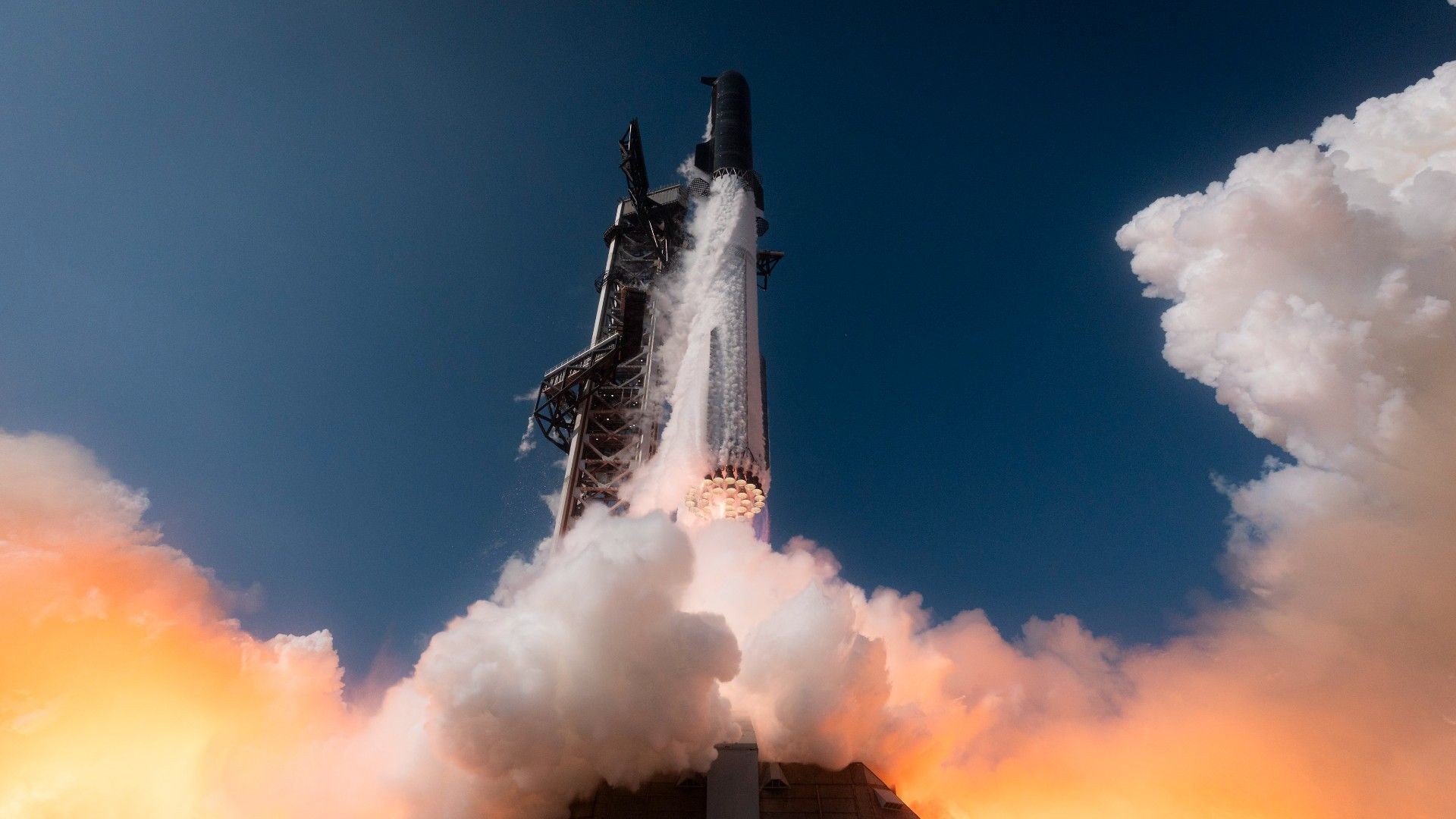
The target is Thursday. July 16.
SpaceX doesn’t want to miss the window. After firing all the engines on the new V3 Starship stages in the past few weeks, the green light is on for Flight 13. The post came down on social media last Sunday, simple and direct. No earlier than the 16th.
It’s the second ride for Version 3. The bigger beast. The stronger one. It made its debut less than two months ago on Flight 12, and honestly, it was a test. Nothing risky. Just proving the V2 could handle the load before throwing in the V3 hardware.
But the hardware didn’t quite play nice.
So Flight 13 isn’t about new tricks. It’s about cleaning up the mess from the last go-around.
Think about how this rocket comes home. No legs. No droneships with foam on their decks. Just Mechazilla ‘s chopstick arms snatching the stages out of thin air. It’s brutal. It’s beautiful. And SpaceX hasn’t figured it out yet for the upper stage, “Ship.”
They have caught Super Heavy three times. Two even flew again. That’s reusability in action. But on Flight 12? They weren’t sure if the V3 booster would hold up. So they opted for a soft splashdown. A gentle hug with the Gulf of Mexico.
It didn’t work.
According to SpaceX’s own autopsy of the failure, the problem started before separation. Hot staging means the upper stage fires while still attached. This time, the ignition sequence on Ship caused a 90-degree wobble in Super Heavy’s orientation the moment they split. Bad news.
Then things got worse. Five out of thirty-three engines refused to relight during the boostback burn. The thrust cut short. The booster missed the mark.
“Updates to engine alarms and aborts match the conditions seen.”
That’s SpaceX’s fix. A tweaked startup sequence. Hardware swaps. Less panic, more procedure.
Ship had its own drama, but it showed guts. One of the three vacuum Raptors died 40 seconds into separation. Game over? Not quite. It hit suborbital velocity anyway. It proved it could fly on less power. Engine out capability checked off.
It couldn’t relight the engine later though. SpaceX blames “interconnected causes” for that one. More fixes incoming.
Here’s what you probably missed last time: two Starlink satellites. Equipped with cameras. Deployed just to snap pictures of the heatshield tiles in space. Weird, right? But necessary. You can’t check the skin without seeing the skin.
Flight 13 changes the game slightly.
Inside the payload bay? Twenty actual functional Starlink V3s. No simulators this time. Real deal. Twenty birds going up. Six will have cameras, repeating the heatshield inspection. The rest are for functional tests.
And here is the kicker. Since this isn’t an orbital mission, none of them matter in the long run.
They deploy. They float. Twenty minutes later, they burn up. Re-enter the atmosphere as vapor.
SpaceX knows this. They want to launch 100,00 of these eventually. Faster internet. Higher capacity. But right now, Flight 13 is a disposal launch for the payload, not the rocket.
So what are they trying to do with the hardware?
Super Heavy wants three things:
– Launch and separate cleanly.
– Complete the boostback burn.
– Splash down gently. No wobbles.
Ship has more homework. Deploy those satellites. Relight one engine in space. Then glide down to a soft landing in the Indian Ocean.
The FAA signed off. Investigation into Flight 12 closed this morning. They liked the fixes.
Launch window opens at 6:45 PM EDT on Thursday. Livestream starts half an hour prior. Catch it on X or the company page.
If all this goes perfectly, Flight 14 gets the first V3 return to Texas. The chopsticks come down. Maybe both stages make it back.
But don’t get carried away. This thing is still raw.
Orbit isn’t guaranteed yet. Docking? Nope. Keeping frozen fuel in a tank while floating in zero-G without boiling it away? Still a technical nightmare waiting to be solved.
They are close. But there’s still a lot of space left.