
The Lego Group isn’t just a toy company anymore. It is a private industry giant. It ranks as the fourth-largest toy manufacturer in the world. The operation employs over 5,000 people globally. A diverse team of 150 designers from 18 different nationalities plans the elements for every set. These products reach consumers in more than 130 countries.
But this massive enterprise began much smaller. It started as a family business in Billund, Denmark, in 1932. Ole Kirk Christiansen founded the company. He made wooden items like ladders and toys. The business stuck with wooden toys for decades. That changed in 1960. A fire destroyed the wooden toy warehouse.
Christiansen had already named the company “Lego” in 1934. It abbreviates the Danish words “leg godt,” which means “play well.”
How Lego Transitioned to Plastic Manufacturing
Plastic entered the picture in 1947. Lego became the first company in Denmark to use a plastic injection-molding machine. By 1951, plastic toys accounted for half of the company’s output.
The design evolved between 1949 and 1958. Since then, the basic bricks have remained unchanged. That consistency is key to understanding how Lego bricks work so effectively. The connection system perfected in the late ’50s is still the standard today.
The company added new elements in the 1960s and 1970s. Lego figures arrived in 1974. They originally featured a yellow skin tone. They were gender-neutral by design.
Lego TECHNIC elements hit the market in 1977. They added mechanical complexity. A decade later, the company introduced MINDSTORMS robots in 1998. This product line resulted from a collaboration with the Massachusetts Institute of Technology Media Lab.
Why Lego’s Design History Matters
The longevity of the core brick is remarkable. Most toys fade from relevance. The fundamental Lego piece has stayed the same for over sixty years. This durability allows new sets to connect with old ones. It encourages long-term collection and creative play.
The expansion into technology shows adaptability. Moving from simple wooden blocks to programmable robots required significant innovation. The partnership with MIT’s Media Lab demonstrates a willingness to engage with advanced educational institutions.
Today, the scale is massive. Thousands of employees support the design and production. Designers from around the world contribute to the ecosystem. The global reach covers most major markets.
The journey from a Danish carpentry shop to a multinational corporation is steep. The fire in 1960 could have ended it. The shift to plastic saved it. The refusal to change the basic brick preserved it.
What happens next? The foundation is solid. The bricks are ready. The only variable is the next idea.
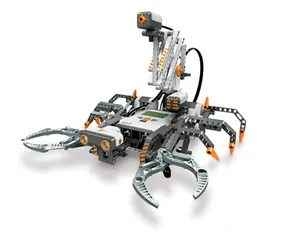
The NXT: A Smart Brick With a Legacy
Lego just dropped the MINDSTORMS NXT set, and it is not your average building kit. At its core lies the “intelligent brick,” a microprocessor-powered brain that actually makes things move. You get three motors, four sensors, programming software, and 571 TECHNIC elements in the box. The company didn’t just build this in a vacuum, though. A group of enthusiasts known as the MINDSTORMS User Panel helped shape the system before it ever hit shelves.
It is funny to think about how much has changed since the early days.
How Lego Bricks Evolved From Unstable Blocks
The history of the brick is long, but the design stability is relatively recent. Ole Kirk Christiansen introduced Automatic Binding Bricks in 1949. They were the precursors to what we know today, but they lacked the interior tubes that define the modern Lego experience. Without those tubes, creations were wobbly. They fell apart easily.
By 1958, Lego added the tubes. The company patented the design that same year. That specific geometry became the standard. Basic Lego bricks have remained essentially unchanged since then. If you take a brand new brick out of a box today and snap it onto one produced in 1958, it fits perfectly. The compatibility has never broken.