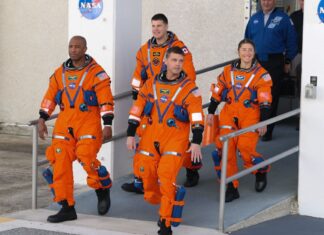
India is making its debut into the elite club of nations capable of sending humans into space. The Gaganyaan mission, slated for 2027, is the country’s first crewed spaceflight program. It is not just a technical milestone. It is a statement of intent. At the helm of this historic endeavor are four astronauts. All of them come from the same background. They are test pilots from the Indian Air Force (IAF).
The team is composed of Group Captain Angad Pratap, Shubhanshu Shukla, Prasanth Balakrishnan Nair, and another Group Captain. Their selection marks a significant shift in how India approaches human spaceflight. By choosing experienced military aviators, the space agency is prioritizing proven skill in high-stakes environments. These pilots have already demonstrated their ability to handle complex machinery under pressure. Now they will face the ultimate test.
Why Indian Air Force Test Pilots?
The choice of IAF test pilots is strategic. Human spaceflight requires a specific set of skills. It demands calm under extreme duress. It requires quick decision-making. It involves mastering systems that can be unforgiving. Test pilots spend their careers pushing the limits of aircraft. They understand the margins of safety. They know how to recover from anomalies. This experience translates directly to the cockpit of a spacecraft.
Angad Pratap leads the group. His rank as a Group Captain reflects years of service and expertise. He is one of the four astronauts selected for this mission. The other three are Shubhanshu Shukla, Prasanth Balakrishnan Nair, and the remaining pilot. Their collective background ensures that the team is not just technically proficient. They are psychologically resilient. They are trained to operate in isolation. They are ready for the unknown.
The Path to 2027
Gaganyaan is not a solo effort. It is the culmination of decades of work by the Indian Space Research Organisation (ISRO). The mission aims to place a crew module in orbit. It will return safely to Earth. This capability will put India in the company of the United States, Russia, and China. It will be the fourth nation to achieve independent human spaceflight.
The timeline is tight. 2027 is the target date. Years of testing will precede the launch. Uncrewed test flights will verify the launch vehicle. They will test the crew module. They will validate the escape system. Each step brings the four IAF pilots closer to the stars. Their training will intensify. They will simulate launch scenarios. They will practice emergency procedures. They will prepare for the physical demands of microgravity.
What This Means for Space Exploration
This mission is about more than just flags and records. It is about technological advancement. It drives innovation in materials science. It pushes the boundaries of life support systems. It enhances communication technologies. The benefits will spill over into everyday life. Improved medical devices. Better environmental monitoring. New materials for industry. These are the tangible outcomes of space exploration.
The selection of these four astronauts highlights India’s commitment to self-reliance. It shows that the country is building its own capacity for human spaceflight. It is not relying on foreign partnerships for this core capability. The IAF pilots represent