There is something primal about the urge to solve a puzzle. Marcel Danesi, in his book The Puzzle Instinct, argues that this drive is as innate as the instinct to laugh. We don’t always know why we enjoy the mental catharsis of resolving a dramatic suspense, but we know it feels good. That same satisfaction drives people to fill out crosswords and Sudoku in Sunday papers. Enter Kakuro.
What Is a Kakuro Puzzle?
A kakuro puzzle is essentially a hybrid between a crossword and Sudoku. It shares the grid structure of a crossword but relies on the logical deduction of Sudoku, with a twist: you have to do math. Specifically, simple addition.
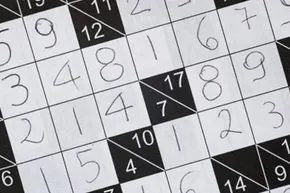
The grid looks like a crossword. You fill white boxes with digits from 1 to 9. The rules are strict. You cannot repeat a number within a single horizontal or vertical group. Each group has a “clue” number. Your job is to fill the boxes so the numbers add up to that clue.
Let’s look at a basic scenario. If a clue is 4 and there are two boxes, you might think 2 and 2 works. It doesn’t. No repeats allowed. The only option is 1 and 3. But which goes where? You have to look at intersecting groups to figure it out. This is where the logic kicks in.
The History of Cross Sums
Don’t let the Japanese name fool you. While Sudoku and Kakuro have Japanese monikers, the Japanese only popularized them. The origins are American.
The game first appeared in 1950 in the United States. Dell Magazines published it under the name “Cross Sums.” Its inventor was a Canadian named James E. Funk. It has since gained cross-cultural appeal, challenging puzzle enthusiasts worldwide.
The Strategy: How to Solve Kakuro Puzzles
Most players develop their own strategies, but it all boils down to logic. For beginners, the easiest route is using a combination table. This is a list of all possible solution sets for every clue number and box count.
Take an “8 in two” clue. The table shows three possibilities: 1 and 7, 2 and 6, or 3 and 5. This acts as a cheat sheet. Advanced players might still use it. Consider a “25 in five” clue. There are 12 unique solution sets. Figuring out which digit goes in which box requires more than just knowing the set.
The real power of solving comes from intersecting groups. This is where a horizontal row shares a box with a vertical column. Each group has its own clue and possible sets. You use process of elimination to narrow it down.
Here is the simplest example. A “4 in 2” intersects with a “3 in 2.” The “4 in 2” must contain a 1 and a 3. The “3 in 2” must contain a 1 and a 2. The shared box must be a 1. That is the intersection.
Practical Tips for Success
You don’t need to memorize every combination. Use a pencil. Jot small notes of possible solutions in each box. Cross them out as you eliminate options.
Start with the easiest clues. Look for groups with the fewest boxes. Look for clues that are very small or very large. These have the fewest solution sets. Solving these easy ones often unlocks the harder sections.
Practice is the best teacher. The more you solve, the faster your brain recognizes patterns.
Understanding the Grid
Publishers vary in how they print Kakuro grids. Sizes change. Some use black-and-white boxes to mimic crosswords. White boxes are for your numbers. Black boxes hold the clues.
The leftmost column and top row are usually all black. If a clue box has two numbers separated by a slash, read it carefully. The upper right number is the clue for the horizontal group to the right. The lower left number is the clue for the vertical group below.
It seems simple enough. But try solving one without a cheat sheet. You’ll see why people are obsessed.