Close your eyes.
Think of a factory farm.
Probably cows. Shoulder to shoulder. Antibiotics in the air.
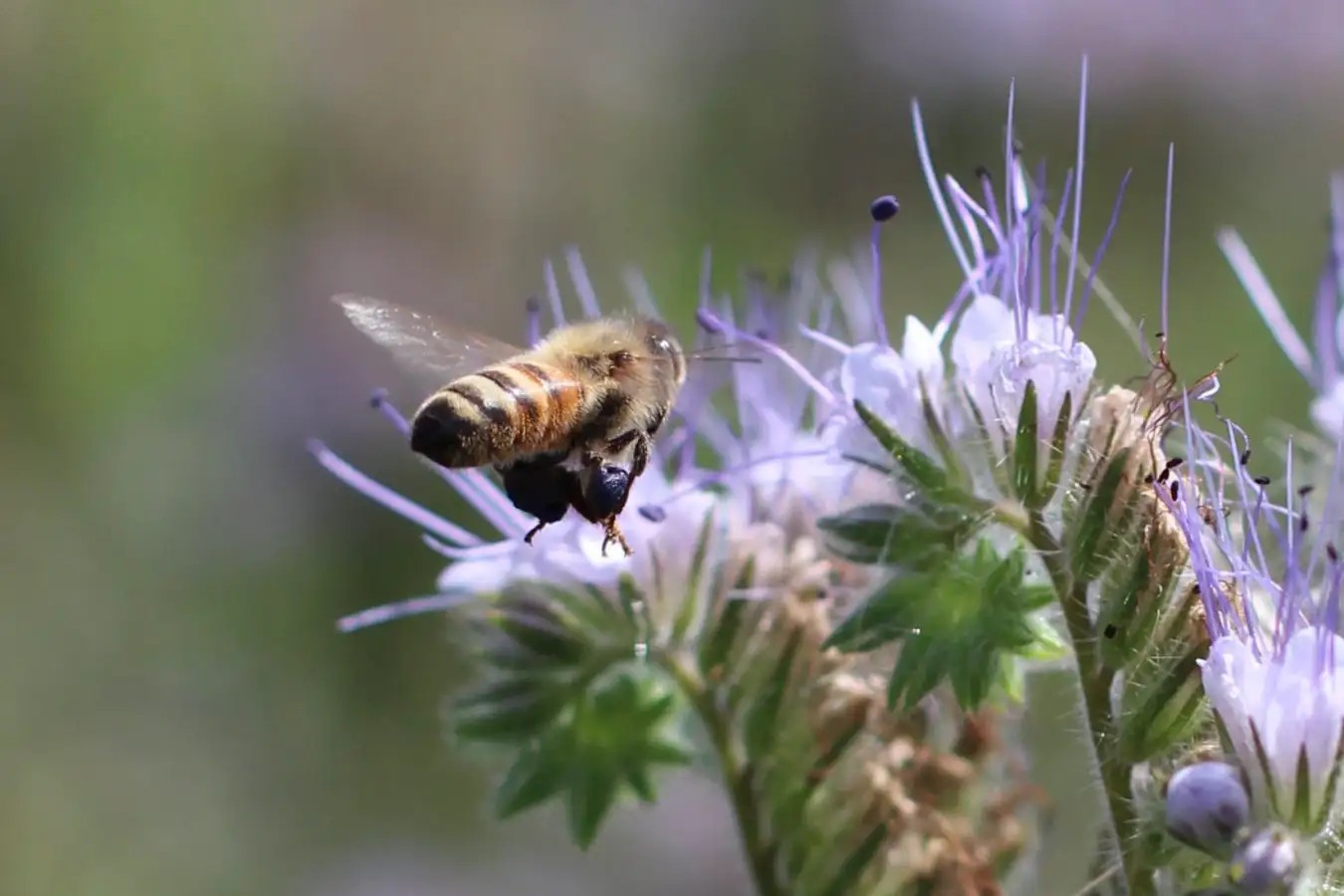
Now replace them with bees.
It sounds wrong. It feels wrong. But in Jennie Durant’s book Bitter Honey, this is reality.
Durant is a social scientist. She writes like someone who has stared at the abyss of industrial agriculture and decided to take notes.
The abyss has wings.
The machine eats the bee
For 3,000 colonies to get to market, you need trucks.
Lots of them. Flatbed trucks crisscrossing the US every year, moving honeybees around like livestock.
They aren’t foraging. They are rented out.
Pollinating crops on command. Fed sugar syrup and protein bars stored in refrigerated warehouses.
It’s a precarious life.
Many of these colonies are hanging by a thread, requiring constant replacement.
We eat because of this system, but the cost is hidden.
Humans have been stealing honey for 8,000 years. There is a cave painting in Spain of a guy hanging off a cliff to scoop some out.
Pretty brave. Pretty old school.
But then came the industrial revolution for bees.
Artificial hives appeared in the 1800s. Monocrops followed. Pesticides too.
The result? Native bee populations crashed. Their numbers would be 50x higher if honeybees weren’t around gobbling all the pollen.
Mid-2000s arrived. Over a third of US colonies vanished.
Did we fix it? No.
We bought more bees. We sprayed more poison.
Durant calls it the “pesticide treadmill”.
“Plant flowers. Limit pesticide. Share land.”
Simple words.
Impossible logistics.
Who to blame?
You can’t just point a finger at beekeepers.
In the 90s, cheap imported honey flooded the US. Local beekeepers had to pivot to pollination services to survive.
It’s a hard life.
Families do it for generations. They love these insects. They can tell hive health by the hum. They will walk miles to find a lost colony.
But then a farmer’s pest control adviser shows up with a tank.
One beekeeper lost half his stock to a spray of fungicides.
Durant doesn’t just describe it; she sits in the dirt with these people. It hurts to read.
The villain isn’t one person.
It’s the almond industry.
California almonds are worth $4 billion annually. In February, 99% of domestic honeybees are trucked there.
It’s efficient. It’s profitable.
It kills resilience.
A bleak horizon with small sparks
Climate change makes it worse.
The fossil fuels powering global food systems disrupt seasons, forcing beekeepers to refrigerate hives like canned goods.
A plaster on a gunshot wound.
Durant doesn’t hide the ugliness.
But in the second half of the book, she looks for light.
Rewilding. Regenerative farming. Planting wildflowers between almond trees. Under solar panels.
Indigenous land-management practices involving managed burns could bring grasslands back to life.
Is it enough?
Maybe not.
It requires the government to spend money.
It requires farmers to earn less.
That is the snag.
Most of us benefit from this broken system. As I write this, I have cheap almonds on my desk. Grown in the US, processed in Germany, sold in the UK.
We are all complicit.
Durant suggests we reconnect with the land. She doesn’t dismantle the economy. She leaves the status quo mostly intact, suggesting small fixes instead.
Some will call that weak.
I call it honest.
Make kin
Changing everything is hard.
Changing your backyard is not.
One gardener Durant mentions turned her lawn into a wild haven in 2017. She got sued by her neighbors.
Good.
Lawsuits happen when we change.
When we let nature be nature, we realize creatures aren’t so different from us watching them.
Watching a bee choose a flower. Seeing it signal to the hive.
There is intrinsic value in that moment.
Not worker bee value. Not pollination value. Just… life value.
Hearing about mass die-offs makes us look away.
Seeing one bee make a choice makes us care.
Durant asks what our landscapes should look like.
The answer is already there, waiting to bloom if we just step back.
She writes: “Make friends with creatures.”
I would add that we need to stop pretending they are machines.
Three more reads for the lost and curious
- The Mind of a Bee by Lars Chittka. Bees might have emotions. Consciousness? Chittka argues yes. You will think differently about reality after this one.
- Staying With the Trouble by Donna J. Haraway. Don’t expect tech salvation or cynicism. Haraway says: stay in the mess. Build messy relations with all beings.
- The Book of Wilding by Isabella Tree and Charlie Burrelli. They turned barren clay into a blooming estate in southern England. Inspiring proof that you can bring soil back from the dead.