Scientists finally have a reason for it. For years we knew APOE2 carried a secret. It’s the genetic variant linked to longer life. Lower dementia risk. But why? That was the black box. Now it’s opening.
“We’ve known for years that APOB2 carriers tend to live longer… but the protective mechanism has been a mystery,” says Lisa M. Ellerby.
New research from the Buck Institute for Aging says it comes down to damage. DNA damage. Specifically how neurons handle it.
The Variants
Three common types. APOE2. APOE3. APOE4. They look almost identical. Just two amino acids different.
APOE4 is bad news. Strongest genetic risk factor for Alzheimer’s. Usually shows up after 65.
APOE2 is the lucky break. Associated with living longer. Staying sharper.
Researchers needed to isolate the effect. So they used human induced pluripotent stem cellss. Edited them. The only difference was the APO variant.
They made two types of neurons.
- GABAergic (the inhibitors).
- Glutamatergic (the exciters).
Then they watched how the different genes treated them.
What Happened?
The difference wasn’t subtle. It was stark.
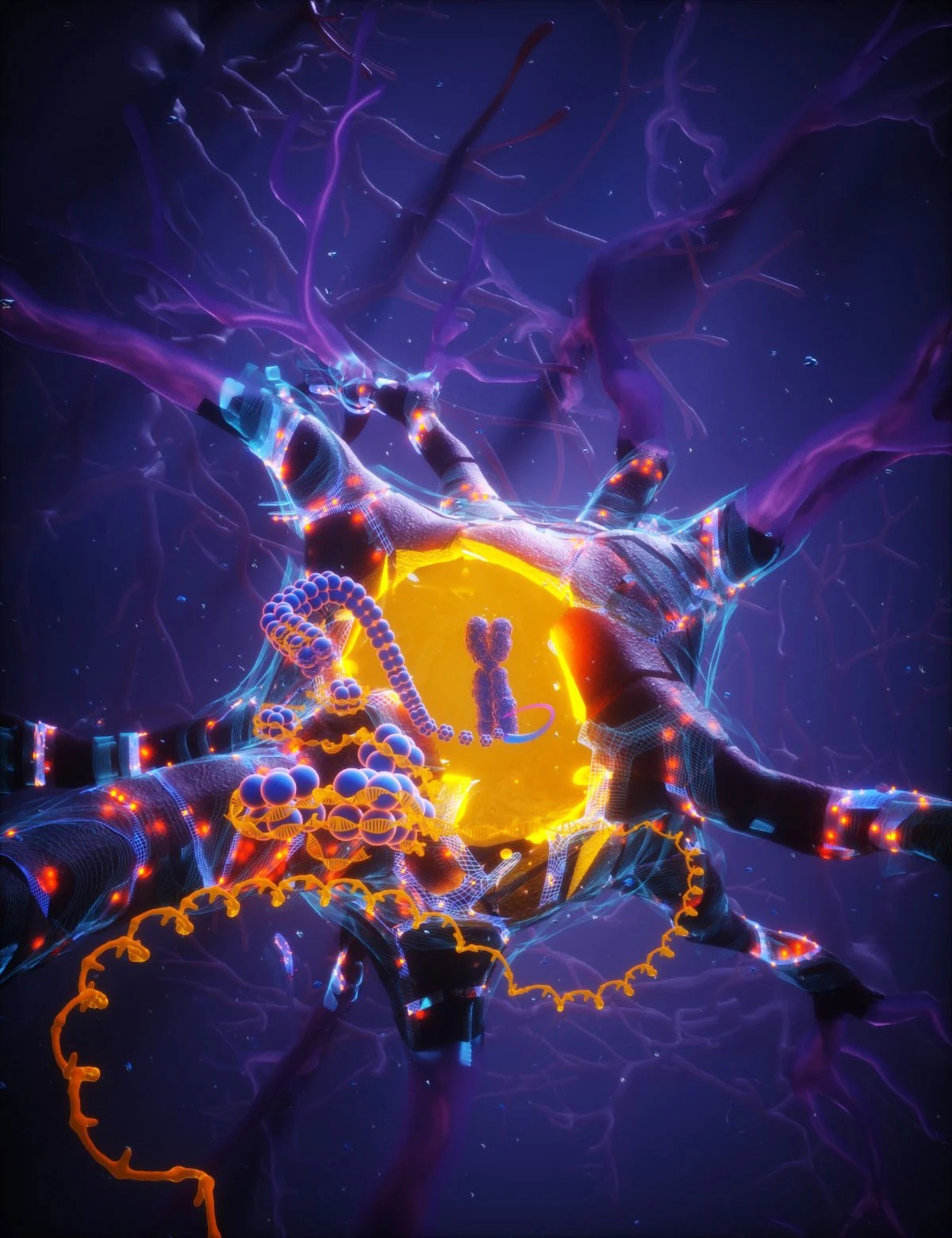
APOE2 neurons repaired themselves. Bulk and single-cell sequencing showed these cells fired up DNA repair pathways. Actively. While APOE4 neurons lit up patterns linked to Alzheimer’s pathology. Direct checks confirmed it. Fewer DNA strand breaks.
What about stress? The team hit the cells with radiation and doxorubicin. A chemo drug. Rough stuff.
APOE2 held its ground. Lower markers of senescence. Like p16. CRYAB. Smaller nucleoli. Healthier nuclear shape. Basically they didn’t look tired. They looked maintained.
Even cooler part. The protein itself helps. Adding APOE2 protein directly to APOE4 neurons? Reduced the damage signaling. After radiation. The protection might not just be about which genes you’re born with. It might be about the environment inside the cell too.
They checked mice too. Hippocampus tissue. Old mice with human genes inserted.
APOE2 mice had better heterochromatin preservation. More Lamin A/C protein. Stronger scaffolding inside the nucleus. The hardware stayed intact.
Why Does This Matter?
We usually think of APOE and cholesterol. Lipids. Amyloid-beta plaques. That’s been the focus for decades.
“This study connects a major longevity gene to… the defense of the genome.”
It flips the script. APOE isn’t just moving fats around. It’s tuning how neurons protect their blueprint.
Senescent cells. Zombielike cells that don’t die. They clog the brain. They drive decline. APOE2 keeps those cells from happening.
So here’s the implication.
Therapies exist that remove senescent cells. Others that boost DNA repair. Maybe those don’t need to mimic cholesterol pathways at all. Maybe they just need to copy what APOE2 does naturally. Especially for the people with APOE4.
“What surprised us was how consistent… across two very different neuron types.”
Cristian Gerónimo-Olvera noted this. The picture didn’t change based on neuron type. Or between human cells and mouse tissue. APOE2 cells recovered faster under stress. Period.
The molecular “how” isn’t clear yet. The exact process stabilizing the nuclear envelope remains foggy.
Future work will look for compounds that mimic APOE. Can we synthesize that protection? Can we give an APOE2-style shield to those at high risk?
It’s a shift in thinking. From lipids to DNA. From transport to defense.
The question remains. How long will it take to translate a biological advantage into a drug? The science is moving. The clock for patients isn’t.