It sounds like science fiction. Or bad marketing.
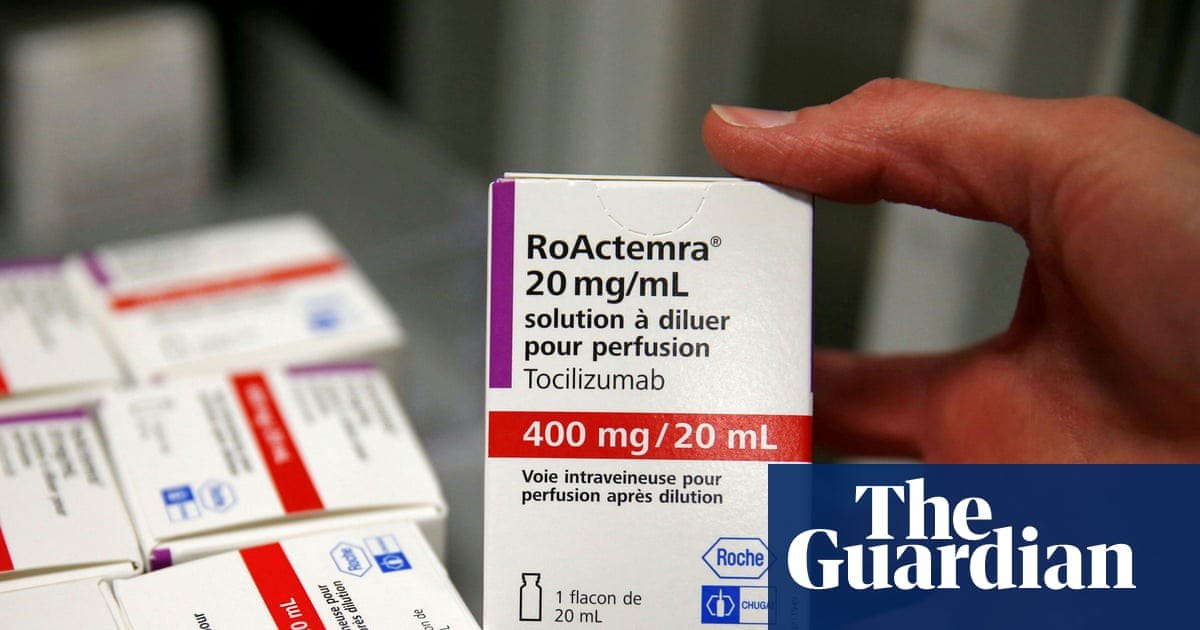
But early data suggests tocilizumab—an anti-inflammatory drug usually reserved for rheumatoid arthritis—might help the depression cases that simply won’t budge.
Standard antidepressants target brain chemicals. Neat theory. Practical reality? Roughly one in three people hit a wall. The meds don’t work. In the UK, about one in six adults will face moderate to severe depressive episodes in their lives. A staggering number, left hanging when the first line of defense fails.
Researchers at the University of Bristol decided to look elsewhere.
Specifically, at the immune system.
Targeting inflammation
Tocilizumab blocks the IL-6R receptor.
Without that receptor binding to cells, the inflammatory signals linked to autoimmune issues get choked off. The logic here is simple. Inflammation isn’t just a bodily issue; it might be fueling the depression itself.
They took thirty people. Thirty people with moderate to severe depression. All of them had already tried standard treatments and found no relief. They flipped a coin for each participant: half got the drug, half got a placebo. The clock ran for four weeks.
Statistically, it’s shaky.
A small sample size rarely shouts “breakthrough” in clean data terms. Yet, when you look closer at the individual measures, a pattern emerges. The group on tocilizumab reported less fatigue. Less anxiety. Better quality of life. They just seemed better across the board compared to those on sugar pills.
“This is one of the first… to show that it works.” — Professor Golam Khandakar
Khandakar calls it an important milestone. And he has a point. It’s one of the first randomized controlled trials to test this specific immunotherapy angle for depression. Even more notably, it tried to select patients who would actually benefit, rather than spraying treatments blindly.
The numbers tell a quiet story.
A different way forward
54%. That’s the remission rate for the tocilizumab group.
Only 31% for the placebo.
In medical terms, we call this the Number Needed to Treat (NNT ). For this drug, the NNT is 5. You treat five extra patients to help one recover. Compare that to SSRIs, the usual go-to antidepressants, where the NNT hovers around 7. Immunotherapy appears more likely to lift someone out of the mire. At least in this controlled pocket of reality.
Does this mean everyone with depression needs an injection? Hardly.
But for the stubborn cases—the ones where standard chemistry has failed—the idea is shifting. We aren’t just looking at neurotransmitters anymore. We are looking at the whole biological machine.
Dr. Éimear Foley put it plainly. Depression affects up to 20% of the global population, yet current tools fall short for too many. This study moves the needle toward tailored care. Treatments that fit the person’s actual biology. Not a one-size-fits-all chemical sprinkle.
Right now, it’s just thirty people and a four-week window. Early evidence, nothing more.
But maybe “nothing” is a little too strong.
Perhaps it’s just the beginning.