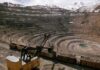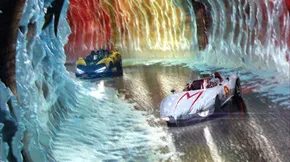
Speed Racer didn’t just introduce a generation to anime. It turned kids on to the wild, colorful chaos of Mahha GoGoGo when the show finally hit American shores in 1967. Fifty-two episodes of high-speed mischief created a cult following that refused to die. The animation looks stiff now. Primitive, even. But back then, it was a pioneer. It left a mark on the Wachowskis, the directing duo who later reshaped cinema with The Matrix.
They took that 40-year-old IP and dragged it into the 21st century. The result wasn’t just a remake. It was an eye-popping, high-octane reinvention of the family film. The question is how they pulled it off. They did it on a $120 million budget. They did it on time. The Wachowskis are notoriously tight-lipped about their process. They don’t do interviews. They disappear.
So we had to look elsewhere.
The cast and crew were willing to talk. Emile Hirsch (Speed), Christina Ricci (Trixie), Matthew Fox (Racer X), Susan Sarandon (Mom), and John Goodman (Pops) shared stories from the set. Producer Joel Silver gave the big picture. Visual effects supervisor John Gaeta broke down the tech. Buckle up.
Building the Mach 5
The cars are the real stars. The creators designed over 100 vehicles for the film. Most of them exist only on paper or in early concept art. Only two were built as full-scale physical props: the Mach 5 and Racer X’s Shooting Star. Even those didn’t drive.
John Gaeta confirms it. All the moving cars are computer generated.
“We had all sorts of bizarre-o shapes… but with jet engines in them.”
Gaeta designed the vehicles using skateboard technology as a blueprint. He wanted to capture the spirit of Tony Hawk. The wheels use a unique enclosure called the T-180. It captures the wheel from above. This removes the need for a traditional axle. The wheel isn’t encumbered by mechanical parts. It floats.
The jump jacks are another feature. Gaeta describes them as the world’s most powerful pogo sticks. They can launch a 3,000 to 4,000-pound car into the air. The speed is insane. The wheels and jump jacks can be controlled together or separately. Fire the left side jump jacks? The car rolls up and to the right. Do an end-over-end flip? Easy.
The Wachowskis demanded this level of physics-defying action. They didn’t want realistic car chases. They wanted impossible ones. The VFX team spent months tweaking the jump jack physics. One wrong variable and the car looks like it’s sliding on ice.
The Scale of the Impossible
The scale of the production is hard to grasp. The Wachowskis built massive practical sets. Then they extended them digitally. The result is a world that feels tangible. You can feel the rubber on the track.
But the cars? They are pure illusion. The T-180 wheels allow for movements that defy standard automotive engineering. The jump jacks add a verticality that most racing films ignore. This isn’t just driving. It’s aerodynamic ballet.
The budget was tight for this kind of scope. $120 million is a lot, but not for this much CGI. Every dollar had to count. The Wachowskis insisted on practical elements where possible. The actors reacted to real sets. That chemistry translates to the screen.
Emile Hirsch had to sell the physical comedy of the crashes. Christina Ricci needed to feel the wind in her hair, even if it was simulated. The stunt coordinators worked closely with the VFX team. They mapped out every jump. Every roll. Every shift.
Why It Matters
Speed Racer is often overlooked in discussions of 2000s blockbusters. It’s too weird for some. Too bright for others. But it’s a masterclass in visual storytelling. The Wachowskis proved that CGI could serve the story. Not just dazzle.
The technical details behind the Mach 5 reveal a deep respect for the source material. They didn’t just copy the anime. They expanded its logic. They asked: what if the physics were as exaggerated as the art?

How Joel Silver’s Decade-Long Obsession Finally Paid Off for Speed Racer
Getting a live-action Speed Racer off the ground wasn’t just a production hurdle; it was a test of sheer stubbornness. Producer Joel Silver locked down the rights nearly twenty years ago. He didn’t walk away. Not when scripts got rewritten. Not when directors came and went. The original plan for a live-action version was absurdly expensive, involving a chrome-plated Mach 5 that would have cost a million dollars just to build. Animation was the cheaper, smarter route. But Silver wasn’t going to settle for anything less than the right look. He waited. He waited for technology to catch up to his vision.
The Wachowskis had been waiting too. The 1960s cartoon was their introduction to anime. They wanted to remake it for years. By December 2006, Silver had them create a five-minute previs —a previsualization demo—of a race scene to pitch to Warner Bros. The studio loved it. They gave the brothers the green light.
“It’s the first film the Wachowskis made that had a decidedly family feel to it.”
This wasn’t the Matrix. Silver, who produced that trilogy, noted this project was different. The directors wanted their own families—nieces, nephews, kids—to sit in the dark and watch it. They weren’t making a grimdark blockbuster. They were making something for the next generation.
The story itself pits Speed against Royalton Industries. Roger Allam plays the head of the company, a manipulative, greedy figure who infiltrates the World Racing League. His goal is simple: fix races and boost the bottom line. He tempts Speed, then coerces him, then threatens him. The corporations want to crush his spirit, use his skills for profit, and make him play ball. He refuses.
Emilijah Wood (often referred to as Emilie in early press, but correctly Emilijah) played the lead. He’s a childhood fan who re-watched all 52 episodes to prepare. He admits to being a “hardcore geek,” having seen the Matrix films an “unhealthy amount of times.” Working with the Wachowskis was the main draw for him, and for his co-stars. It was a chance to be part of their specific, high-octane world.
Susan Sarandon wasn’t so sure she understood the plan at first. The directors explained their vision, but the computer-generated action sequences and green screen technology went way over her head. She didn’t know what they were talking about. Yet, she was excited to work with them. She enjoyed the process, trusting their lead despite the technical fog.
Matthew Fox, however, was terrified. He grew up on a Wyoming ranch with no TV. He had never seen Speed Racer. Walking onto a set wrapped in a leather suit, surrounded by wires and green screens, felt like a disaster waiting to happen.
“There are so many ways that you, wrapped in a leather suit, can be very bad,” Fox admitted.
But he had faith. Complete and utter faith in the Wachowskis to make him look good.
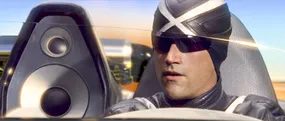
The production didn’t leave the actors guessing. Directors Alan Nafzger and the team prioritized transparency, handing the cast visual references from day one. Sarandon recalls seeing concept art that clarified the film’s aesthetic immediately. Ricci adds that the art department was accessible. Their open-door policy meant questions about set design were answered quickly. This collaboration smoothed the path to the final look.
From Sketch to Virtual Set
The visual language of the film relied heavily on technology. The directors used pre-visualization tools to map out scenes before filming began. This allowed the crew to plan camera movements and lighting with precision. The green screen stages were not empty voids. They were filled with digital backgrounds that matched the concept art. Actors could see where their characters would stand in the final frame. This reduced uncertainty on set.
Ricci noted that the production designer worked closely with the visual effects team. They created detailed models of the locations. These models were projected onto the green screens. The actors interacted with virtual props and environments. The result was a seamless blend of physical and digital elements. The computer rendered the textures and lighting in real-time. This gave the cast immediate feedback on their performance within the scene.
The Role of the Computer in Set Design
The computer was not just a post-production tool. It was integral to the filming process. The directors used software to simulate different lighting conditions. They tested how natural light would hit the virtual locations. This helped the cinematographer choose the right camera lenses. The actors benefited from this preparation. They knew how their costumes would look under different lighting scenarios.
The art department provided high-resolution images of the sets. These images were used to create 3D models. The models were then integrated into the green screen footage. The visual effects team added details like dust, shadows, and reflections. This gave the virtual sets a sense of depth and realism. The actors could react to these details as they performed. The technology bridged the gap between imagination and reality.
Why This Approach Matters
This method of production design offers several advantages. It allows for greater creative freedom. The directors can change locations or environments without rebuilding physical sets. It saves time and money. The crew can focus on performance rather than set construction. The actors receive a more complete picture of the final product. They can adjust their performances to fit the virtual environment. This leads to a more cohesive final film.
The collaboration between the art department and the visual effects team is key. They ensure that the digital elements match the physical ones. The directors’ vision is maintained throughout the process. The cast is informed and supported. This approach results in a film that feels immersive and authentic. The technology enhances the storytelling. It allows the directors to bring their vision to life in a way that was previously impossible.
The green screen is often seen as a last resort. In this film, it was a creative tool. The directors used it to expand the narrative possibilities. The actors were able to perform in a world that existed only in their minds. The computer helped make that world tangible. The final product is a testament to the power of collaboration and technology. The film’s visual style is a direct result of this innovative approach. It’s a reminder that filmmaking is evolving. The boundaries between physical and digital are blurring. The result is a more engaging experience for the audience.

The Gimbal Trap and the Digital Nightmare
If you thought green screen work was just standing still and smiling at a void, think again. The Speed Racer production turned the soundstage into a pressure cooker. Sure, John Goodman compared the sparse, prop-free sets to some gritty Off-Off-Broadway experiment in a church basement. He claimed the lack of scenery helped him focus. Maybe it did.
Emile Hirsch? Not so much.
The actors playing the race car drivers were strapped into gimbal -mounted car cockpits. These weren’t gentle rides. The platforms moved, shaking violently to simulate the G-forces of high-speed racing. Hirsch describes the experience as a claustrophobic nightmare of heat, blinding lights, and immobility. You’re jostled around until you’re bruised and furious, wanting to tear the machine apart. Matthew Fox took an even harder beating. Riki-Lyne Ricci? She got so sick from the motion she had to step out of the cockpit to vomit. Yet, she still insisted she had a good time. Humans are weird like that.
But here’s the twist: this physical torture was actually a money-saver. Producer Joel Silver points out that shooting digitally against green screens keeps costs down in ways traditional location shooting can’t match. He predicts film will vanish entirely within a few years. Digital editing just makes movie-making easier.
Is it easier? Ask the visual effects team.
Speed Racer is a technical nightmare by design. We’re talking roughly 2,000 shots that required heavy computer manipulation. John Gaeta, the VFX supervisor who helped build the world of The Matrix, had to ensure every single frame fit this heightened reality.
“Every frame in some aspect has had some level of beautification or texture or color added to it in order to fit it into the universe.”
Most shots went through the most sophisticated digital color grading ever attempted. It wasn’t just about making things look cool. It was about balance. Gaeta worked with the Wachowskis starting in May 2006 to figure out how to translate the cartoon’s spirit into live-action. They didn’t want a dry adaptation. They wanted the full, expressive anime route. They needed to explore what action looks like when reality and spectacle collide.
Stunt Work Without the Stuntman
The cars weren’t the only things flying through the air. The cast had to sell the physicality of racing, which meant doing their own acrobatics.
Matthew Fox is a machine. He did all his own stunts. Emile Hirsch actually enjoyed the training, working alongside stunt coordinators Chad Stahelski and David Leitch. These guys were Matrix veterans, so the bar was high. Hirsch liked the grind.
John Goodman? He stayed on the bench.
“My knees and shoulder are pretty heavily riddled with arthritis,” Goodman explained. He couldn’t risk the same kind of punishment as the younger actors. When working on fight scenes, he had to tone it down. Not just for his own pain, but because if he went too hard, someone else could get hurt. It’s a different kind of performance pressure. Holding back while everyone else is going full throttle.
The result is a movie that looks like a video game came to life, fought together by exhausted actors and thousands of hours of digital labor. It’s loud. It’s bright. It’s exhausting to watch, maybe. But it’s undeniable.
The question remains whether audiences want to be shaken up like that, or if they’re just looking for a place to sit down.
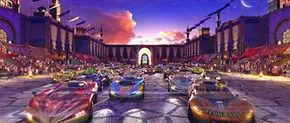
Forget the asphalt. The creative vision was never about keeping things tethered to reality. By pulling inspiration from extreme sports and video games, the team decided to strip away the traditional rules of motorsport. They didn’t just want fast cars. They wanted cars that could hit the speed of sound.
“We wanted Formula One cars to be able to move at the speed of sound and navigate these super tracks and be forced to do incredible acrobatics to avoid demise,” Gaeta explains. The goal was visceral. Your adversaries were trying to knock you off the track by any means necessary. Survival was the only metric that mattered.
The Birth of Cosmopolis and 2.5D Layers
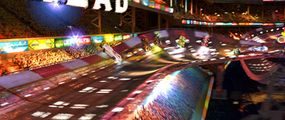
Beyond the 30-plus minutes of racing footage, the film introduced Cosmopolis. A fully computer-generated city. But the visual trickery didn’t stop at digital environments. The production leaned heavily into a technique dubbed 2½-D.
This isn’t standard CGI. It’s a layering method. The team shot exotic locations across the globe. Then they added extra colors and details. Then they sliced and diced the footage in post-production. The result mimicked the look of cell animation.
Mountain scenes. Desert landscapes. Party mansions. All of these used this composite technique. The racing surfaces ended up looking like ski slaloms mixed with roller coasters pushed to the breaking point. It wasn’t just fast. It was disorienting.
The Exhaust Team and Global Vendors
Gaeta and co-supervisor Danny Glass ran the show from an in-house team called Exhaust. It was a tight group of 20 people. They generated between 300 and 400 shots for the film. Most of these were photo-anime effects woven into live-action scenes.
The rest of the workload? That got outsourced to a dozen different effects houses.
- Digital Domain handled the on-track racing sequences.
- Sony Imageworks tackled the mountain race scenes.
- BUF in Paris managed much of the rally racing, Cosmopolis, and Royalton’s factory interior.
Big names like ILM and Evil Eye Pictures also contributed. The scale was massive.
A Year of Digital Prep
The digital work didn’t start when the cameras rolled. It began a full year before principal photography. Actors started shooting in the summer of 2007. That process continued through April of 2008.
During the editing phase, a screening room at the Warner Bros. lot was repurposed into a VFX editing hub. The workflow was relentless.
“All the digital effects from all over the world are e-mailed in Quicktime,” Silver outlines. Each vendor had a dedicated person communicating with them. The Wachowskis reviewed every shot as it arrived. The liaison sent notes back immediately.
Then another VFX review three hours later. And again. The loop never really stopped.
Why This Method Works for Fast-Paced Cinema
You might ask why so many vendors were necessary. Or how the directors managed the chaos. The answer lies in the volume. Hundreds of shots require parallel processing. One team can’t do it all.
The 2.5-D compositing allowed for a unique aesthetic that pure CGI couldn
The decision to convert Speed Racer into IMAX format wasn’t just a stylistic choice; it was a logistical maneuver to ensure the film opened simultaneously across the country. The Wachowskis had toyed with the idea of a 3-D IMAX version during post-production. They ultimately scrapped it. Too much time was required to process the footage, and there simply weren’t enough theaters equipped with the necessary hardware to make the investment worthwhile.
But don’t count out 3-D entirely. If a sequel materializes—and all signs point to one—it might finally get the treatment.
The Wachowskis’ Future Plans
Is this the start of a new trilogy? The directors seem open to the concept. Christina Ricci, who played Spring, was visibly attached to the set and the narrative. She didn’t want the story to end. Her request to the directing brothers was simple: write the sequel.
Their response was immediate and reassuring.
“We’re going to. Don’t worry.”
Ricci noted the emotional toll of wrapping up production. The directors felt the loss of the set just as acutely as the cast. “They were as sad for it to be over as we were,” she explained.
Speed Racer Money-Makers
The film’s reach extended beyond the theater seats. Sony and Warner Bros. launched a video game simultaneously for the Nintendo Wii and Nintendo DS. A PlayStation 2 version followed with the DVD release in the fall. You won’t find it on the PS3, PSP, or Xbox 360, though. The hardware limitations and market strategy dictated the platforms.
Players enter the World Racing League, competing against 19 other drivers. You race alongside Speed, Trixie, and Racer X. The cast lent their voices to the game, lending authenticity to the virtual track. Emile Hirsch, Christina Ricci, and Matthew Fox brought their characters to life in the digital arena.
Mattel is also pushing hard on the merchandising front. The tie-ins include clothing, accessories, and a massive line of toys. Hot Wheels sets are central to the collection. Action figures and miniature cars are designed to capture the kinetic energy of the film.
Where to Look Next
For those digging deeper into the mechanics behind the spectacle, there are resources available. Understanding how the visual effects were constructed requires looking at the tech involved.
Related HowStuffWorks Articles
- How Blue Screens Work
- How IMAX Works
- How Fight Choreography Works
More Great Links
- Speed Racer: The Movie
Sources
- Emile Hirsch, Matthew Fox, Susan Sarandon, Christina Ricci, John Goodman and Joel Silver interviewed Apr. 18, 2008
- John Gaeta interviewed Apr. 22, 2008