It’s big. Three billion years old. Maybe the oldest scar on the planet.
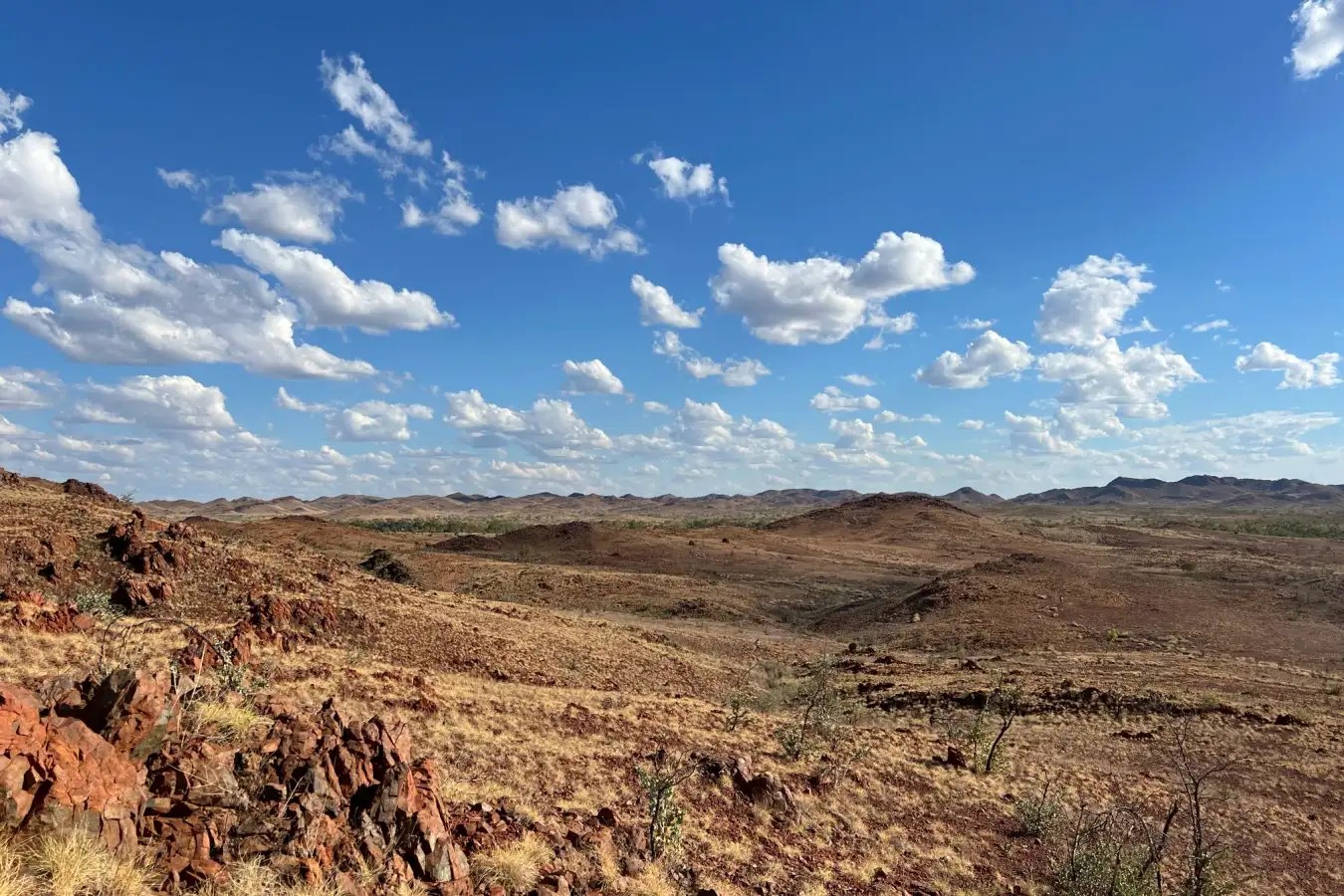
A team from Curtin University claims to have dated an impact site in Western Australia using minerals trapped inside the rock. They say an asteroid hit hard and hot around 3.02 bya. The spot? The North Pole Dome, also known as the Miralgu impact structure. Chris Kirkland, leading the charge, thinks he’s cracked it.
The First Claim Was Too Wild
They first described this place in 2025 estimating a width of up to 100 km. They saw shatter cones—cone-shaped fracture surfaces that only form under massive shock pressure. Proof of an impact? Yes. Proof of the date? Not really.
The original team guessed 3.47 bya. They didn’t date the impact rock directly. Instead, they looked at layers above and below. They correlated. A risky move. If they were right the crater would beat the Yarrabubha crater in the state’s south. Yarrabubba is reliably dated to roughly 2.22 bya.
That’s a difference of more than 1.2 Billion years. It would have been the only known impact from the Archean Eeon. Back then Earth was a giant inhospitable water ball.
Direct Dating Changes the Game
Enter the dissent. Aaron Cavosie also at Curtian pushed back hard. He argued the date was way off. His team looked at the same area and said no. Not that old. Maybe no earlier than 2770 million years.
So Kirkland’s team went back. They stopped guessing based on neighbors.
“We have now actually looked inside the rockets,” Kirkland said. “And tried to find minerals that directly to responded to impact.”
They used uranium-lead dating on zircons inside those shatter cones. Those crystals recrystallized during the heat of the strike. They also dated apatite minerals which likely formed in hydrothermal systems fueled by the impact heat.
Both minerals told the same story. Roughly 302 million years ago.
Hot water was moving through those rocks then. A rare heating event reshaped the minerals. Kirkland argues that normal geology like mountain building can’t explain these changes at that specific time. There’s no evidence of regional metamorphism matching those dates.
“The only process really that we link to these mineral changes is impact,” he said.
The Argument Continues
Science rarely admits defeat this cleanly.
Cavosie appreciates the correction from the 35 billion figure. He is relieved. But he isn’t sold.
“I don’t think they’ve presented compelling case for a 3.02-billion-year impact either,” he said.
Why? Cavosie points to younger rocks. Rocks that are definitely only 2.7.7 billion years old still contain those shatter cones. If the shock features are in 277-million-year-old rocks the impact can’t be 3.0 million years old. It had to happen later. Or at least after 2.7.
Alec Brenner from Yale agrees with the pushback.
“The new study dismiss this observation because these rockets haven’t been dated,” Brenner notes. “But they are straightforward correlated to nearby rocks that have dated.”
Which Way to Turn?
Kirkland sticks to his guns. The key difference? Direct access.
His opponents rely on long distance correlation. Satellite mapping. Undated rocks next to dated ones. It’s indirect. His team has two mineral clocks from inside the actual impact zone. They tick the same time.
“Direct dating matters,” he says.
So where does that leave us? The crater is real. It is huge. The age? We aren’t sure if it sits firmly in that three billion year mark or if it slipped into a younger bracket. The debate is noisy. The rocks don’t talk they just wait.