The stars are getting crowded.
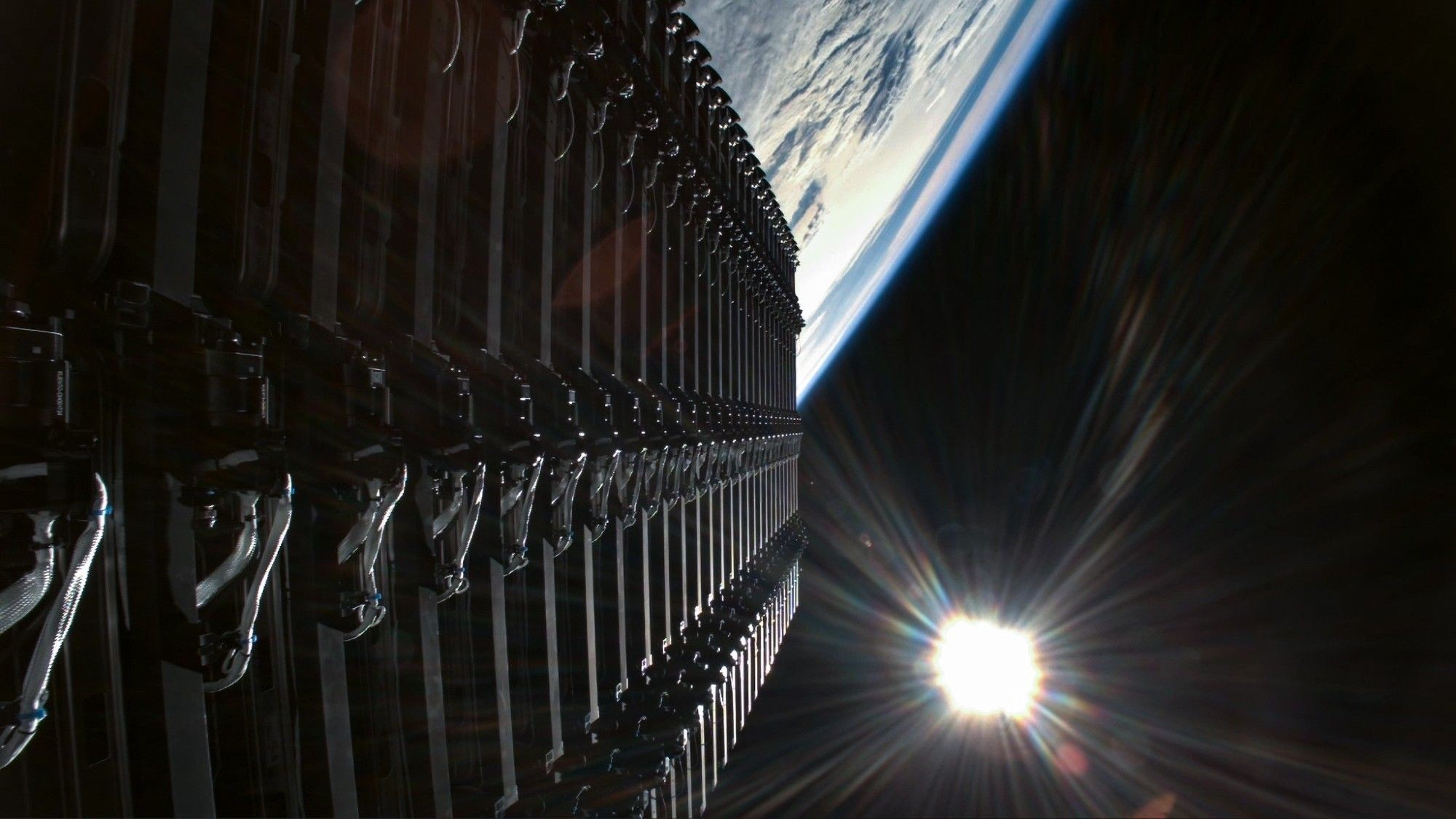
SpaceX just filed their latest report to the FCC. The numbers inside are staggering. Starlink satellites executed 355,081 collision avoidance maneuvers last year. That’s every single satellite dodging something on a weekly basis.
Look at the raw data. Between December 2024 and May 2025 alone, the count jumped nearly 60,00 maneuvers higher than the previous six months. We hit 207,000 in just that window. Compare that to 2023, where the whole constellation moved three times less often. On average each bird in the flock had to yank its thrusters over forty times just to survive another orbit.
Is it manageable?
Maybe for now. Hugh Lewis, a professor of astronautics who knows his stuff, thinks we’re skating on thin ice. “We are heading towards a collision with an operational satellite,” he said. And not because they tried to cause it. It’ll happen in spite of every dodge, every calculation, every desperate last-second burn.
The math doesn’t care about ambition.
Starlink went from 6,000 birds in the sky to 10,000 between 2023 and 2025. The entire global orbital population swelled from 10,00 operational objects to 16,00. Everyone wants the prime real estate between 480km and 550km up. That’s where the latency is best for internet users. It’s also where the traffic is densest.
Here’s the trick SpaceX pulls: their satellites think for themselves.
If the risk hits 3 in 10,08, the computer fires the thrusters.
No negotiation. No radio call to the other guy asking who’s going to move. Starlink just moves. Always.
This creates a statistical nightmare. Lewis points out the flaw in the safety margin. “They reduce the collision chance to one in a million. Sounds safe? Maybe for one pass.”
But do that a million times? The risk aggregates. You can’t wash away the probability by adding more zeros to the denominator. By June 2028, Starlink will likely clock a million total maneuvers in the constellation’s lifespan. By 2090, it might do that every year. Then that one-in-a-million chance? It’s just a matter of time.
Tommaso Sgoba sees this coming. He’s with the International Association for Space Safety. His argument is simple geometry. Pack more satellites into a shell and you don’t just add pairs. You multiply them.
Double the satellites? You quadruple the potential crashes.
There’s another problem: ghosts.
Current prediction tools suck at calculating atmospheric drag. Space weather shifts unpredictably. “Operators can’t tell a real threat from statistical noise,” Sgobba said. So satellites burn precious fuel avoiding debris that might not even be there. They shorten their own lives chasing shadows.
Who is fueling this fire?
Amazon’s Kuiper. China’s Thousand Sails (Qianfan). Data center operators launching directly into the most convenient altitudes. They aren’t coordinating orbits. They’re competing for the best views. Lewis notes that Thousand Sails plans to orbit in the same lanes as Starlink. Overlap isn’t a possibility; it’s a feature of their business plan.
The only safe play is to keep them apart. Segregated orbits. But space is limited. If SpaceX holds the lane at 530km, no one else gets to use it. First-mover advantage turns into a land grab.
Regulators are playing catch-up. Again.
Sgoba wants change before launch, not after. Companies should have to declare how many maneuvers a new constellation will require upfront. Do the satellites have the fuel? The automation? Or are they just guessing?
“It is not an accident waiting happen,” he wrote. It’s engineering workload. Treat it like work, not a headline.
Right now nobody is forcing anyone to say.
We keep launching. The numbers go up. The fuel runs out. We watch from down here. Wondering if the next headline is a near miss. Or an actual one.
Which is more likely?
Who knows.