The bone is old. Ancient, even. 83 million years. It spent decades rotting in a drawer while the world forgot it existed.
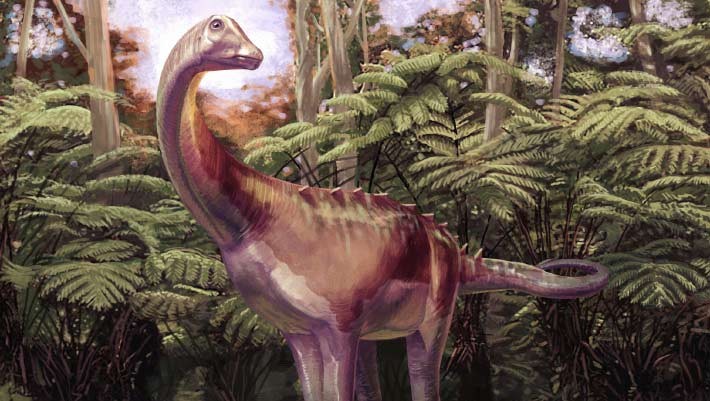
Now, thanks to a new paper in Acta Palaeontologica Polónica, we know exactly what it is. A tail vertebra. From a titanosaur. Specifically, a small one, likely a juvenile or perhaps a dwarf species that grew only six or seven meters long. This specimen, cataloged as BAS D.862.1.25, comes from the Santa Marta Formation on James Ross Island, off the tip of the Antarctic Peninsula It dates to the Campanian stage of the Late Cretaceous.
It sat there. In the dark. Waiting.
Here is the irony. This tiny bit of calcified history is the first dinosaur fossil ever collected in Antarctica. Dig that in. Before Antarctopelta —the armored beast found in 198 and usually credited with the title of “first dinosaur of Antarctica”—this bone was in hand. Found on December 9, 1985 by Michael Thomson and Reinhard Förster.
They missed it.
Obviously.
Paul Barrett, from the Natural History Museum, London, put it simply: it looked unremarkable. Just a rock, mostly. But at the time that animal walked the earth? Lush. Temperate forests covered the continent. Ample food. For huge herbivores. We picture ice when we think Antarctica. That’s our problem, not theirs.
The new study by Paul Barrett and his team used CT scanning. They looked inside the bone. The tech revealed structures hidden for forty years. Without the scanner, this is still just debris in a crate.
So. Was this dinosaur related to the others?
Probably. It suggests multiple lineages of long-necked sauropods roamed here during the Cretaceous. It reinforces Antarctica’s role as the bridge. Not ice then, but land. Connecting South America, Australia, New Zealand. Before Gondwana broke apart and left us with frozen deserts and penguins.
Matthew Lamanna from the Carnegie Museum of Natural History called it rare evidence. Of course he did. Samantha Beeston, a Ph.D. student at University College London, pointed out why museums hoard things. New methods. Old objects. The combo unlocks history that was waiting in plain sight.
Maybe there are more.
As climate change melts the ice, we might find further proof of that past biodiversity. The forests are gone, buried under the white. The dinosaurs are dead. But their bones are leaking out again, one drawer, one CT scan, at a time.