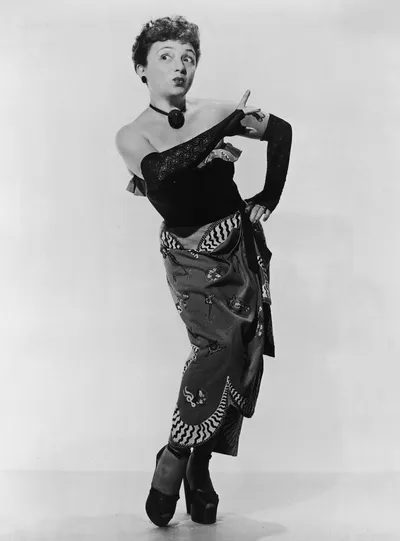
Molly Picon wasn’t just an actress. She was a force of nature that dominated New York’s Lower East Side for decades. Born on June 1, 1898, in New York City, she grew up to become the undisputed “Sweetheart of Second Avenue.” That wasn’t a marketing slogan. It was the title Yiddish theatre audiences in the 1920s and ’30s gave her because of her impish charm and razor-sharp comedic timing.
She died on April 6, 1992, in Lancaster, Pennsylvania, at 93 years old. But her legacy didn’t vanish with her. It lingered in the laughter of crowded theaters and the music of her songs.
Picon started way before the Yiddish stage ever existed in its polished form. She was a child star in vaudeville as early as 1904. That’s when she was still barely a teen. By 1919, she joined a Yiddish theatre managed by playwright Jacob Kalich. They married that same year. The duo toured Europe in 1921 so she could refine her Yiddish dialect. She needed to sound authentic. She needed to sound like home.
The Broadway Breakthrough and Wartime Tours
When she returned to the US, the grind began. Picon starred in over 200 Yiddish productions. Her repertoire included comic renditions of famous works like “The Working Goil” and “The Story of Grandma’s Shawl.” She played Yankele, Raizele, Oy, iz dos a meydl! (“Oh, what a girl!”) and starred in Hello Molly.
She didn’t cross over to English-language stages until later. Her Broadway debut came in Morning Star in 1940. It was her first starring role in English. The transition wasn’t easy for many Yiddish performers. Picon made it work.
“She continued to perform into her 80s.”
During World War II, she toured internationally. She brought Yiddish culture to troops and civilians alike. Later, she earned critical acclaim in London. She performed opposite Robert Morley in the comedy A Majority of One. Critics loved it. The role showcased her range beyond pure comedy.
From Yiddish Stage to Hollywood Films
As Yiddish theatre declined in popularity, Picon adapted. She accepted mainstream stage and film roles. She played an American widow searching for a husband in Israel in the Broadway musical Milk and Honey in 1961. The role was specific. It required nuance.
Her film credits span decades. She appeared in Yiddle with His Fiddle in 1937. Then Mamele (“Little Mother”) in 1938. Later came Come Blow Your Horn in 1963. And finally, her role in Fiddler on the Roof in 1971.
A Jewish theatre was named for her in 1931. It stands as a testament to her early impact. She didn’t just perform. She defined an era.
Why did she endure? Maybe because she refused to let