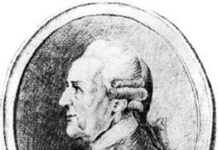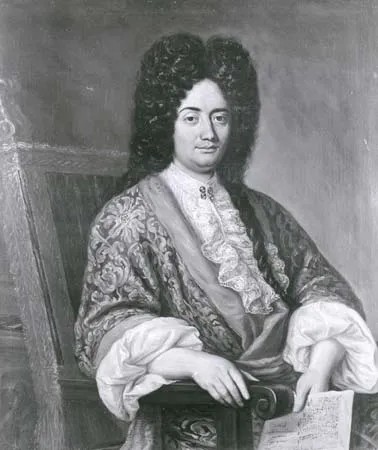
Alessandro Scarlatti doesn’t just make music. He created the blueprint for the sound of 18th century opera. Born in Palermo, Sicily in 1660, he became one of Italy’s most prolific composers. He died in Naples in 1725, leaving behind a legacy that defined the Baroque era.
His career started early. Around the age of 12, he was sent to Rome, where he came under the influence of Bernardo Pasquini. That training stuck. His first opera, Gli equivoci nel sembiante (1679), was more than his debut. This earned him the patronage of Queen Christina of Sweden. She became his protector and in 1680 commissioned “L’honestà negli amori”*. Scarlatti served him until 1684.
From there, Naples called. In 1684 he became “maestro di cappella”. He stayed there for almost 20 years. During this time he created more than 40 operas and court entertainments. Gli equivoci in amore (1690) is a great example of this period of intense creativity. He didn’t just copy trends. He sets them.
Florence pulled him away in 1702. Prince Ferdinand III de’ Medici hired him to compose four operas for his theater. Unfortunately, those scores are lost to history. Two years later, Scarlatti returned to Rome. He served Cardinal Pietro Ottoboni and entered the prestigious Arcadian Academy. In 1708 he held a similar position in the Basilica of Santa Maria Maggiore. He also expanded his operatic ambitions. Il trionfo della libertà and Il Mitridate Eupatore premiered in Venice during the Carnival. The latter is widely considered one of his absolute masterpieces. He traveled to Venice to oversee the performances.
In 1709 he returned to Naples. This triggered his most intense creative burst. He composed masses, serenades and grand operas. La Principessa fedele (1710), Scipione nelle Spagne (1714) and Il Tigrane (1715) were his great successes. In these works, the three-part aria form matured more and more. The Orchestra’s Strings became bolder and more confident. He no longer hides behind the singer.
In 1716, he composed a mass for Pope Clement XI. In the same year he completed his first “opera buffa”, “Il Trionfo dell’Onore”. It was first performed in Naples in 1718. From 1718 to 1721, output never really stopped. Then, around 1723, he retired to Naples. The noise faded. The writing slowed.
Scarlatti’s chromatic harmonies and thematic development were decades ahead of composers such as Mozart and Schubert.
Why is he important today? People often forget the man behind the overture. Scarlatti established the three-section Italian overture. Allegro-Adagio-Allegro. This structure is just open operas. It became the immediate ancestor of the classical symphony. His chamber music shows a masterful control of form. More than 600 chamber cantatas composed during his lifetime are still preserved. That’s a huge amount of music.
His approach to the orchestra was equally revolutionary. At the beginning of their career, the strings mainly played intros and ritornelli. Instrumental interlude. Scarlatti changed that. He made the orchestral accompaniment an essential to the voice. He doesn’t just use wind instruments as background textures. He uses trumpets, flutes, oboes and bassoons to achieve certain dramatic effects. Horns entered the orchestra under his direction.
He left behind a few independent orchestral works. But he changed the opera orchestra. The harmony was chromatic. The development of these themes developed with a mastery that felt modern long after his death. He influenced Mozart. He influenced Schubert. He doesn’t just write notes on paper. He wired the nervous system of Western classical music.
Does realizing how much the history of opera depends on these particular architectural choices feel different? Perhaps. Or maybe it just feels heavy. Scarlati’s music lives on. It’s waiting to be heard. But the silence between the notes tells its own story.