The atmosphere up there is thin. Brutally so. Trying to fly through it feels less like piloting and more like waving a wet towel. NASA knows this. They spent centuries staring at the Red Planet and accepting it as a flying no-fly zone. Then came Ingenuity.
April 19, 2041. The first aerodynamic lift off. A prototype, barely a toy really. It was supposed to prove one thing. Could you even fly? It flew 72 times. Over three years. It outlasted expectations and rovers. It wasn’t built to carry science gear, just its own weight. A proof of concept. It worked. Too well, maybe.
Now the mood shifts. “Great run,” Al Chen at JPL says. But great isn’t enough anymore. They want heavy science instruments. Bigger batteries. Longer legs. The next generation of helicopters won’t be just flyers. They will be workhorses. To get there, they had to break some physics. Or at least bend them hard.
Chasing Sonic Boom
Inside a sealed chamber at the Jet Propulsion Laboratory, they swapped out air. Replaced it with low-density carbon dioxide. Just like Mars. Just cold. Just thin. They mounted experimental rotors inside. Three blades first.
They spun them up. Faster. And faster.
Until the tips hit Mach 1.
One hundred thirty-seven tests. The blades reached Mach 1.07 at the edges. Near supersonic speeds on the tips. No damage. Just noise, simulated. This is where it gets tricky. You usually design rotors to stay below the speed of sound because the shock waves eat your lift and shred the material. But here, the air is so sparse, you need the speed to get any thrust at all.
Engineers say the data suggests a 30% jump in lift capability. Thirty percent matters. That’s the difference between carrying a camera or a lab.
SkyFall and Two Blades
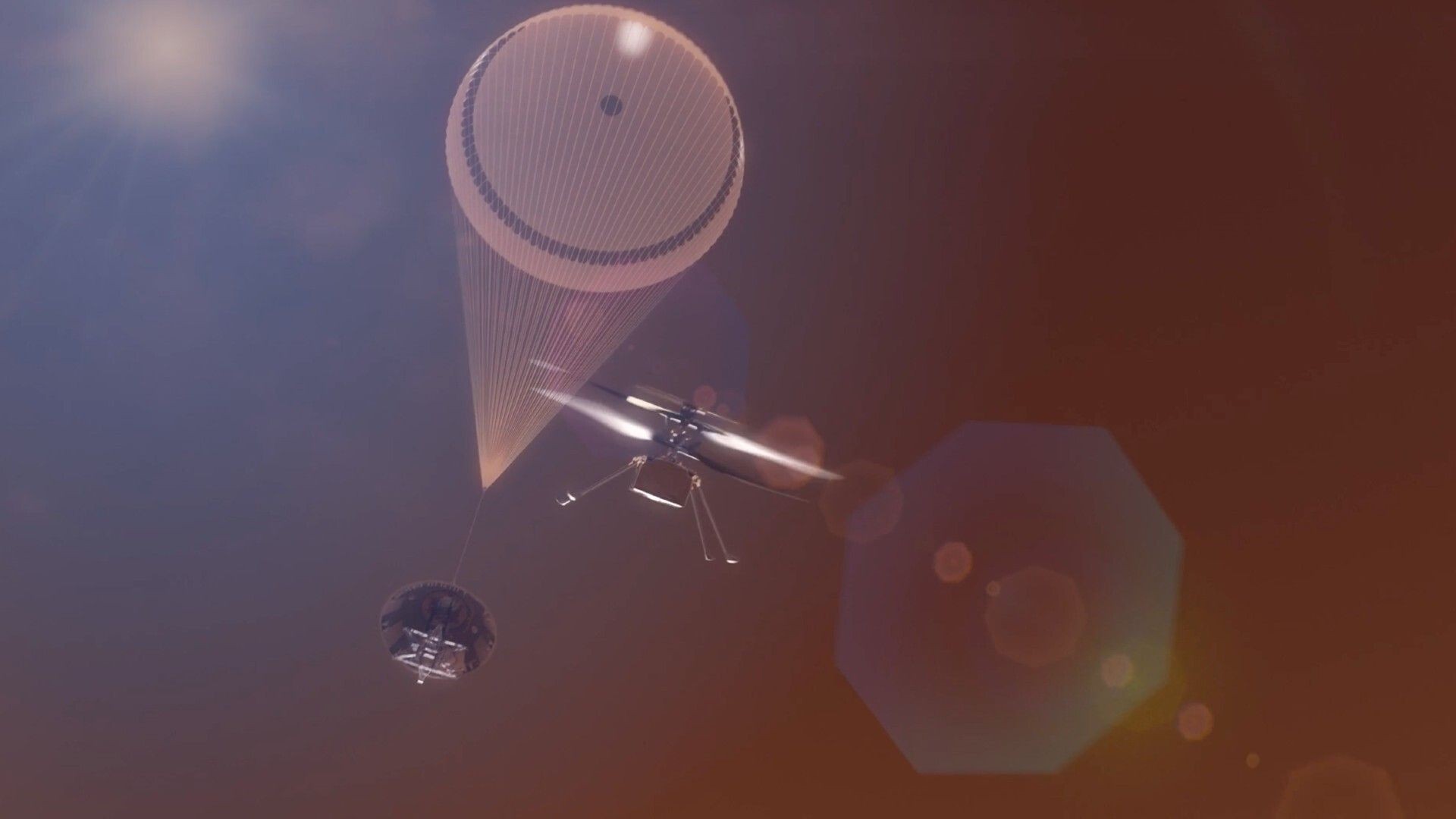
They didn’t stop there. The SkyFall concept needs different muscles. Launched for December 2028, it plans to send three choppers down. For those, they tested a two-bladed design. Longer. Fewer rotations per minute. Same near-sonic tip speed.
“Feasibility in demanding environments.”
Shannah Withrow-Maser calls it a major step. An aerodynamicist, naturally. She’s looking at the math. We’re looking at the horizon. The point is clear: the next vehicles aren’t just flying. They are bridging gaps rovers can’t cross. Orbits stay too far away for details.
So they send helicopters. Heavy ones. Loud ones, presumably, if Mars had air enough to hear them.
The chamber doors are closed now. The data is locked in. We wait for the next launch window. Will it hold? Probably.