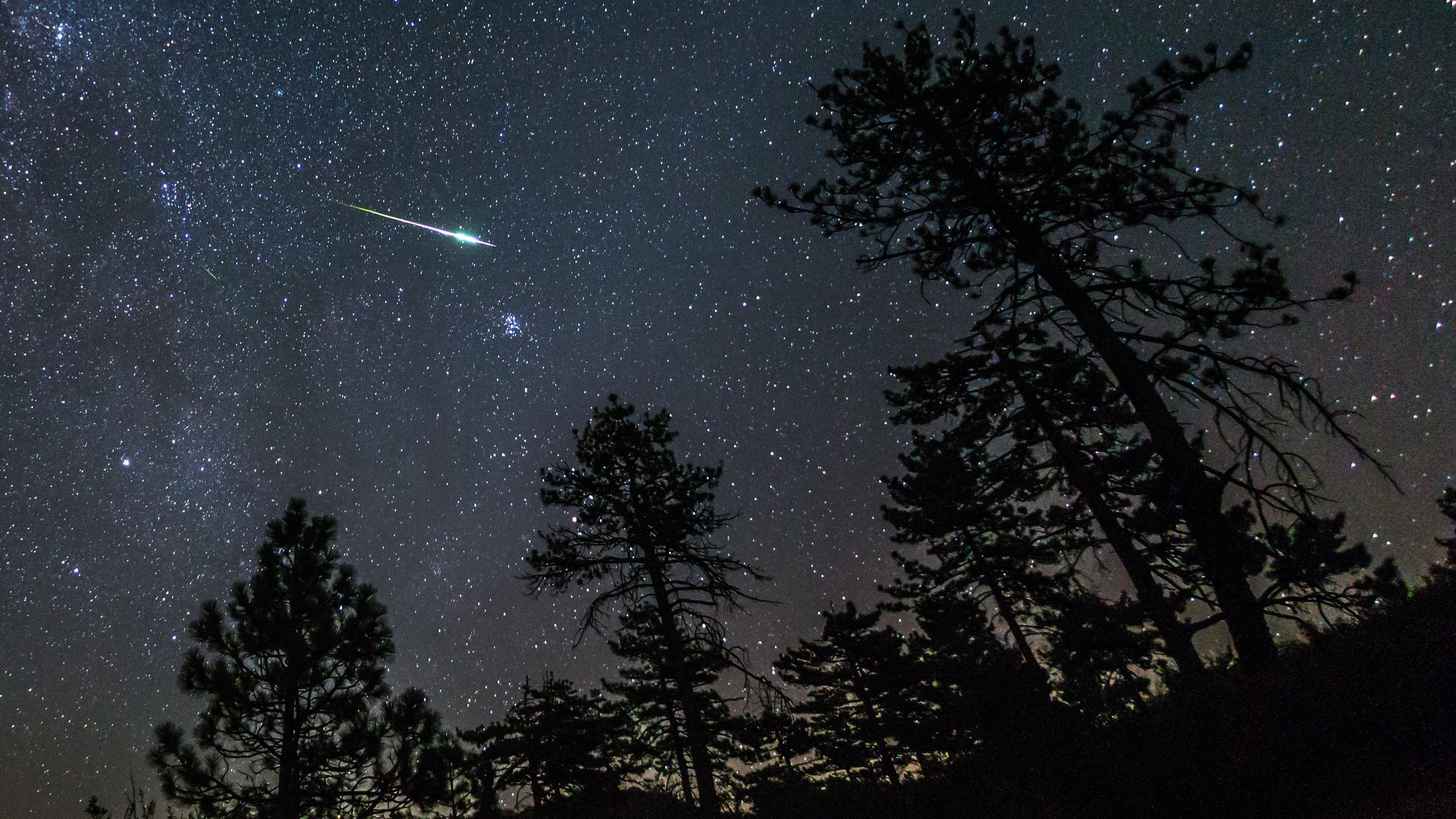
A streak of vivid green tears across the night. Gone in a blink. That split second of joy is the end of a saga that started thousands of years ago.
You just caught your first Perseid meteor.
What you saw was the climax of a journey spanning billions of miles. It began inside Comet 109P/Swift–Tuttle, a 16-mile-wide icy wanderer. This comet travels between the outer and inner solar systems. Heat from the sun triggers activity. Ice turns to gas, bypassing the liquid stage. It escapes into space, dragging debris with it.
Embedded in that ice was a grain of sand. A micrometeoroid.
Its expulsion from the nucleus was violent. Then came silence. Solar forces and planetary gravity tugged at its orbit. It joined millions of other particles shed by Swift–Tuttle. They form a debris stream threading through the inner solar system. This swarm crosses Earth’s path, trailing the comet’s elliptical orbit below the plane of the ecliptic.
Each particle follows a unique path.
Trajectories shift based on ejection force, solar radiation pressure, and gravity. How long did that specific grain drift? Hundreds of years? Thousands? We may never know.
Civilizations rose and fell while it traveled the cold void. Its death, however, was instant.
The meteoroid hit Earth’s atmosphere at 132,003 miles per hour. Friction vaporized the cometary shard in a fraction of a second. That bright green trail? That is the fire of its demise.
You can see this happen repeatedly.
The shower is active now through August 24. The peak hits on the early hours of August 13. Look for the radiant high in the sky then.
Why this year?
The new moon falls on August 12. Dark skies. No moonlight to wash out the meteors. The same alignment brings a total solar eclipse across parts of Spain, Iceland, and Greenland.
If you are in the path of totality, watch for fireballs. A Perseid streaking through the darkness of the eclipse’s shadow might be the highlight of your night.
Need to capture one?
Read our guide to photographing fast meteors. Check our roundup of the best astrophotography gear. Lenses and cameras matter when the sky moves too fast for the naked eye.
The shower will continue. The dark will return. Will you be ready to look up?