It lurks in your body for years. Silent. Waiting.
Then it wakes up.
A new study suggests this dormant trigger might be accelerating Alzheimer’s disease in ways we didn’t expect. Researchers at Cardiff University found that common herpesviruses intensify memory loss in mice genetically predisposed to the condition. But it’s not the virus doing the dirty work directly.
It’s the immune system’s reaction to it.
The Hidden Cost of Viral Reactivation
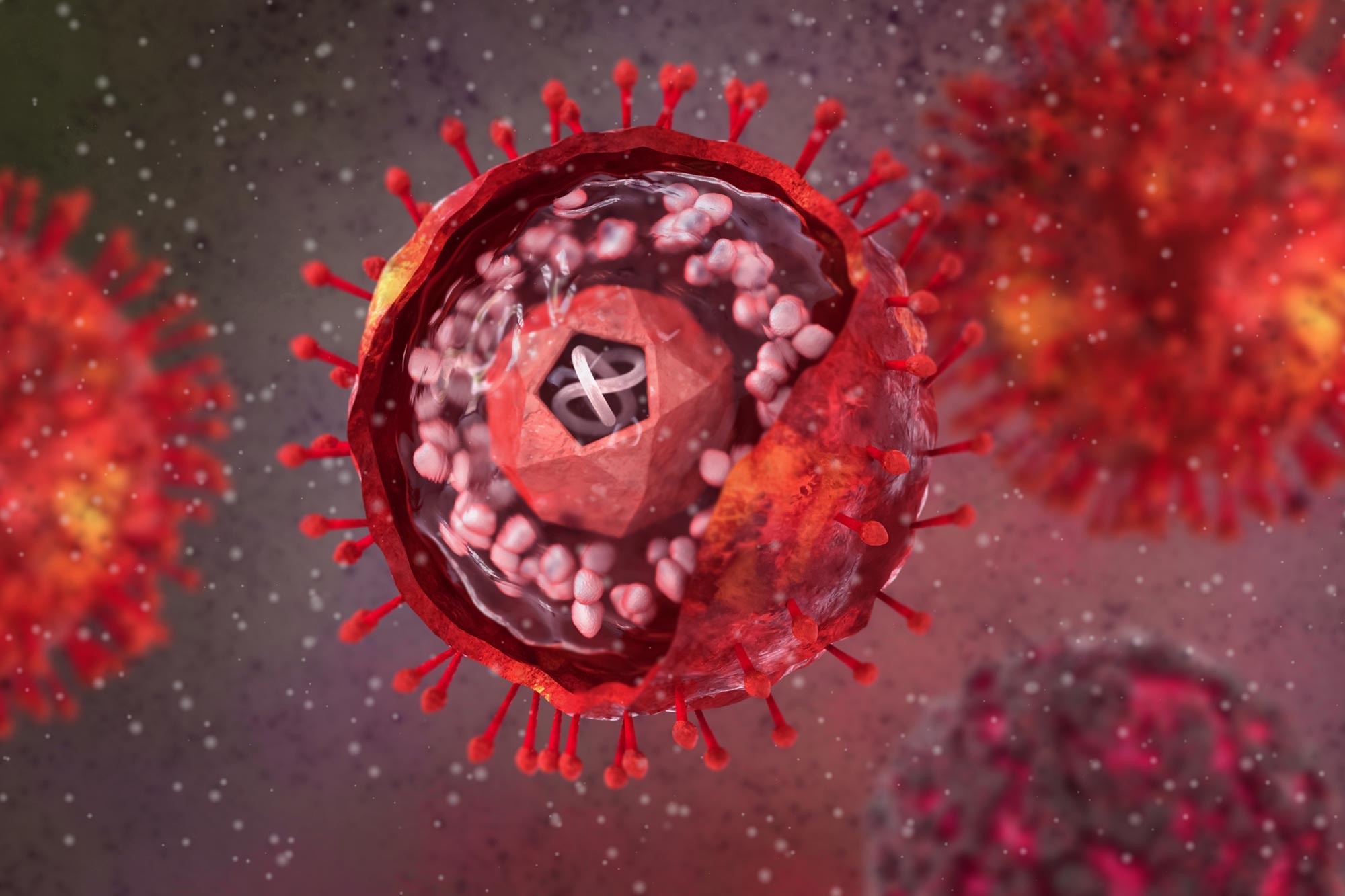
Herpesviruses are everywhere. Cold sores, glandular fever, chickenpox—all members of the same large family. After you recover from the initial infection, the virus doesn’t leave. It hides.
For decades, scientists have suspected a link between these persistent infections and dementia. But correlation isn’t causation. The mechanism remained a black box.
Until now.
The Cardiff team investigated whether that long-term, low-grade immune activity could actually drive the progression of Alzheimer’s. Their hypothesis? The brain isn’t just a victim of the virus. It’s a battleground for the immune response.
T Cells Enter the Brakes (and the Brain)
The researchers used mice carrying genetic changes typical of Alzheimer’s—specifically the 3xTg-AD model. These animals naturally develop amyloid plaques and tau tangles.
The team then introduced murine cytomegalovirus (MCMV). A β-herpesvirus. Known for its ability to persist.
What happened next was telling.
Large numbers of CD8+ T cells—white blood cells designed to hunt infected cells—migrated into the brains of these mice. They weren’t supposed to be there in high concentrations, certainly not during a viral infection in a host already struggling with neurodegeneration.
Once inside, they didn’t just sit on the virus. They accelerated cognitive decline.
“Infections, including chronic human herpesvirUSES… have long been suspected as increasing risk,” said Dr. Mathew Clement. “However, the mechanisms… have remained largely unknown.”
This study fills that gap. The damage is driven by the immune system’s attempt to control the virus, not just the pathogen itself.
Disrupting the Response Fixes the Memory
Here is where the evidence becomes concrete.
Some infected mice were treated with valganciclovir, an antiviral medication. Others received antibodies that stripped away their CD4 and CD8 T cells.
The results? Clear.
Mice whose immune response was dampened—either by drugs or by removing the T cells—performed significantly better on memory tests. They retained their cognitive function far longer than those left to fight the infection alone.
This proves the virus-driven immune response actively speeds up the disease. It’s not a side effect. It’s a contributor.
The hippocampus, the brain region central to learning and memory, suffered cell loss and amyloid accumulation in the untreated, infected groups. But the disruption was mitigated when the T-cell response was blocked.
Why This Changes the Conversation on Prevention
We tend to view Alzheimer’s as purely genetic. A predetermined path toward decline.
This research suggests that environmental factors, specifically infectious diseases, play a massive role.
Dr. Clement emphasized the preventive angle. It’s not just about treating a cold sore today. It’s about the long-term trajectory of brain health decades later.
“By preventing disease through vaccines, antiviral treatments… we are playing an important role in reducing dementia risks for the later parts of our lives.”
The implication is stark: If chronic immune activation in the brain accelerates neurodegeneration, then managing viral loads and immune responses might be as crucial as managing cholesterol or blood pressure.
The Unknowns Remain
The precise chain of events isn’t fully mapped yet. Do the T cells release inflammatory toxins? Do they disrupt blood-brain barrier defenses? The study narrows the focus but doesn’t solve the entire puzzle.
Professor Ian Humphreys noted the uncertainty: “It remains unclear how virus-induced T-cell presence in the brain leads to disease progressions.”
But the direction is clear. The link between herpesviruses and dementia is no longer just theoretical. It’s biological. And it’s active.
Prevention matters. Not just for avoiding a rash or a fever, but for preserving the mind.
We’ll have to wait for the next phase to see if human trials match the mouse models. But the seed is planted.
And once a virus wakes up, the immune system answers. Sometimes, that answer is too loud.