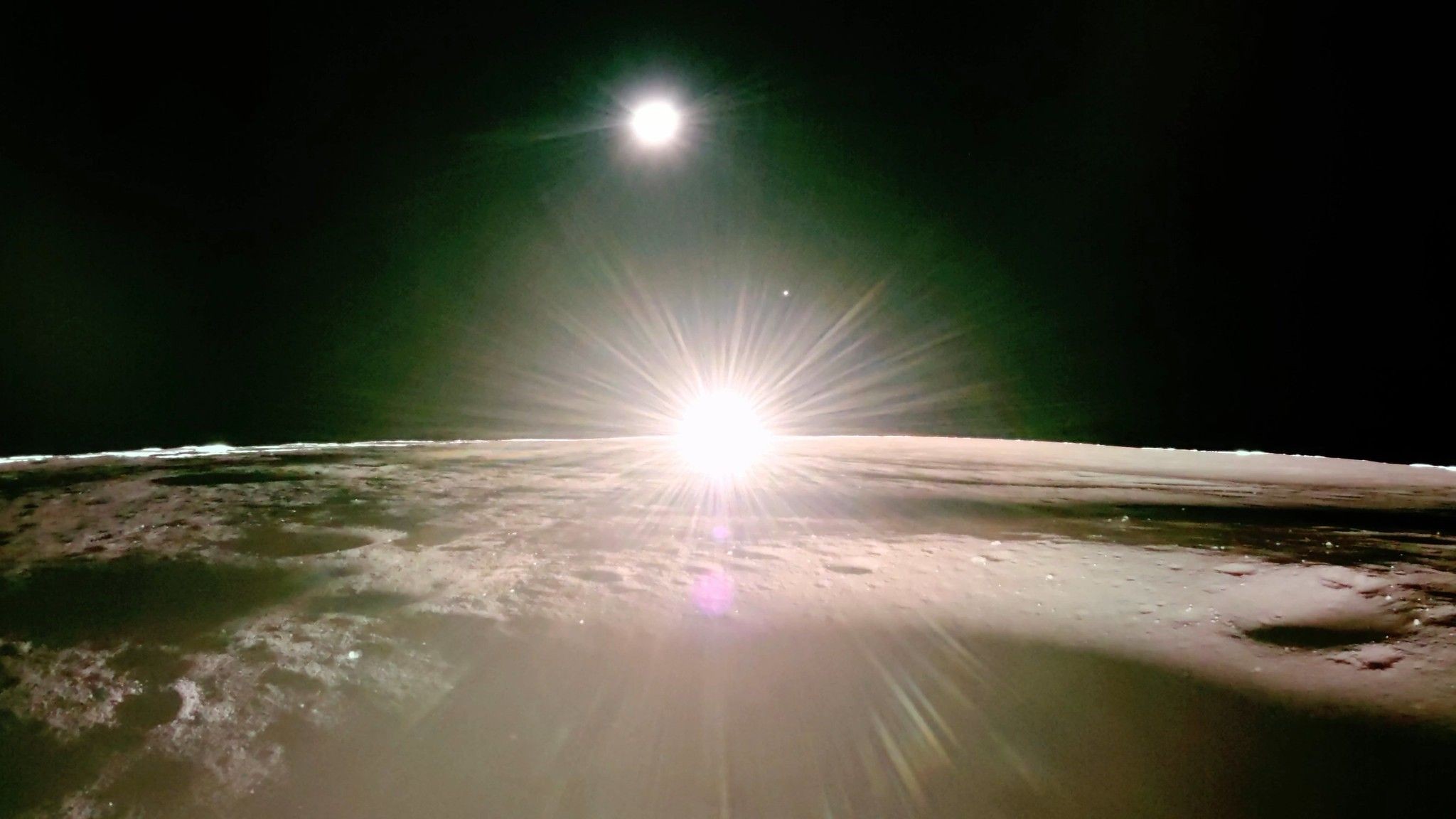
This wasn’t supposed to end this way.
On Wednesday, Aug. 5, at roughly 2:35 a.m. EDT, an upper-stage rocket will hit the lunar surface. It will create a crater about 89 feet wide. The object in question is the discarded Falcon 9 second stage. It has been drifting above Earth for 18 months. Now it is coming down.
Why the sudden change?
The launch happened in January 2025. It carried two private robotic landers. Firefly Aerospace’s Blue Ghost made it safely to the surface. Its sister ship, ispace’s Resilience, crashed on landing. To get those probes so far, the rocket used nearly all its fuel. That left no propellant for the upper stage to deorbit itself.
SpaceX usually burns rocket bodies up in the atmosphere. It’s the standard protocol. But this mission required high-energy transfer. There was simply no fuel left for a controlled re-entry. So the stage was left in a high-Earth orbit. A orbit that crosses the moon’s path.
Benjamin Fernando at Los Alamos National Laboratory studied the trajectory. The rocket was “abandoned” in that crossing orbit. It sat there for six months. Then gravity took over.
How Solar Forces Redirected Space Debris
A SpaceX spokesperson, Julianna Scheiman, addressed the situation. She explained that the initial maneuver ensured safety protocols were met. But it didn’t lock the debris in place. Natural forces did the rest.
“What has happened is, essentially, a mixture solar activity and gravity forces have put it path towards the moon,” Scheiman said during a press conference on Aug. 3.
This isn’t the first time a human-made object has impacted the moon. NASA’s Saturn V third stages struck the lunar surface during multiple Apollo missions. They didn’t aim for it, but they hit. Recently, in March 2022, an unknown rocket body slammed into the side of the moon. It left a strange double crater. Experts still don’t fully agree on what hit it.
But this time, the object is accounted for. And the science community is watching closely.
Testing Lunar Impact Detection Systems
Why do scientists care about a piece of metal hitting the moon?
The impact offers a data point. It helps test pipelines for detecting flashes from impact events. These flashes can be tracked seismically. Understanding these events is critical for future safety.
“Provi des an opportunity to test pipelines… and to better understand the multi-modal hazards posed to future lunar infrastructure,” Fernando wrote.
That infrastructure is coming. NASA’s Artemis program aims to build a base near the lunar south pole. They plan to keep astronauts there long-term. Space debris poses a real threat. Not just from rocks, but from human-made junk.
The impact will occur on the sunlit side. Most people won’t see it. The ejecta plume might be visible to those with strong telescopes. But the data gathered from the impact itself matters more than the visual.
Future Disposal of High-Energy Missions
SpaceX is aware of the issue. Scheiman noted that the company is working with NASA. They are looking for better disposal methods.
“What is the best future disposal path for hi gh-energy missions in the sun-Earth-moon system?” she asked.
High-energy missions are hard to manage. You can’t just drop them back to Earth. You need to push them away. Far away. Into a stable orbit that won’t intersect with lunar operations.
For now, the Falcon 9 stage goes where it will. It will join the list of human-made scars on the moon. A small one this time. But it highlights a growing problem.
We are putting more stuff in space. And it stays there longer. How we manage that junk determines how safe the moon will be. And eventually, how safe our return there will be.
The rocket falls. The crater forms. The data streams in. And engineers start designing a better way to get rid of it next time.