It’s not the size that matters. It’s the movement.
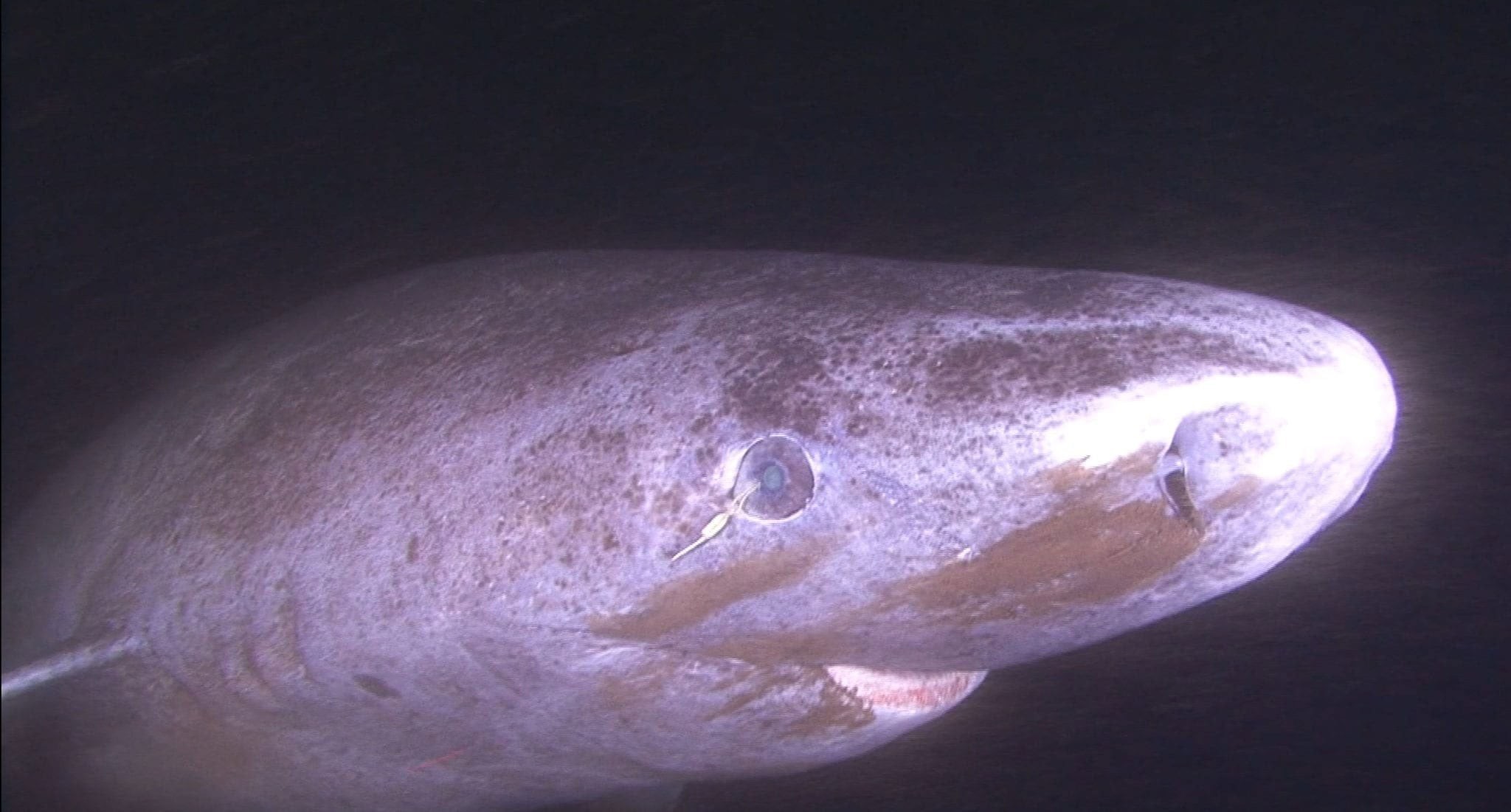
In a dim office at UC Irvine, Dorota Skowronska-Chowayska stares at a screen. A Greenland shark drifts through Arctic murk. Slowly. Deliberately. It turns its eye. Toward the light.
“You see it track,” she says. Fascinating.
This is not a video from a documentary. This is data. And it contradicts centuries of assumption. Greenland sharks are the oldest known vertebrates on Earth. Some survive 400 years. They are thick, gray, ugly in a functional way. Their eyes are often covered in parasites. Cloudy. Lifeless looking.
Science said they were blind. Functional eyes would be wasted in that dark water. Why evolve them?
Skowronska-Chowaysca doesn’t think that. Her new paper, published in Nature Communications, suggests the opposite. These sharks aren’t blind. Their DNA fixes itself. Again and again. Retina remains pristine. Even after four centuries.
The Parasite Red Herring
Where did the blind shark idea come from? A 2016 Science paper by John Fleng Steffenen. He noted parasites clinging to shark eyeballs. It made sense, logically. Parasites block sight. Blind shark. Checkmate.
But Skowronska-Chowawsca watched more footage. Lots of it. She noticed something others missed. The sharks weren’t just staring into the void. They were moving their pupils. Tracking photons in the dark.
“One takeaway,” she explains, “was that they have parasites. Impairment.”
Yet evolution doesn’t keep useless organs. If you don’t need sight, you lose it. Or you ignore it. This animal used its eyes. That changes everything. The question shifted from why are their eyes broken? to how do they stay fixed?
A Baseball on Dry Ice
Getting answers meant getting tissue. Rare tissue.
Between 2020 and Disko Island’s coast, off Greenland’s rugged shore, scientists hauled up sharks on long lines. Steffensen worked with Peter G Bushnell and Richard W Brill. They dissected eyes. Preserved them. Fixed them in chemical baths.
Then the samples arrived in Orange County. Emily Tom opened the box. She’s a Ph.D. student. Used to mice. Tiny specimens. Papaya seeds of eyeballs.
Inside the dry ice? A giant.
“I opened the package,” Tom recalls, laughing now. “A 200-year-old eyebell stared back.”
Baseball sized. Wet. Cold. It smelled like a fish market. Bad fish markets.
Timing is everything with this stuff. Thaw it too fast? Degradation hits. You lose the history inside the cells. Tom scaled her techniques up. No easy transition from mouse to monster. But she’s in a hands-on lab. Skowronska-Chowaszyca mentors close. Really close.
Tom ran histology. Checked markers. Looked for cell death. None found. Not even a scratch. Instead? Rhodopsin. The protein that catches dim light. Still active. Tuned to blue. Just like a fresh eye.
“We can learn so much,” Tom says, “about vision and longevity.”
It’s rare work. Few study shark eyes. Fewer care. But the findings matter.
Human Medicine?
Here is the real hook. We get old. Our eyes fail. Macular degeneration. Glaucoma. Cell death stacks up like unpaid bills. The Greenland shark? No receipt for aging damage.
Why? DNA repair mechanisms. Strong ones.
If scientists understand how this shark protects its retina for centuries, maybe humans can borrow the trick. Maybe. It’s a long shot. Biology rarely copies cleanly. But the path is clearer now. The mystery has a key.
Funding is shaky. Federal support hangs by threads. Skowronska-Choawsky knows the risk. But she stays optimistic.
“We will prevail.”
She likes the discovery phase best. Being first. Seeing what no one has seen before. Sharing the joy with students like Tom, who thawed a prehistoric eye in their fume hood.
What does a 400-year-old shark see that we cannot? Maybe just light. But light, after all, is enough to navigate the dark.
Is there more light down there than we think?
Reference: “The visual system of the longest living vertebrate, the Greenland shark,” Nature Communications, Jan 2026. DOI: 10.1018/s1267-25-27679-9