The Muppets have a weird and wonderful place in television history. Early broadcasts featured ventriloquists, marionettes and hand puppets. Animation eventually captured most of the market. The Muppets keep the fire burning. They just don’t make it. they are comfortable.
We look at the icon. Legend. People who make things bigger.
Kukla, Fran, Olly
This program was broadcast on the radio in 1947. It started as a children’s program. This is changing fast. I prefer adults. This humor works on two levels. Character development is faithful.
Kukura leads the team. he looks like a clown. He is not one of them. Ollie is Oliver J. Long. He only has one tooth. he is in a bad mood. Fran is not a doll. She is the older sister. He ruled the chaos.
There are others in the cast. Mrs. Ogrepus was a diva. Witch Beulah was there too. Fletcher rabbits belong to this group.
This show proved that puppets could attract audiences at their best.
Charlie McCarthy
Edgar Bergen got a star. His puppet is the punchline. Charlie McCarthy is more than just a prop. He is the main performer.
Bergen plays a straight man. Charlie did the dirty work. he jokes. He insulted guests. he broke the rules. Radio programming began in the 1930s. Later, TV channels also reported on the matter. It worked. People love this dynamic.
Charlie was ingrained in the culture. He showed up at the party. he met the president. He became the first Muppet to have a star on the Hollywood Walk of Fame.
Bergen died in 1978. Charlie is still in the archives. But the momentum is still there. An idiot to talk back. Now this is a metaphor. That’s where it starts.
Other celebrities
The list doesn’t end with Charlie. It’s not just Kukla. There are many other names. More traditional behavior.
Fred Rogers had a doll. Sesame Street was a game changer. Jim Henson globalized them. But the roots are old. It’s older.
This tradition still exists today. It has changed. I adapt. But the core remains. A man with a shell. Tell the world.
Why do we still pay attention? Is it nostalgia? Or the wondrous valley? The line between meat and dough becomes blurred. This is disturbing. It’s fascinating.
We are moving into modern times. But first we have to respect the classics. The people who paved the way. Someone who will teach you to smile with a wooden face.
The next post will be published soon. It’s a familiar name. You may not know the original story.
it’s complicated. It’s very messy. This is television.
And this is just the beginning.
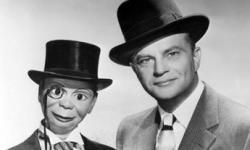
Edgar Bergen doesn’t just talk to dolls. He lived with one person. Charlie McCarthy was not a prop. he was a partner. Bergen bought the wooden figure as a teenager in the late 1910s. They lived together until Bergen’s death in 1978. That’s 60 years together.
In 1936, they made a breakthrough. A visit to Rudy Vallee’s radio show changed everything. Suddenly they have their own plans. It lasted until 1956. The top hat is not visible to the public. I couldn’t see the cloak. They can’t see through a monocle. Even worse, they didn’t see Bergen’s lips move. The fans didn’t care. The illusion remained.
This works because Charlie is funny. And it’s dangerous. At a time when polite conversation was the norm, Charlie’s conversations with Mae West and W.C Fields were full of insolence. In 1938, industry took notice. Bergen won the prestigious Oscar. It was a small wooden statue. perfection.
Why ventriloquism works in broadcasting
The magic of Edgar Bergen and Charlie McCarthy is based entirely on auditory cues. If there is no visual confirmation, the viewer will suspend disbelief. They heard different voices. They heard the joke. They did not find any technical faults. This is a special skill. This differs from puppetry, which requires visual participation.
Quick Business Dynasty
Fast forward to the 1950s. The media has moved to television. The brand is Nestlé Quik. Stars are puppets. Danny O’Day is a dog. Farfel is your furry, long-eared companion. Ventriloquist Jimmy Nelson took it.
Advertising jingles are etched in memory. Danny sang:
“N-E-S-T-L-E-S, Nestlé products are the best…”
Farfield interrupted.
“Jock returns!”
Simple. Effective. They joined the Texaco Star Theater with Milton Berle and achieved national fame. This triangle became famous. People recognize voices before they recognize faces. This is how brands worked before the advent of social media. repeat. The melody is catchy. A memorable character.
Topo Jillo: The mouse that conquered the world
Created by artist Maria Perego in 1958, Topo Gigio is unlike any other. He is not a ventriloquist’s tool. he is a star Friendly rat with big ears. In the early 1960s, he appeared in an Italian children’s program.
There is not enough recognition in Japan. He needs global influence. It was in 1963. He appeared on The Ed Sullivan Show. The American public responded immediately. He became a worldwide sensation.
Today, topo gillo is still part of Italian pop culture. He still performs at festivals. He hasn’t retired yet. He still has ears.
Hello Doody: Save the Muppets on Saturday morning
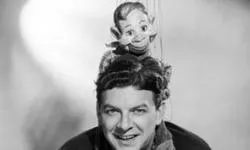
If Charlie McCarthy owned broadcast television, Hody Doody owned the screen. He made his debut on NBC in 1947. The program is the “Howdy Doody Show.” This is more than just a program. It turned out to be
8: Bert and Ernie
You might think they’re just two roommates bickering over a hose or a game of chess, but Bert and Ernie are perhaps the most famous pair of puppets in history. They have been at the heart of Sesame Street since the pilot episode that aired in 1969.
The dynamics are simple but effective. Bert is the rigid, rule-abiding straight man. He enjoys collecting rubber ducks and keeping his apartment tidy. Ernie is a chaotic and imaginative foil. He turned ordinary objects into crazy inventions without give a damn about Bert’s need for structure.
Their interaction has become cultural shorthand for friendship. Or so we tell ourselves.
The Great Name Controversy
Fans and critics have debated the origin of their names for decades. The most persistent theory claims that it is named after Bert Lahr and Ernie Kovacs. The logic? They were popular comedians in the late 1950s and early 1960s. However, the puppeteer behind the magic, Jim Henson, flatly denied this. He said he picked the names randomly.
“I didn’t have any particular meaning in mind. It’s just a name I like.”
This confusion may be due to the fact that “Bert” and “Ernie” are very common names in the English-speaking world. Despite the internet’s best efforts to prove otherwise, there is no smoking gun linking them to the actors.
More Than Just Puppets
Bert and Ernie are not just static characters. They are fully realized humanoids. Unlike the hand puppets and muppets you might see on other shows, they are full-bodied. This allows for complex physical comedy. We see Ernie slipping on a banana peel and Ernie throwing water balloons while Bert tries to read a newspaper.
Their stories tackle real issues for kids. Friendship. Sharing. Dealing with disappointment. They also explore the strange edges of childhood. Bert’s obsession with dust collection. Ernie’s belief that he can fly. These quirks make them relatable. We all have weird obsessions.
The “gay subtext” controversy
You can’t talk about these two things without addressing the elephant in the room. Fans have highlighted their close living arrangement over the years. They share an apartment. They share a bed. They are inseparable.
The creators have always maintained that they are just best friends. Jim Henson calls it the “roommate situation.” He rejected the idea that they were anything more.
“They are two best friends who share a home. That’s it.”
However, the culture moves faster than creators intend. Over time, interpretations have changed. For many in the LGBTQ+ community, LGBTQ became an early and nuanced term for a same-sex relationship. Not necessarily in a sexual sense. But in a domestic, committed way.
This sparked a massive backlash in the late 1960s and 1970s. Some conservative groups see them as a threat. The producers of the show had to defend their characters constantly. They stayed true to the script. Just friends.
Today, this debate has subsided. The characters exist in a gray area. They are the best friends of millions of people. For others, they are icons of a different kind of love. Both interpretations can exist at the same time.
Why They Endure
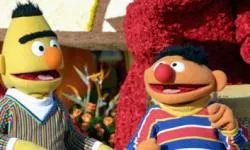
Bert and Ernie have shared a bathroom since “Sesame Street” premiered in 1969. Created by Jim Henson, these two are the definition of an odd couple. Ernie is naughty and naive. Bart is reasonable and realistic. While this dynamic often annoyed Bart, the audience loved it.
The leaders have long maintained that they are not a same-sex couple. Just roommates. Sometimes fans have different opinions. But the fact remains. Ernie released “Rubber Ducky” in 1970, which reached the top 40 on the Billboard charts. This is a verified hit.
Triumph the Insult Comic Dog’s Cigar-Smoking Rant
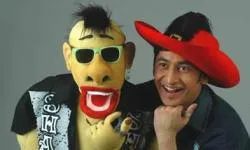
Then there is Triumph. He looks like a rottweiler. He is a rubber puppet. He appeared on “The Late Show” with Conan O’Brien. Triumph speaks with an Eastern European accent. He puffs on a cigar.
His slogan was spot on. He said this to deny praise. “You’re the best… for me to poop on!” It’s cruel. This show started in 1997. The skit is about the Westminster Kennel Club’s dog show. From then on, he started insulting guests. Don Rickles would be proud.
Kermit the Frog’s Quiet Leadership
The Green Icon of Television
Kermit has been the face of the Muppets for decades. He is a frog. He is calm. He is usually the straight man in the midst of chaos. Jim Henson played him. He made his acting debut in ‘Sam & Friends’. And then there’s Sesame Street. Then there are movies. He is the anchor.
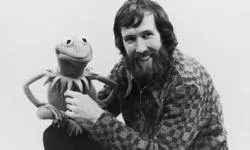
Jim Henson didn’t start out as a frog. In 1955, the legendary puppeteer conjured a lizard-like creature (and a thrift store) out of thin air. An early Kermit was a Frankenstein’s monster of art. Two ping-pong balls act as eyes. 放棄がれますの皮のコート。 he’s ugly He’s a very strange person. He’s not a frog yet.
It took 10 years to implement the change. By 1969, Kermit had escaped his lizard past and became the amphibian we know today. That same year, he landed a regular role on “Sesame Street.” This role made him the talk of tearooms across America. This made him instantly famous.
Kermit didn’t stop there. He became one of the most popular dolls in television history. His title was “The Muppet Show.” He appeared in films such as “The Muppets Take Manhattan”. He recorded classics like “Bein’ Green” and “The Rainbow Connection.” He also made a guest appearance on The Tonight Show. 沼地からますますめくまて来たんと、カーミー.
For more on TV history, check out The 10 Longest TV Shows.
Participant:
Helen Davis, Marjorie Dorfman, Mary Fons, Deborah Hawkins, Martin Hintz, Lynn Lundgren, David Preece, Julia Clark Robinson, Paul Seaborn, Heidi Stevens, Steve Tunison