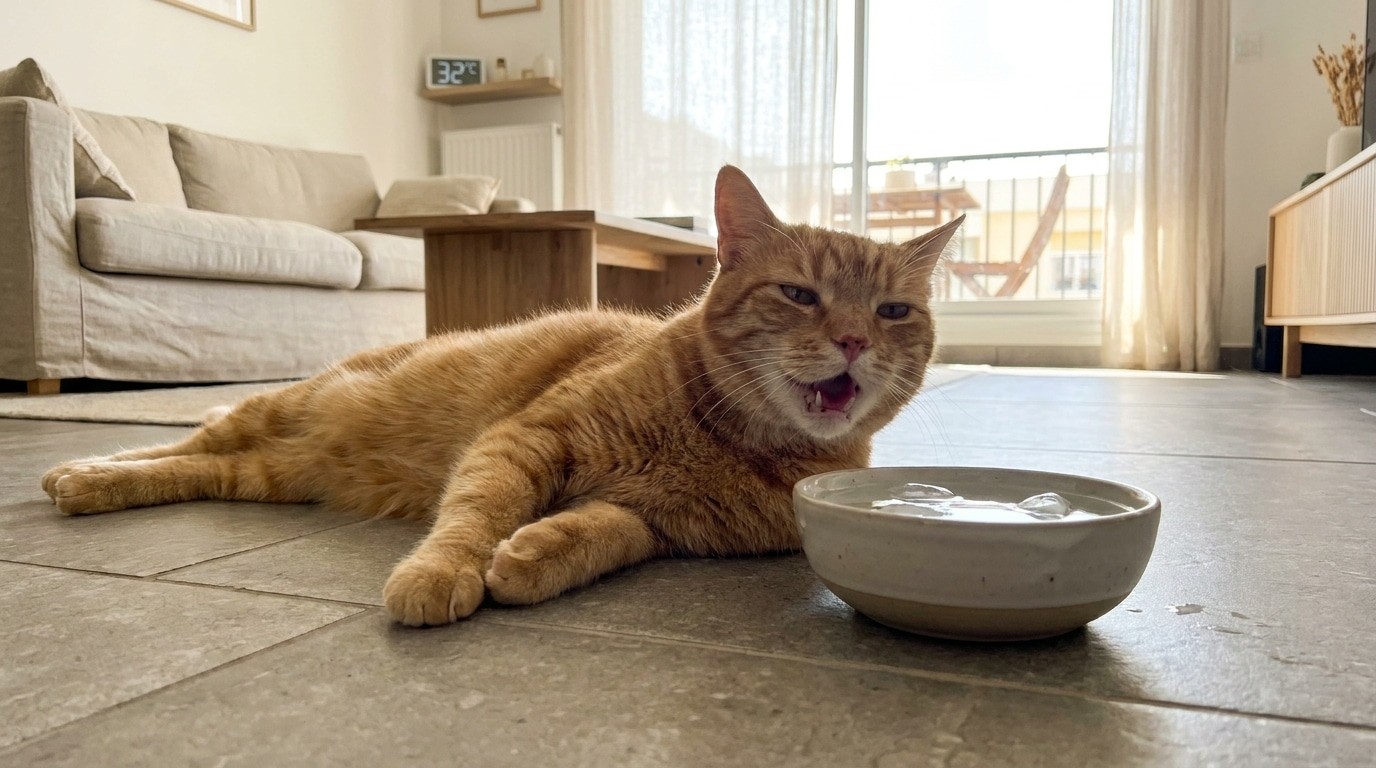
We love the aesthetic. A cat stretching lazily on a sun-drenched rug. It’s the image of summer peace. But here is the problem. You close the windows to keep the noise out or maybe just because you’re leaving for work. Inside, the apartment stops being a home and starts becoming an oven. The cat, master of the nap, just sits there. He absorbs the heat in silence. You probably don’t even check the thermostat.
This isn’t just uncomfortable. It’s dangerous. Cats trapped in overheated rooms without proper care are flirting with disaster. We often ignore the thermometer because we’re distracted by our own lives. There is a specific temperature limit inside a house that you should never cross. There are also simple emergency steps to take if you realize your pet is suffering. Ignoring them is negligence disguised as care.
Why 30°C indoors is a critical danger zone for cats
People think cats come from the desert. They assume these animals handle heat like tanks. This is a dangerous myth. When indoor temperatures hit 30°C, the situation shifts from warm to hazardous. At this point, the air is too dense for the cat to regulate its body temperature naturally.
Cats don’t sweat like humans do. They lack effective sweat glands across their bodies. Their cooling mechanisms are limited. They might lick their fur compulsively to use evaporation. They might hunt for a draft that doesn’t exist because the house is empty. Leaving a cat alone in a south-facing apartment without precautions is reckless. The heat builds up. The animal has nowhere to go.
Create cool zones with fresh water and ventilation
You don’t need an AC unit blasting like a freezer. You need logic. Hydration is the first line of defense against overheating. Throw away the old bowl of warm, stagnant water sitting in a corner. Be proactive.
Create strategic refuges. Close the blinds during the hottest hours to block direct sunlight, but ensure air can still move safely. Here is what you need to do right now:
- Place multiple water bowls with fresh, cool water. Change it morning and night.
- Give the cat access to rooms with cool surfaces. Tile floors in bathrooms or kitchens work well.
- Set up shaded, ventilated areas. Under a sturdy chair or on a lower shelf works. Keep these spots away from hot windows.
- Stop intense play sessions when it is hottest outside.
Spotting heatstroke signs: panting, lethargy, and red gums
Precautions help. But accidents still happen. Kittens, older cats, and flat-faced breeds like Persians are at higher risk. You need to know what distress looks like.
If your cat is panting with its mouth open, it is not trying to play. It is struggling to breathe. Heatstroke shows up through three main signs:
- Heavy panting.
- Sudden lethargy. The cat lies on the floor and won’t move.
- Bright red gums.
If you see these, do not improvise. Wet the cat’s fur with a cool towel. Do not force water down its throat. Offer water nearby. Then go to the vet. Immediately.
Watching your cat’s behavior and hydration levels when the mercury rises is not optional. It is the bare minimum of ownership. The heat is suffocating. Is the air near the floor really breathable enough for the animal that spends most of its day there?