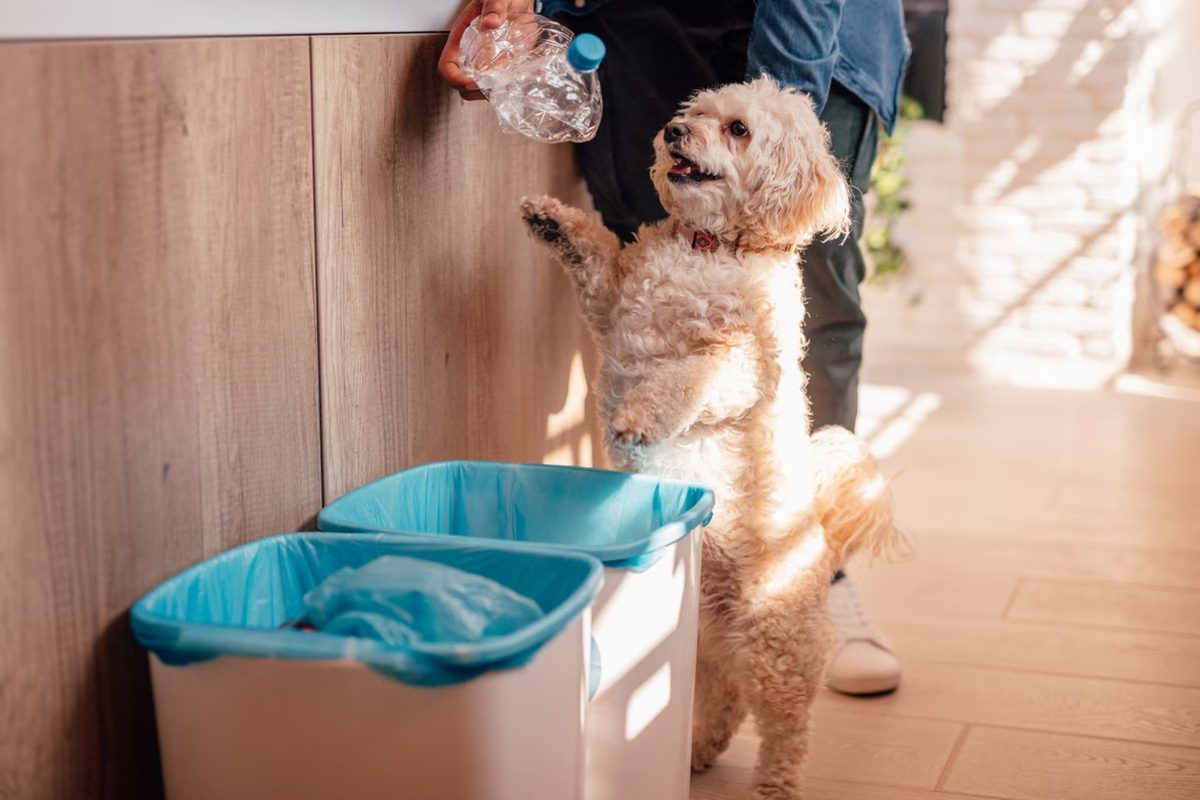
A dog frantically digging through an overturned trash can looks annoying. It is messy. It is chaotic. But this behavior reveals something fascinating about the dog’s nature. This search for smelly treasures in human waste combines ancient instinct with the abilities that border on superhuman. By understanding why our four-legged companions are drawn to our trash cans, we can manage this behavior without fighting their biology.
The Dog’s Nose: A Sensory Superpower
A dog’s nose is not just a nose. It is a powerful biological tool. Humans have about 6 million olfactory receptors. Dogs have roughly 300 million.
This difference changes everything.
Dogs perceive the world primarily through smell. What looks like a simple bag of rotting food to us is an irresistible feast of smells to them. They do not just smell “trash.” They smell the specific history of the items inside. They smell the grease on that pizza box. They smell the dried residue on that napkin.
This olfactory power allows dogs to detect traces of food that we can’t even detect. We use this ability to train dogs to find drugs, explosives or missing people. But the same sensitivity naturally directs them towards concentrated odor sources. Like the kitchen trash can.
Why the trash can wins
Even a used tissue or paper towel holds an olfactive fingerprint for a dog. It retains the scent of the food it wiped up. Your pet’s nose picks up these powerful signals. They are impossible to ignore.
The trash can is not a storage unit to a dog. It is a treasure trove of sensory information.
This is not bad behavior. It is good biology working in the wrong context. The dog is following a trail that is bright and loud to their senses. It’s not a question of whether they’re investigating the trash. This is how we make the trash can less interesting than the rest of the house.
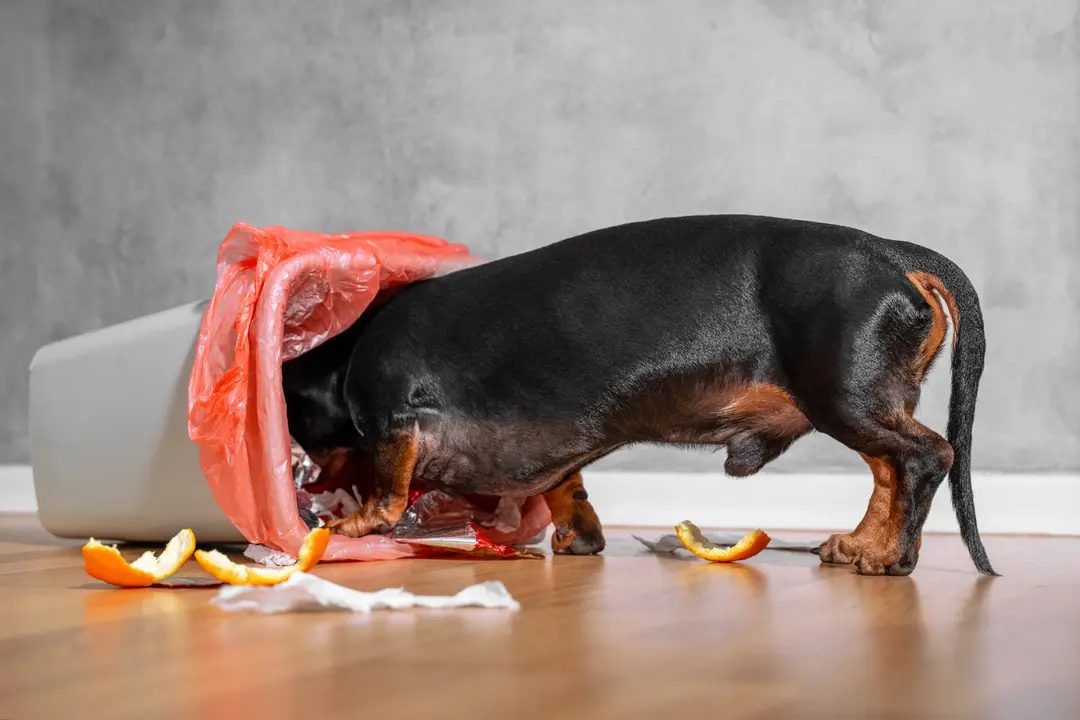
Your dog isn’t just knocking over the trash because he’s being mischievous. Or bored. Or even hungry. They do exactly what their wolf ancestors did to survive.
It goes back over 10,000 years. When early canids thrived near human campsites, those that ate scraps left by hunter-gatherers lived longer. They reproduced more. They passed on the genes that made them good scavengers. Even if your golden retriever is now fed dry food twice a day, this genetic drive is still active. It’s hardwired.
When you come home, littering the floor in the kitchen is not a sign of bad behavior. You are looking at evolutionary success.
The Mental Workout Behind the Mess
Scavenging isn’t just about calories. It’s all about stimulation.
Digging through garbage is a complicated puzzle for a dog. It engages their nose, their brain, and their paws. They have to sniff out hidden items. You have to figure out how to open the bag or the container will fall over. You have to deal with different textures. And when they finally find a crust of bread or a bone? Instant reward. Dopamine hit.
This is why enrichment toys exist. Snuffle mats and puzzle feeders aren’t just gimmicks. They mimic the natural foraging process in a safe way. They give the dog the thrill of the hunt without the risk of eating rotten cheese.
If you ignore this mental need, the dog will find its own outlets. Usually these outlets are your trash.
The hidden dangers of the trash can
Natural instinct does not mean safety.
Trash cans are landmines for dogs. What looks like a fun treasure hunt for your pet could be a trip to the emergency room.
The risks are specific and serious:
- Sharp bones. Chicken bones splinter. They can puncture the digestive tract.
- Plastic. Swallowing packaging or bags can cause fatal blockages.
- Toxins. Cleaning products, alcohol or chocolate in the trash are deadly.
- ** Spoiled food.** Eating moldy or rotten meat can cause vomiting, diarrhea or severe illness. Veterinarians sometimes call this “trash can syndrome.”
Just scolding the dog is not enough. The environment must change.
Securing the kitchen
Willpower cannot be trusted. Dogs are opportunists. If the lid is light, it will rise. If the smell is strong, they will dig.
To protect your dog and your mental health, you need physical barriers.
Invest in trash cans with locking lids or heavy weights. Even better, put the trash can in a cabinet with a child-proof latch. Keep the kitchen door closed when you are not there. These are simple solutions, but they work.
Also change your routine. Don’t leave food scraps lying around for days. Empty the trash can regularly. Remove the reward before the dog can respond to it.
But don’t just punish digging. Redirect it.
Give your dog a snuffle mat. Hide the treats in the puzzle toy. Make them work for their food. Meet instinct, not just behavior.
Understanding this drive changes everything. That’s not defiance. It’s a deeply ingrained survival strategy. By offering safe options and securing the hazards, you respect your dog’s nature and keep it alive.
The bin stays closed. The dog stays happy. And you stay out of the vet’s waiting room.
However, the next time you hear that familiar rummaging sound at night, remember: your dog is just a very good dog. Might not be very smart when it comes to kitchen safety.