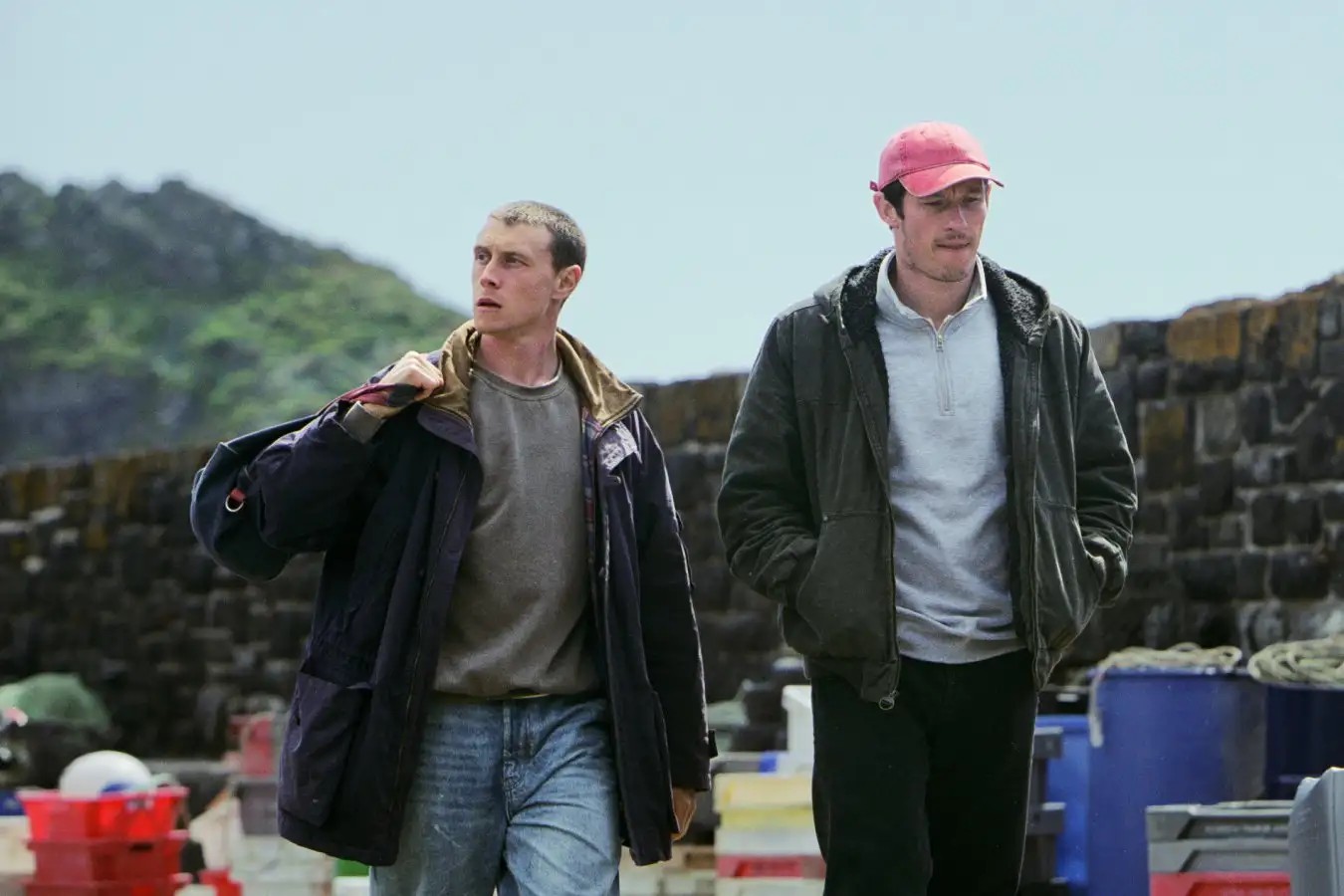
Director Mark Jenkin has established himself as a master of the “Cornish milieu,” using the rugged, isolated landscapes of Cornwall to explore themes of isolation, memory, and decay. His latest film, Rose of Nevada , marks the conclusion of his acclaimed Cornish trilogy, offering a haunting, metaphysical exploration of time and grief.
A Ghost Story Set in a Ghost Town
The film is set in a desolate fishing village that has been stripped of its former vitality. Once a bustling hub of industry, the town is now a collection of empty pubs and abandoned moorings—a place where the absence of people is as palpable as the presence of the sea.
The narrative is anchored by a historical tragedy: thirty years prior, a fishing vessel vanished at sea, leaving behind a community permanently scarred by loss. The mystery of this disappearance provides the film’s supernatural engine when, unexpectedly, the vessel—the cherry-red Rose of Nevada —reappears in the harbor.
The Mechanics of a Temporal Loop
The arrival of the boat brings a flicker of hope to the local men, but it comes with a disorienting price. The film follows three central figures:
* Nick (George MacKay): A struggling father and husband desperate to provide for his family.
* Liam (Callum Turner): An itinerant worker looking for stability.
* Murgey (Francis Magee): A grizzled, veteran skipper who seems as much a part of the mystery as the boat itself.
As the men head out to sea to secure a catch that could save the village, they encounter a reality-bending phenomenon. Upon returning to land, they find themselves not in their own time, but 30 years in the past.
The tragedy deepens as identity blurs: Nick and Liam are mistaken for locals from the previous era—men whose fates were tied to the very disappearance they are now experiencing. This creates a profound sense of “unmooring,” where the characters are caught between the lives they know and a past they do not belong to.
Themes of Grief and Routine
While the premise leans into the supernatural, the film finds its emotional core in the human reaction to chaos. George MacKay delivers a standout, heartbreaking performance, particularly in scenes where Nick realizes he is a stranger in his own home, being welcomed by people who believe he is a long-dead son.
Interestingly, the film uses the rhythm of labor as a grounding force. Amidst the temporal displacement, the repetitive, physical act of fishing—the hauling of nets and the shuddering of the engine—serves as the only thing that remains consistent and “real” for the characters.
The Conclusion of a Trilogy
Rose of Nevada serves as the final chapter in Jenkin’s stylistic evolution:
1. Bait : A grounded drama regarding the impact of tourism on coastal communities.
2. Enys Men : A surrealist exploration of isolation on a remote island.
3. Rose of Nevada : A culmination that blends the social realism of the first with the psychological surrealism of the second.
Notably, this film marks a technical transition for Jenkin. Having used a hand-cranked Bolex camera for his previous works, the end of his trilogy coincides with the mechanical failure of that specific equipment, signaling the close of a distinct era in his filmmaking career.
Rose of Nevada is more than a genre film; it is a haunting meditation on how the past continues to haunt the present, and how we attempt to find footing when time itself becomes unreliable.
If you enjoyed George MacKay’s performance here, consider watching Femme, a high-tension erotic thriller where he delivers another powerful, complex turn.