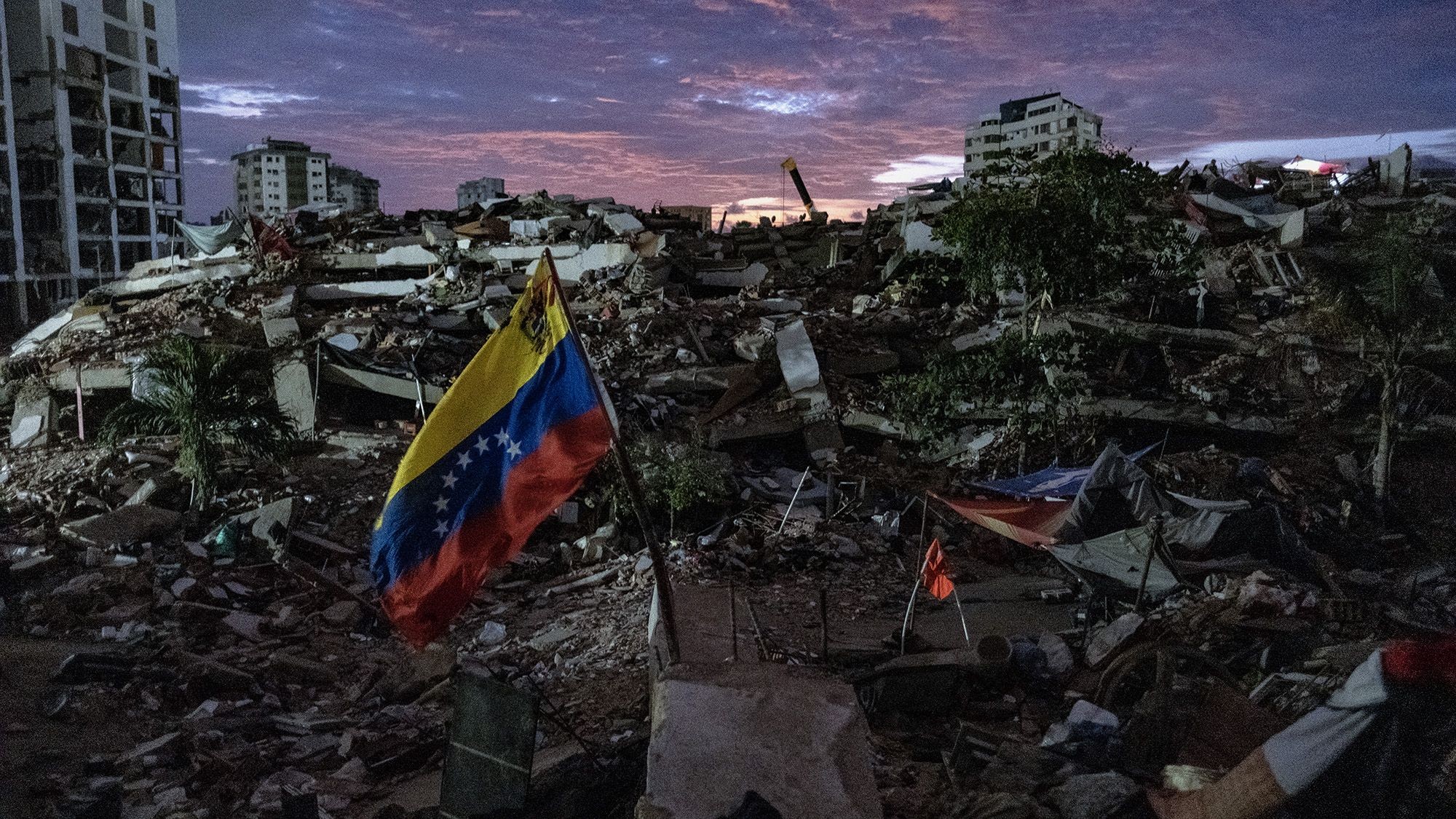
Two earthquakes. Thirty-nine seconds apart. That is all the warning Venezuela got on June 24. The first hit near San Felipe (M7.2). The second struck closer to Yumare (M7.5). The death toll is in the thousands. The injuries, thousands more. But while the world focuses on the rubble, seismologists are watching closely.
Why? Because this wasn’t just a disaster. It was data. A rare “earthquake doublet” that might explain how massive faults actually break.
Usually, big quakes are followed by small aftershocks. Standard procedure. But sometimes stress shifts. It spills over to a neighboring fault—or further down the same line. That shift triggers another monster quake.
It doesn’t happen often. We’ve seen it before though. Turkey in 2023. Pakistan in 1997. Now Venezuela.
The takeaway? We are probably wrong about how we map danger in places like California. Most seismic models treat faults like lonely roads. But in regions where multiple plates meet—Venezuela, the San Andreas zone—those roads connect. Ignoring the intersection makes the models blind.
A Natural Laboratory with a Twist
The fault network in Venezuela (Boconó, Morón, El Pilar, San Sebastián) looks a lot like California’s San Andreas system on paper. Both are right-lateral strike slip faults. Blocks slide past each other horizontally. They sit on plate boundaries.
But the details differ. Big time.
Julián García Mayordomo from the Geological and Mining Institute of Spain calls the Venezuelan architecture “much more complex.” It stems from the Maracaibo block twisting the tectonic puzzle. Then there is the speed.
In Venezuela, plates grind past each other at 0.8 inches a year. The San Andreas moves faster, at roughly 1.2 inches.
Faster movement means stress builds quicker. In Southern California, we expect M7+ quakes every 100 to 150 years roughly. The last big one? 1857 in Fort Tejon. In Venezuela, the math suggests a recurrence interval of one or two centuries. They got hit in 1812 with a sequence including M7.5 and M7.2 quakes. A 2018 study noted the Boconó fault had already recharged.
Does this mean a quake is due today? Or in fifty years? Statistics don’t predict time. They just outline odds. And odds are messy.
Beyond Isolated Lines
That messiness is exactly why scientists are fascinated. Liliane Burkhard from the University of Bern sees the Venezuela event as a live test of theories paleoseismologists have only guessed at for years.
“We infer how stress evolves,” she notes. But we rarely catch the moment faults talk to each other. The doublet provides that real-time capture.
The lesson for California? Faults aren’t independent actors. They are a network. At spots like Cajon Pass, where the San Andreas meets the San Jacinto fault, stress levels are currently high—among the highest in a millennium. Burkhard’s research asks if a rupture can jump between systems there. The answer in Venezuela was yes.
Though, a nuance exists. Cajon Pass worries about one rupture jumping tracks mid-quake. The Venezuela event looked more like two separate strikes. Distinct ruptures on likely separate faults. Triggered in close succession.
The distinction matters, but the conclusion doesn’t.
New Zealand already knows this. After the 2017 Kaikōura earthquake cracked across twelve faults simultaneously, they changed their national hazard model. They stopped pretending faults are isolated lines. They started modeling the web.
García Mayordomo thinks the U.S. should follow suit. Building codes need to account for this complexity. Multi-fault ruptures cause shaking to last longer. Structures fail from fatigue. It’s not just about the peak intensity. It’s about the duration.
“It’s like a boxing match,” he said. “Many times the winner isn’t who throws the hardest punch, but who keeps throwing punches longer.”
Don’t read too much into one event. Judith Hubbard of Cornell University reminds us that earth behavior varies wildly. Each quake is a unique story. One data point.
The models in California remain blind to these connections. They ignore the network effect. For now, the warning from Venezuela stands. Unanswered.
Are we building for the punch that never ends? 🥊