The walls of Lascaux and Chauvet don’t just sit there. They burn.
Look closely at those bison, those running horses, the massive aurochs trapped in ochre and charcoal. You are looking at chemistry. Not just art, but mined earth, crushed minerals, and blood-red soils that our ancestors dragged home on their shoulders.
We think of these caves as temples. They were workshops.
And the tools? Dirt.
Why Red Earth Matters More Than You Think
We’ve spent centuries marveling at the skill of Paleolithic artists. The perspective. The fluidity. The sheer terror of seeing a human handprint pressed against stone 30,000 years ago.
But let’s talk about the paint.
Without the right pigments, those caves would be gray. The vibrant reds, yellows, and blacks that give these sites their surreal, hyper-real quality didn’t come from magic. They came from the ground beneath their feet.
Ochre is the keyword here.
It’s iron oxide. It’s rust. It’s the color of dried blood and sunset. And it was the first global commodity.
The Geology of Greatness
Where did they find it?
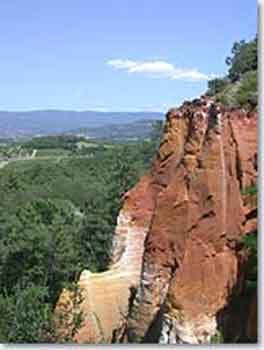
In France, the landscape itself is a pigment factory. The Dordogne region, the Lot, the caves near Vézère—this isn’t random. The soil here is rich in iron deposits.
When you dig into the earth in these areas today, you hit layers of clay mixed with hematite and goethite. That’s your red and your yellow. Add manganese for black. Add charcoal for depth.
Our ancestors didn’t need to travel far to find the materials for their masterpieces. They just needed to dig.
“The freshest state of preservation isn’t just luck. It’s the stability of the cave environment holding onto minerals that don’t fade.”
Lascaux vs. Chauvet: A Tale of Two Soils
Not all caves were created equal.
Lascaux (discovered in 1940) is famous for its polychrome animals. The reds are bold. The blacks are dense. The artists here used a variety of techniques—spraying, brushing, outlining. But they relied heavily on the local iron-rich clays found in the Dordogne valley.
Chauvet (discovered in 1994) tells a different story.
The pigments here are sharper. The reds are more orange-toned. Why? Different geological strata. The artists near Vallon-Pont-d’Arc had access to different deposits. They were more precise with their mixtures. They ground their minerals finer. They added binders—animal fats, plant juices—to make the paint stick.
This wasn’t just painting. It was material science.
How to Find Your Own Prehistoric Palette
You don’t need a time machine to see this. You can walk it.
The regions of Périgord and Ardèche offer tours that highlight the connection between the landscape and the art. But if you’re looking for the raw source, the journey ends in the dirt.
- **Locate the red earth