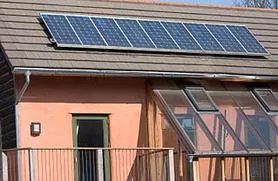
Solar panels are annoying because they work too well. You forget they exist. They sit there, silent and efficient, doing their job without requiring a single touch from you. But when the annual bill arrives, you might be the one at fault.
The culprit is usually dirt.
Clean glass equals an unobstructed surface for the sun. When that surface is clogged, your savings vanish. The frequency of cleaning depends entirely on where you live. If you reside near construction sites, in a windy desert, or in an area with high particulates, you need to wash them more often. Some regions require weekly washing. Others can get away with cleaning every other month.
Keep an eye on the glass. If a dusty film appears, aim the hose and let it rip.
How to Clean Your Solar Panels Safely
Never use abrasive soap. Do not use a scrubbing sponge. Your goal is clarity, not a scratch. A pool skimmer with a soft cloth attached reaches high roofs safely. For ground-level or accessible panels, a wash rag and soft biodegradable soap work fine.
If you clean frequently, a quick hose-down might suffice. This assumes there is no built-up bird poop or caked-on mud.
Be extremely careful if you climb onto the roof. It becomes slippery once you start washing. The hose adds weight and pull, making it easy to lose your footing and slide off.
Homes that complain about their meter spinning forward often have dirty panels. A good scrub changes the meter to spin backward. If your meter spins forward in the middle of a bright sunny day, you have two problems: either too many appliances are running, or your panels are failing. When the panels fail, you lose money.
Why Shading Reduces Output Exponentially
Check for new shade issues. Trees grow. Buildings change. Obstructions appear.
We do not suggest cutting down a tree. Trimming is usually sufficient.
Shade on solar panels reduces output exponentially, not proportionally. If 25% of a panel is shaded, you do not lose 25% of the power. You likely lose more than half. This is due to how the cells are wired. One shaded cell can choke the current for the entire string.
When the panels cannot do their job, you are losing money. It is a direct correlation.
How to Monitor Your Inverter and System
You do not need to inspect the panels daily. You do, however, need to watch the inverter display.
Is the green light on? Good.
Is it flashing? Probably not good. Check your manual immediately.
Technically, you do not need to stare at the light every day. But if the green light goes out, the longer you wait, the more money you lose. The panels are no longer covering your electricity use. You will likely not be able to diagnose the issue yourself. Do not worry. You have a 25-year warranty.
Call the experts. Let them sort it out.
Tracking Daily Performance Data
For a deeper look, record your system’s daily production. Do this at roughly the same time each day.
Add an asterisk for overcast days. Those days throw off your results. Low production on a cloudy day does not mean a system failure.
Daily accounting helps you determine if the system is working or just underperforming compared to its original output.
Too much data to manage? Monitoring systems are available. They come in various formats. You can display readings on a home panel. You can download data to your desktop. You can configure a website with your solar data.
Contact your solar installer for options. It is a growing sector. Green jobs are emerging in monitoring and maintenance.
If you do not mind heights, there are neighborhoods full of solar panels. They all need a good spring cleaning.