They were swimming in the oceans long before trees touched the sky. More than 500 million years ago, during the Paleozoic era, the first crustaceans emerged. It was a time of radical biological experimentation. Most of those original lineages died out. Extinction is the norm for species over deep time. Yet, some survived. They persisted through mass extinctions and climate shifts. Their descendants look similar to their ancestors in some ways. But they also evolved into something entirely new.
Today, these creatures are everywhere. They inhabit saltwater oceans. They crawl through freshwater rivers and lakes. A few stubborn groups even conquered the land. You might have seen them on a damp forest floor. We know of about 40,000 species now. That number is huge for a single group of arthropods. They are closely related to insects. Some scientists even argue they share a direct common ancestor.
How Crustaceans Conquered Water and Land
The story of crustaceans is one of adaptation. Water was their cradle. Early forms likely looked like segmented worms with limbs. Over millions of years, they developed hard exoskeletons. This shell provided protection. It also served as an anchor for muscles.
Marine environments remain their primary home. You find them in the deepest trenches. You see them on coral reefs. They range from microscopic zooplankton to giant crabs. Freshwater habitats offer a different challenge. Salinity levels vary. Oxygen levels fluctuate. Crustaceans adapted to these stresses. They developed efficient gills for breathing air-like conditions in water.
Then came the move to land. It seems impossible for gilled creatures to survive on dry ground. Yet, some did. Land crabs are the most famous example. They live in tropical forests and coastal areas. They breathe through modified gills that must stay moist. This limits where they can go. They cannot wander far from humidity.
Why did they make this jump? Resources were likely the driver. Land offered new food sources. Fewer predators existed in those early terrestrial zones. The transition was not easy. It required physiological changes. But the payoff was significant. It allowed them to exploit new ecological niches.
The Insect Connection
We often think of insects and crustaceans as separate worlds. One swarms the air. The other lurks in the mud. But they are relatives. Genetic studies confirm this link. They belong to the same superorder. Pancrustacea includes both.
This relationship changes how we view evolution. Insects might have evolved from a crustacean-like ancestor. The common ancestor probably lived in water. Over time, one branch moved to land. It developed wings. Another branch stayed in or near water. It grew claws and shells.
The diversity within crustaceans is staggering. Crustacea is not a single class. It is a diverse group. Some are tiny copepods. Others are massive lobsters. The size difference is extreme. Yet, they share key traits. Jointed appendages. A segmented body. An exoskeleton made of chitin.
Why This Matters Now
These creatures are not just relics. They are essential to modern ecosystems. Crustaceans form the base of many food webs. Tiny planktonic species feed fish. Larger species
How to Tell Crustaceans Apart from Insects and Spiders
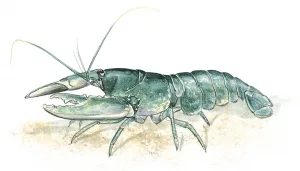
It starts with the math. Six legs for insects. Eight for spiders. Five pairs for the vast majority of crustaceans. That’s the first giveaway. If you see a creature with ten walking legs, it’s not an insect. It’s something else entirely.
And those front legs? Often transformed into massive claws or pincers. We call them claws, but biologically, they are the first pair of walking legs, heavily modified for defense, food processing, and mating displays. Behind the heavy artillery, there’s a toolkit of smaller appendages. These are the swimmerets. They look like tiny oars tucked under the tail section, used for stability, swimming backward, or carrying eggs.
Then there are the antennae. Two pairs. They don’t look like the single pair on most insects. The second pair is often outrageously long. Look at a lobster or a spiny lobster. Those antennae stretch out like radar dishes, helping the animal navigate through murky, dark water where eyesight fails. They are sensory life-lines.
Breathing presents a different puzzle. You’d expect an animal with legs to breathe air. But crustaceans are aquatic at heart. They use gills. Even the ones that have crawled out of the ocean. Land crabs, hermit crabs on beaches, even some terrestrial species clinging to damp forest floors. They still rely on gill respiration.
How do they survive on land without drowning in their own lungs? The gills must stay moist. They trap a film of water inside the exoskeleton. Air flows over that wet surface, oxygen diffuses in, carbon dioxide leaves. If that water dries up, the crab suffocates. It’s a fragile balance. A dry crab is a dead crab. This constraint is why you rarely find fully terrestrial crustaceans in arid deserts. They need humidity. They need moisture. They are tied to the water, even when they walk on sand.
Crustaceans breathe through gills that must remain moist, linking even land-dwelling species directly to their aquatic ancestry.
The Evolutionary Weight of Ten Legs
Why so many legs? Insects evolved wings. That changed everything. Flight opens up new niches, new food sources, new escape routes. Crustaceans didn’t take that route. They doubled down on the aquatic environment. More legs mean more propulsion. More legs mean more ability to dig, to climb underwater rocks, to scavenge in complex three-dimensional habitats.
The exoskeleton is another key factor. Hard shell. Heavy. Movement requires leverage. Multiple legs provide that leverage. A six-legged insect can be light enough to fly because its exoskeleton is relatively thin. A ten-legged crustacean carries more mass, more armor. It needs more power to move that armor.
Consider the fiddler crab. One giant claw. One normal claw. Ten legs. It lives in tidal mudflats. The mud sucks at its feet. It needs those extra legs to pull itself out of the suction. It needs the big claw for signaling, not just fighting. It’s a specialized tool for a specialized environment.
The swimmerets add another layer of complexity. They aren’t just for swimming. In females, they hold the eggs. In males, they