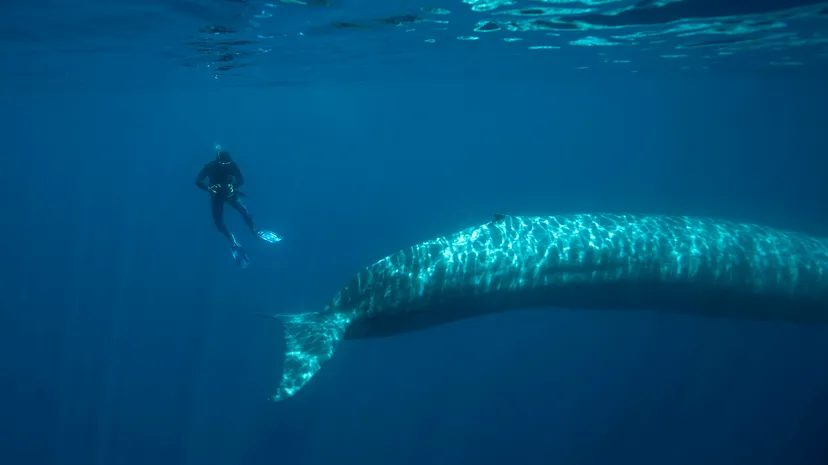
They are the heavyweight champions of the natural world. No dinosaur that ever stalked the earth—Tyrannosaurus rex included—could match the sheer mass of the modern biggest whale. The blue whale doesn’t just beat the prehistoric giants; it leaves them in the dust. This isn’t just a fun trivia point. It’s a biological anomaly that forces us to rethink what an animal body can actually do.
We tend to think of marine life through the lens of human limitations. We have lungs that need air every few minutes. We have bones that can’t support massive weight on land. Whales bypass all of that. They breathe through blowholes, a mechanical marvel that lets them exchange up to 90% of their lung air in a single exhalation. They dive into the abyss. Sperm whales, for instance, plunge to depths of 6,000 feet (2,000 meters). That’s deeper than most military submarines dare to go.
And they sing.
Humpback whales craft complex acoustic compositions that can last for hours. Toothed whales, like sperm whales and orcas, use echolocation clicks to map their world in the dark water. But size? Size is the headline.
Which Whale Is The Biggest? The Blue Whale Record
When people ask what is the largest animal to ever live, the answer is almost always the blue whale. But it’s not just about length. It’s about volume.
The blue whale can reach 100 feet in length. That’s roughly the size of a school bus. But the length is misleading. The animal’s girth is what matters. A single blue whale heart is the size of a bumper car. Its tongue alone weighs as much as an elephant.
How does an animal get that big? The answer lies in the ocean’s density. Water supports weight. Land does not. On land, the largest creatures—like Argentinosaurus —had to walk on thick, pillar-like legs to avoid collapsing under their own mass. In the water, buoyancy does the heavy lifting. This allows blue whales to grow to sizes that would be physically impossible on solid ground.
A blue whale’s tongue weighs as much as an elephant. Its heart is the size of a bumper car.
The blue whale’s diet is equally extreme. They don’t hunt big fish. They filter-feed. They gulp thousands of gallons of water containing krill. Then they push the water out through baleen plates, trapping the tiny crustaceans inside. It’s a high-calorie, high-volume strategy. One gulp can contain millions of krill. This energy intake fuels a body that can grow continuously for decades.
But size comes with trade-offs. Blue whales are endangered. Ship strikes, noise pollution, and entanglement in fishing gear are major threats. Their slow reproductive rate—calves are born every two to three years—means populations recover slowly. Protecting them isn’t just about preserving a record-holder. It’s about maintaining the balance of the ocean’s food web.
The blue whale’s existence challenges our intuition. We expect limits. Biology finds a way around them.
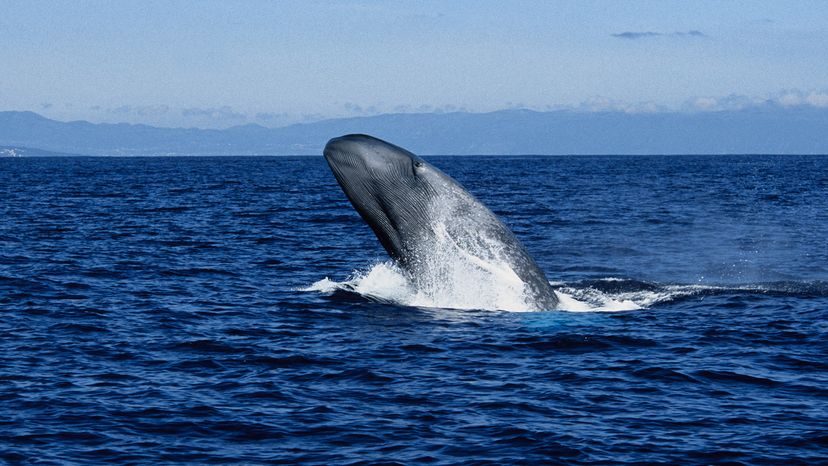
The Runner-Up: Fin Whale
If the blue whale is the heavyweight champion of the ocean, the fin whale is the marathon runner. They don’t have the sheer mass of their cousins, but they are undeniably massive.
Fin whales typically max out around 85 feet. That puts them firmly in second place for the title of longest animal on Earth. To visualize it, imagine a creature nearly as long as three school buses lined up end-to-end.
They are distinct enough to be called “the sleeping giants” due to their slow swimming speed compared to other large whales, yet they can still sprint when necessary. While Antarctic blue whales might push toward 110 feet, the standard fin whale holds its ground with a sturdy, streamlined build that cuts through water with surprising efficiency.
Pygmy blue whales sit somewhere in the middle of this hierarchy. At roughly 80 feet at their absolute largest—and usually hovering between 65 and 79 feet—they are smaller than the common blue whale but still dwarf the fin whale in girth, if not always in total length. The gap between these giants isn’t just about size; it’s about survival strategy.
“Size isn’t just about length. It’s about how much energy you can store and how efficiently you can move.”
So, which is bigger? In terms of pure length, the Antarctic blue whale takes the crown. But the fin whale’s 85-foot frame is a marvel of evolutionary engineering, designed for endurance rather than just bulk.
This raises an interesting question. Why do some whales prioritize length while others prioritize mass? The answer likely lies in their feeding grounds and the density of krill fields they navigate. But that’s a discussion for another time. For now, just remember that an 85-foot fin whale is still an animal that makes a cruise ship look like a toy.
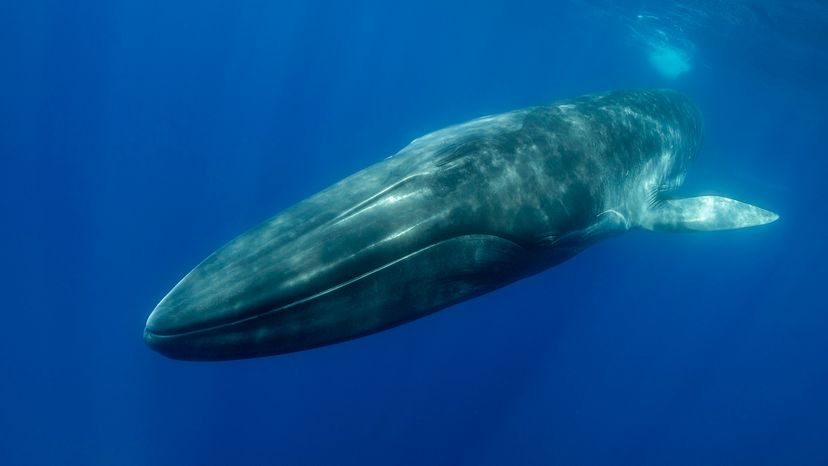
They don’t just swim. They cut through the water like something engineered for velocity. Fin whales, often dubbed the greyhounds of the sea, possess that same deceptive elegance. Their bodies are long, slender, and built for speed rather than brute mass. But size? That’s another story.
An adult fin whale can stretch up to 85 feet. Twenty-five point nine one meters.
It’s a number that feels abstract until you try to visualize it. Try fitting that much living animal inside a standard NBA basketball court. The court is 94 feet long. Twenty-eight point six five meters.
The whale fits.
Just barely. There’s only about nine feet of buffer space on either end if you lined them up perfectly. It’s a tight squeeze for an animal that weighs as much as a school bus. Yet there it is. All that muscle, all that blubber, contained within the rectangular confines of a sports arena.
This comparison isn’t just about vanity or shock value. It highlights the sheer scale of life that exists beneath the surface, invisible to most of us until a strand washes ashore or a research vessel spots a blowhole breaking the waves.
3. Sperm Whale (67 feet)
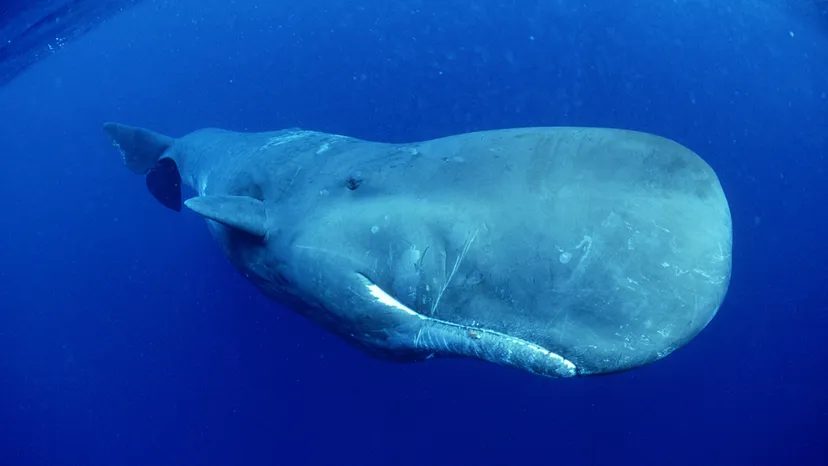
If the fin whale is the greyhound, the sperm whale is the heavyweight champion. They drop down to 67 feet. A solid twenty meters.
Still huge. Still impossible to ignore.
But notice the shift. The fin whale needed the whole court, barely. The sperm whale takes up less than three-quarters of that same floor space. It’s a different kind of giant. Built for diving. Built for depth.
Where the fin whale relies on length and speed, the sperm whale relies on density. Its head, nearly a third of its total body length, houses a massive organ used for echolocation. That’s where the power lives. Not in the tail stroke, but in the skull.
You can park two sperm whales end-to-end and still have room for a few more cars. Or a small swimming pool.
The contrast between these two giants tells a story of evolution’s different solutions to the same problem: how to survive in the ocean’s vast, dark expanse. One chose speed. The other chose depth. Both chose size.
And both, in their own way, fit inside our courts.
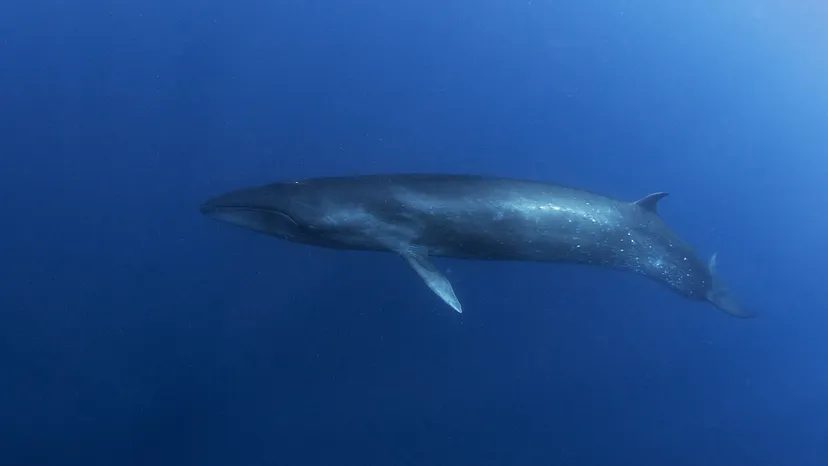
4. Sei Whale (60 feet)
Next up is the sei whale, a sleek powerhouse that hits the 60-foot mark. That’s big. Almost 20 meters of pure muscle and speed.
It’s the third-largest whale species, trailing only the blue whale and the fin whale. But size isn’t its only claim to fame. Sei whales are built for velocity. They hold the title for the fastest whale species, regularly clocking speeds of 30 to 40 mph. Think about that. A marine mammal sprinting faster than most highway traffic.
The name “sei” comes from Norwegian, meaning “horse mackerel,” a nod to their primary snack. These planktivores filter-feed on dense swarms of krill and small fish. They don’t chase prey individually. They lunge. Their throats expand like bellows, scooping up tons of water and then pushing it out through baleen plates, trapping a meal in the process.
Where do they live? Mostly in the open ocean, across the Atlantic and Pacific. They’re migratory, moving toward polar waters in summer to feed and toward the equator in winter to breed.
Why does this matter? Because sei whales are still recovering from industrial whaling. They were heavily targeted in the 19th and 20th centuries for their oil and baleen. Today, they remain an endangered species in most regions. Protecting their migratory paths is essential. Ship strikes and entanglement in fishing gear are ongoing threats.
Their speed makes them elusive. Hard to track. Hard to study. But crucial to monitor. If their krill stocks collapse due to climate change or overfishing, the sei whale has nowhere to go. It relies on those dense biological hotspots.
So when you look at a 60-foot animal moving through the deep, remember: it’s not just big. It’s fast. And it’s fragile.
Arctic Survivors and Ocean Giants
Sei whales stretch out to 60 feet. That is a bowling lane. But they are not the only ones hitting that mark.
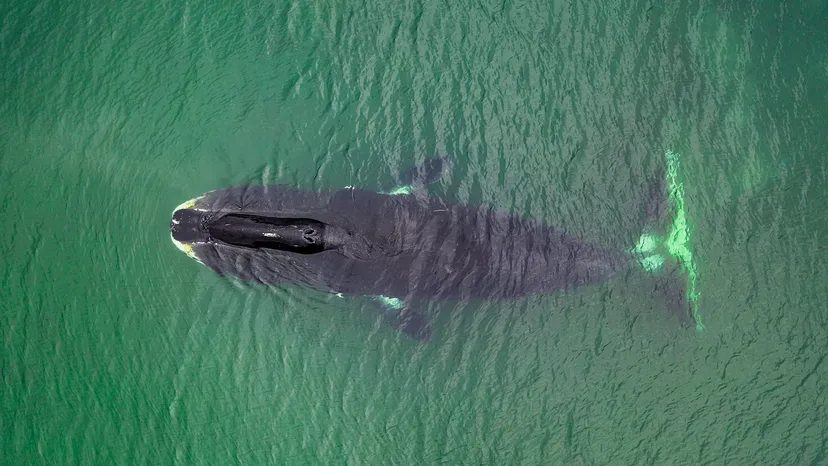
5. Bowhead Whale (60 feet)
Bowheads live in the Arctic. They also reach 60 feet. Their real superpower is time. Some individuals have lived past 200 years. They are the old men of the sea, enduring ice and cold for centuries.
5 Heaviest Whales
1. Antarctic Blue Whale (220 tons)
The Antarctic blue whale dominates the weight class. It tips scales at over 220 tons. That is 200 metric tonnes. It is the heavyweight champion of the ocean.
The title for heaviest animal on Earth belongs to the blue whale. They usually weigh up to 200 tons. That is 181.4 metric tonnes. Think of 2,500 average humans. Or the Statue of Liberty, minus the concrete pedestal.
The scale of their biology is hard to grasp. A blue whale’s heart weighs as much as a small car. About 400 pounds. Or 180 kg. Its tongue alone can carry the weight of an elephant. It holds 2.7 tons of water.
2. Bowhead Whale (100 tons)
Bowheads weigh around 100 tons. That is 90.7 metric tonnes. They survive freezing Arctic waters because of thick blubber. A small house weighs that much.
3. Fin Whale (80 tons)
Fin whales look slimmer. They still hit 80 tons. That is 72.6 metric tonnes. An empty Boeing aircraft carrier has the same mass.
4. North Atlantic Right Whale (77 tons)
Eubalaena
The North Atlantic right whale reaches 77 tons. That is 69.8 metric tonnes. These baleen whales are critically endangered. They play a crucial role in maintaining ocean ecosystems.
5. Sperm Whale (70 tons)
Sperm whales weigh up to 70 tons. That is 63.5 metric tonnes. A semi-truck with a loaded trailer weighs about the same.
Blue Whales: The Biggest Whale on the Planet
Blue whales are the largest animals ever known to exist. Females tend to be slightly larger than males.
Blue whale calves are born weighing around 3 tons. That is 2.7 metric tonnes. They grow rapidly. They gain hundreds of pounds daily. They nurse on nutrient-rich milk.
Their diet is simple. Almost entirely krill. They filter it through baleen plates. During feeding seasons, one whale consumes up to 4 tons of krill daily. That is 3.6 metric tonnes. They are highly efficient marine mammals.
Despite their massive size, blue whales are endangered. Historical whaling hurt them. Ongoing threats like ship strikes and climate change keep them vulnerable. Populations are slowly recovering. Conservation efforts are helping. But significant challenges remain.
Protecting these gentle giants ensures a healthier ocean ecosystem. It helps all whale species. It helps marine life.
We created this article with AI technology. Then we made sure it was fact-checked and edited by a HowStuffWorks editor.