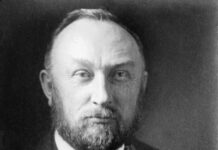
Arno Penzias died on January 22, 2024, in San Francisco. He was 90. His passing closes a chapter on one of the most significant scientific accidents in history. For decades, he was known not for a planned experiment, but for stumbling into the truth about the universe’s birth while trying to tune a radio antenna.
He shared half of the 1978 Nobel Prize for Physics with Robert Woodrow Wilson. The prize was for detecting faint electromagnetic radiation everywhere in the cosmos. It was the smoking gun for the Big Bang. The other half went to Pyotr Kapitsa for unrelated work. Penzias never claimed he set out to prove cosmic evolution. He just wanted clear radio signals.
From Munich to the Holmdel Horn
Born in Munich on April 26, 1933, Penzias grew up in the shadows of World War II. His family fled Germany. They ended up in New York. Education became his anchor. He attended City College of New York. Then he moved to Columbia University. He earned his doctorate there in 1962.
After finishing his studies, he joined Bell Laboratories in Holmdel, New Jersey. The lab was a powerhouse of innovation. Penzias worked with Robert Wilson. Their job was straightforward. They were monitoring radio emissions from a ring of gas circling the Milky Way. They were looking for specific celestial noise.
They found something else. The signal was persistent. It came from every direction. It did not fade. It was uniform.
The 3.5 Kelvin Mystery
The team was using a large horn antenna. It was sensitive enough to pick up microwave radiation. But the readings were stubborn. The noise floor was higher than expected. For a year, they troubleshooted. They checked for urban interference. They looked for pigeon droppings on the antenna. Yes, pigeons nested there. They cleaned the antenna. They removed the pigeons.
The noise remained.
It was about 3 Kelvin. Or rather, 3.5 Kelvin at the time. Most scientists expected the background noise to be near absolute zero. This residual thermal energy suggested something massive. It suggested that the universe was filled with leftover heat.
Penzias and Wilson published their findings in 1965. They didn’t know what it was. They thought it might be pollution from nearby galaxies. They were wrong. Other physicists, including Robert Dicke at Princeton, connected the dots. The radiation was the afterglow of the Big Bang. It was the cooling remnant of the primordial explosion billions of years ago.
Why This Discovery Matters Today
The detection of this cosmic microwave background changed cosmology. Before this, the Big Bang was just one theory. The Steady State theory was still popular among some academics. That theory suggested the universe had always existed and was constantly creating matter.
The uniform radiation killed that idea. It provided concrete evidence that the universe had a beginning. It had a hot, dense start. It had since expanded and cooled. This is the cosmic microwave background radiation that defines our modern understanding of the early universe.
Without Penzias and Wilson’s persistent antenna readings, that evidence might have been delayed by decades. The universe’s