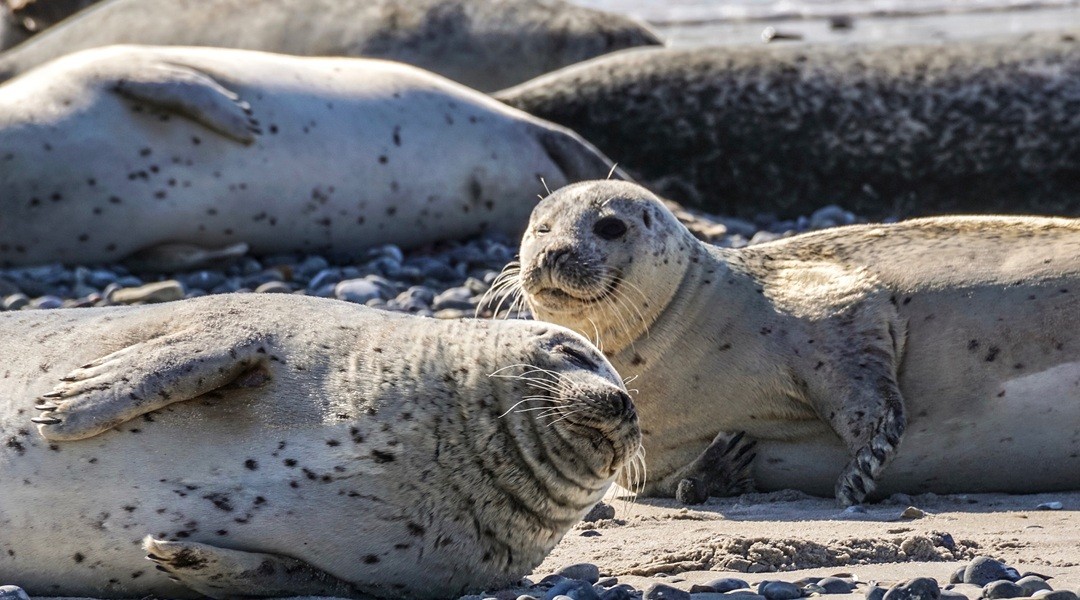
Millions of years ago, the ancestors of today’s seals, sea lions, and walruses were land-dwelling carnivores—relatives of modern raccoons and skunks. As these animals transitioned from life on land to life in the ocean, their bodies underwent a profound structural transformation. New research published in The Anatomical Record reveals that this shift wasn’t just about growing flippers; it required a fundamental redesign of the vertebral column to balance the conflicting demands of swimming and stability.
The Trade-off: Neck Mobility vs. Back Flexibility
In terrestrial carnivores, the spine serves two primary purposes: supporting body weight during running and providing a mobile neck for hunting and feeding. To run effectively, land animals require a relatively stiff mid-to-lower back to stabilize their frame, while a highly flexible neck allows them to maneuver their heads to grab prey.
The transition to an aquatic environment flipped this biological priority. For pinnipeds (the group comprising seals, sea lions, and walruses), the primary driver of movement shifted from limb-driven running to whole-body undulation.
The study, led by Borja Figueirido of the Universidad de Málaga, highlights a distinct evolutionary pattern:
– Reduced Cervical (Neck) Mobility: Unlike their land-based relatives, pinnipeds have stiffer necks. This reduction in neck movement helps maintain a streamlined profile, minimizing drag as they move through dense water.
– Increased Lumbar (Lower Back) Mobility: To compensate for the loss of leg-driven propulsion, pinnipeds evolved highly flexible lower spines. This allows them to undulate their bodies powerfully, creating the thrust necessary to navigate the ocean.
Specialized Spines for Different Lifestyles
Not all pinnipeds swim the same way, and their skeletal structures reflect these specialized niches. By using 3D reconstructions and advanced mobility protocols (Autobend), researchers identified distinct “spinal signatures” among species:
🌊 Seals (Phocids)
Seals prioritize propulsion. They possess more rigid spines through the chest and mid-back, which directs their energy into a highly mobile lower back. This setup is optimized for powerful, rhythmic undulations that drive them through the water.
🌊 Sea Lions (Otariids)
Sea lions prioritize agility. Their spines are more flexible across the neck and lower back, with stiffness concentrated in the chest area. This increased range of motion allows for greater maneuverability, helping them navigate complex environments and turn rapidly.
🌊 Walruses
Walruses exhibit a unique middle ground, characterized by very limited neck mobility but increased flexibility throughout the chest and back regions.
Why This Matters
This research provides a crucial piece of the evolutionary puzzle regarding how animals adapt to entirely different physical mediums. Moving from air to water changes the very physics of movement; buoyancy reduces the need for weight-bearing stiffness but increases the need for hydrodynamic efficiency. By mapping these changes in spinal mobility, scientists can better understand the mechanical “cost” of evolution—how much an animal must sacrifice in one area (like neck maneuverability) to gain a competitive advantage in another (like swimming speed).
“The land-to-sea transition involved a fundamental shift in how joints move. While land carnivores use flexible necks to handle prey, pinnipeds use flexible lower backs to power themselves through the water.”
Conclusion
The evolution of pinnipeds demonstrates a sophisticated biological recalibration, where the spine was reshaped to trade terrestrial agility for aquatic efficiency. This structural shift enables these animals to master the ocean through specialized modes of propulsion and streamlined movement.