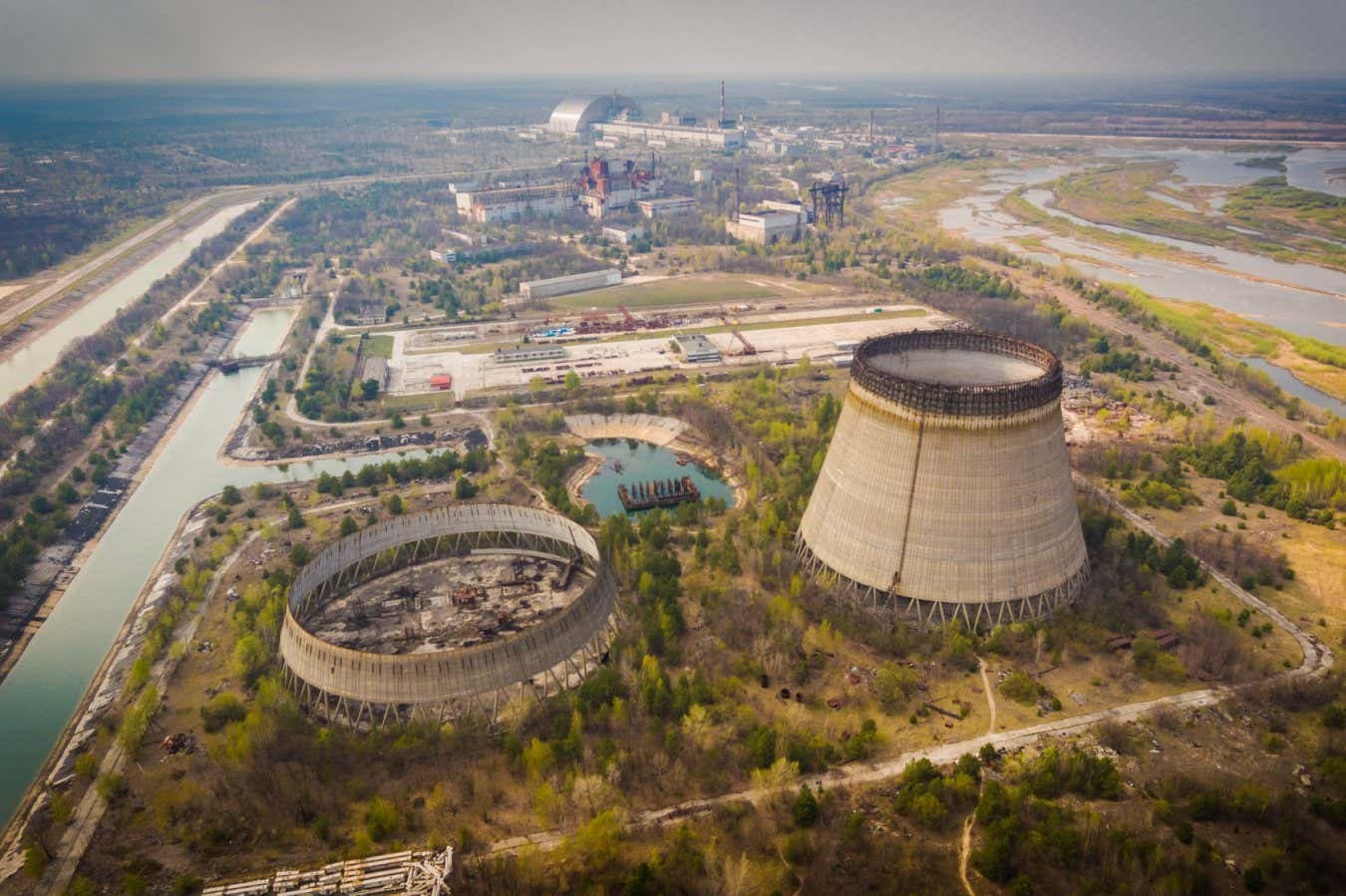
For decades, the name “Chernobyl” has been synonymous with a single, terrifying concept: radiation. Popular media—ranging from sensationalist news headlines to dramatic cinematic portrayals—has cemented a global perception of the Exclusion Zone as a permanent, uninhabitable wasteland of mutation and decay.
However, as we approach the 40th anniversary of the world’s worst nuclear disaster, the reality on the ground is far more complex. Recent access to the zone reveals a landscape that defies the “contaminated wasteland” trope, presenting a story of ecological resilience, engineering feats, and a new, much more volatile danger.
A Thriving, Unlikely Wilderness
Contrary to the image of a dying landscape, the Exclusion Zone has become an accidental sanctuary for wildlife. In the absence of human interference, nature has staged a remarkable comeback.
- Biodiversity is surging: Populations of rare animals, including wolves and moose, are flourishing.
- Ecological shifts: As the vast cooling ponds slowly drain, they are being reclaimed by forests, creating new, evolving habitats.
- Contamination management: While radiation remains a factor, it is largely being monitored and managed through sophisticated engineering and scientific oversight.
This phenomenon highlights a broader trend in environmental science: when human activity ceases, nature often finds a way to reclaim even the most damaged environments, provided the damage is stable.
The Complicating Factor: War and Militarization
The most significant shift in the Chernobyl narrative is not biological or radiological, but geopolitical. The Russian invasion of Ukraine has fundamentally altered the safety and stability of the zone.
The region has transitioned from a scientific and historical site into a highly restricted military zone. Situated near the Ukrainian border, the area serves as a strategic corridor, making it a potential route for further invasions. This militarization has brought several critical issues to the forefront:
- Physical Vandalism and Instability: The occupation of the zone by Russian forces led to widespread damage to infrastructure, which can compromise the containment of radioactive materials.
- Disruption of Science: The war has made ongoing research and environmental monitoring infinitely more difficult, stalling vital studies on the long-term effects of the disaster.
- Direct Threats to Safety: Recent drone attacks have posed direct risks to the clean-up operations and the structural integrity of containment sites.
The New Primary Threat
While radiation is a measurable, predictable, and—with sufficient funding—manageable risk, the current geopolitical climate introduces an unpredictable variable.
The central tension in Chernobyl has shifted. The danger is no longer just the invisible particles of cesium or strontium, but the visible presence of modern warfare. The stability of the zone depends heavily on the security of the Ukrainian state; without it, the engineering efforts designed to keep radiation contained could be undone by human conflict.
The biggest threat to Chernobyl’s safety is perhaps no longer radiation—which can be monitored and managed—but the volatility of war.
Conclusion
The Chernobyl Exclusion Zone is no longer just a cautionary tale of nuclear failure, but a complex intersection of ecological rebirth and geopolitical instability. While nature is successfully reclaiming the land, the region’s long-term safety now depends more on the outcome of the war in Ukraine than on the management of radioactive isotopes.