Alzheimer’s was always treated as a head problem. You got it in the skull. You died by the skull. That’s the old view. New evidence complicates things. Specifically.
Metabolic health matters. Or rather. Does it.
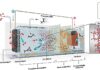
Houston Methodist researchers think body fat plays a direct hand in the disease. They looked at the connection. Found that fat molecules drift from tissue into the brain. They disrupt immune activity. They mess with cell communication. They help pile up the toxic proteins everyone fears.
The work came from Stephen Wong and Li Yang. They published it in Molecular Neurodegeneration. It is dense but clear.
The Messenger Molecule
The culprit is specific. Phosphatidylethanolamines or PEs for short. They are a type of fat. Obesity drives up the levels.
Once high they pack into tiny particles. Those particles travel. They make it to the brain. When they arrive things go south. Cell signals break down. Immune defenses weaken. Amyloid proteins start accumulating. That is the hallmark of the disease.
Obesity can change how signals travel. We might be able to treat this. Instead of viewing risk as just a metabolic problem we could target the connection to the brain.
Stephen Wong put it bluntly. It is not just a weight issue. It is a signal issue. And signals can be blocked. Or redirected.
Finding The Balance
Fixing the lipid balance helped. In models.
Restoring PEs reduced regulation problems. It supported better brain function. Cognitive performance improved. It worked.
But this is lab data. Not clinical yet. The CDC says 6.5 million Americans have the disease now. By 2060 that number hits nearly 14 million.
Yang warned that more research is needed. We cannot jump to pills based on this. Still the route looks promising for those with metabolic risks. Early intervention might actually mean something.
We do not have an answer. We have a direction. And maybe that is enough for today. 🧬