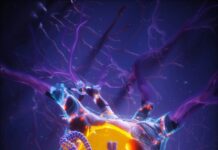
They are there. Millions of them. Scattered through the Milky Way like cosmic shrapnel, silent and dark. We know neutron stars should be everywhere. Left behind after massive stars blow themselves apart in supernova explosions. They are supposed to be the ghosts of our galaxy.
Yet. Most remain invisible.
A new study in Astronomy and Astrophysics says NASA’s Nancy Grace Roman Space Telescope might finally fix this blind spot. The plan isn’t to see them shine. It’s to watch what happens to the light behind them.
“Most neutron stars are relatively dim and are on their own.” – Zofia Kaczmareik, Heidelberg University
They are incredibly hard to find. Alone in the dark. Kaczmarek, who led the study, knows how tricky they are. They don’t scream like pulsars or burn bright like active stars. They just sit. Waiting.
How gravity acts as a magnifying glass
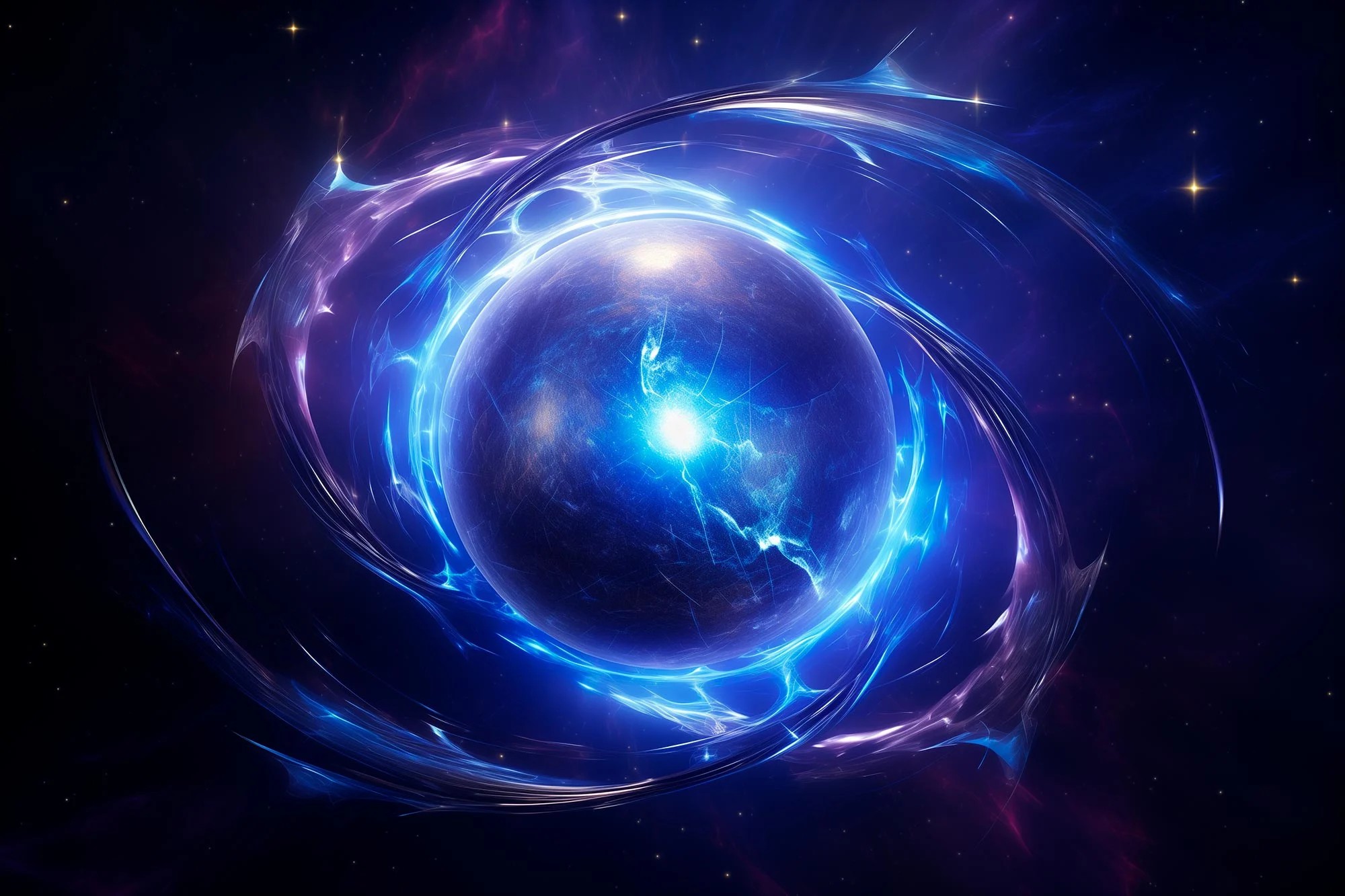
Pack more mass than our Sun into a ball the size of your city. That’s a neutron star. Physicists love them because they represent the absolute limit of how much stuff can be squashed together before it turns into a black hole.
Usually. They don’t emit enough visible light for us to see. Unless they spin and beam radio waves like a lighthouse. Or unless they eat nearby gas and shine in X-rays. Most are too polite. Too quiet.
Roman sees differently.
When one of these dense ghosts drifts in front of a background star. Its gravity bends. Not much. But enough. It shifts the star’s position in the sky while briefly brightening it. This is microlensing.
Many telescopes see the brightening. Roman will see the shift.
It’s about precision. Neutron stars are heavy. Heavier than brown dwarfs. Heavier than rogue planets. A heavy object bends space-time harder. This creates a stronger astrometric signal — a measurable positional wiggle.
“Photometry tells us that something passed, but it is the amount the star’s position shifts that tells us how massive the object is.” – Peter McGill, Lawrence Livermore National Laboratory
McGill puts it plainly. You can directly weigh the unseen. By measuring that tiny defon the sky. You don’t need light from the object itself. Just the shadow it casts on spacetime.
Chasing the kicks
Why bother? Because we still don’t fully understand stellar death. Or birth. Specifically the boundary where a neutron star stops and a black hole begins.
Scientists are hunting for the gap. Or lack thereof.
Neutron stars also move fast. When their parent stars explode the physics of the blast can give the newborn star a massive “kick”. Hundreds of miles per second across the galaxy. Roman might finally track these runaways.
The Galactic Bulge Time Domain Survey is the method. It will repeatedly photograph dense star fields. Millions of stars. Again and again. Looking for changes.
“We are going to get to work as the data come in.” – Peter McGill
They expect to find candidates in the first months.
A broken sample
Here’s the problem. We only know of a few thousand neutron stars. Almost all of them are pulsars. Or binary stars dancing with a partner.
This is a bad sample. A tiny sliver.
If you judge the world only by loud things you miss the quiet majority. Estimates put the Milky Way’s population between tens and hundreds of millions. Most are loners. Cold. Dark.
Kaczmarek is blunt about the current data. “We are seeing a small sample that is not representative.”
One mass measurement from a lonely neutron star would help. One would be transformative. Because currently we have to rely on complex models of how stars explode. Roman lets us test those models against reality.
Unexpectedly useful too. The mission was designed to hunt exoplanets using light brightness changes. It wasn’t meant to hunt neutron stars using position shifts. But its eyes happen to be precise enough for this extra job.
“This was not part of the original plan,” McGill noted. But it works. So it stays.
Roman might give us the first big list of isolated neutron stars found purely by gravity. No light needed. Just pure Einstein.
We might also find rogue planets and black holes. Things that refuse to orbit anything. Just floating there in the interstellar dark.
The telescope is managed by Goddard with help from JPL and Caltech. BAE Systems built parts of it. L3Harris too. But the science? That’s ours to wait for.
The stars are waiting.