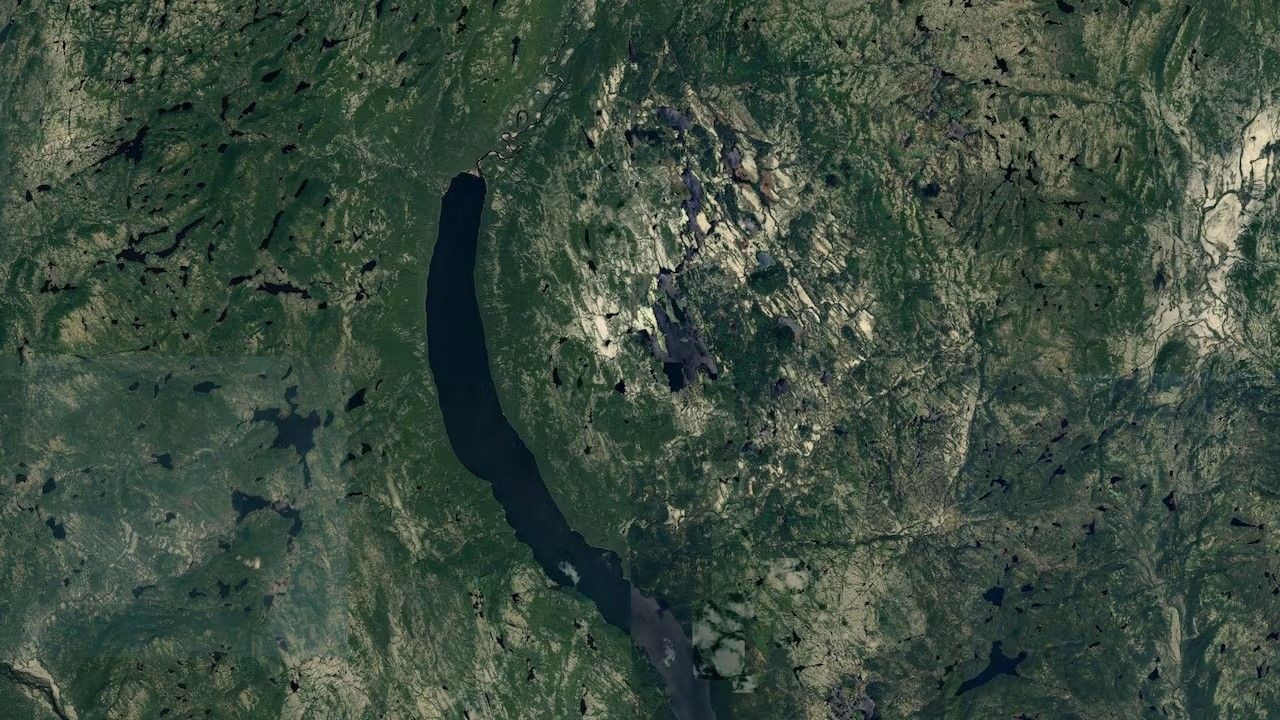
It looked weird on a screen.
That is where it started.
An amateur astronomer named Joël Lapointe wasn’t looking for science. He was planning a camping trip. The terrain in Quebec’s Côte-Nord region caught his eye near Lake Marsal. A ring. A deep indentation. Twenty-five kilometers across. Not a ditch, not a glitch.
He sent the coordinates to Pierre Rochette. A French geophysicist. Rochette thought it was promising. Very suggestive.
Then came the hard part.
Initial tests showed zircon. A mineral born in chaos. But zircon alone is circumstantial evidence. It hints. It does not prove. To get proof you need to look at the scars left behind by shock waves. You need to see the rock itself.
Gordon Osinski knew the drill.
Osinski, a planetary geology professor at Western University, doesn’t get many hits. Most satellite tips are noise.
I get lots of messages from the public… 99/10 turn out not to be the cases.
This one stuck.
In October 202. The team moved. Into the field. Osinski called it one of his hardest expeditions. He’s done 25 trips to the Arctic. He’s been to six continents. Yet the rough terrain and the bugs won that time.
Why go through the mud?
For shatter cones.
These are grooves in the rock. Visible to the eye. Created only by the insane pressure of an asteroid impact. Or a nuke.
They found them.
Along with massive cliffs of melted rock. Tens of cubic kilometers of crust liquefied by the strike. The team pulled samples. Dated the event.
Three hundred ninety million years.
Ancient.
Osinski runs Impact Earth, a site dedicated to verifying craters. Earth has about 200 known impacts. Thirty-one in Canada. This new find? Uhaachatik.
Named in discussion with the Ekuanitshit Inun council. A rare large crater. Most found today are small, less than 10km. The last Canadian confirmation was 201. This changes the count.
Lapointe is thrilled.
Not many ordinary people stumble onto geological history. He suggests we trust our eyes. Even when we’re experts in something else.
The papers are going to Germany soon. The Meteorological Society will hear it. The work continues in the lab. Craters teach us about climate, biology, how the earth bends.
It’s a hole in the ground. But it holds answers we’re only beginning to scrape off the surface.
Maybe you’re looking at something else too.