Scientists just watched it happen. Or rather, they watched the absence of something that proves a phenomenon has existed since the first seconds after the Big Bang.
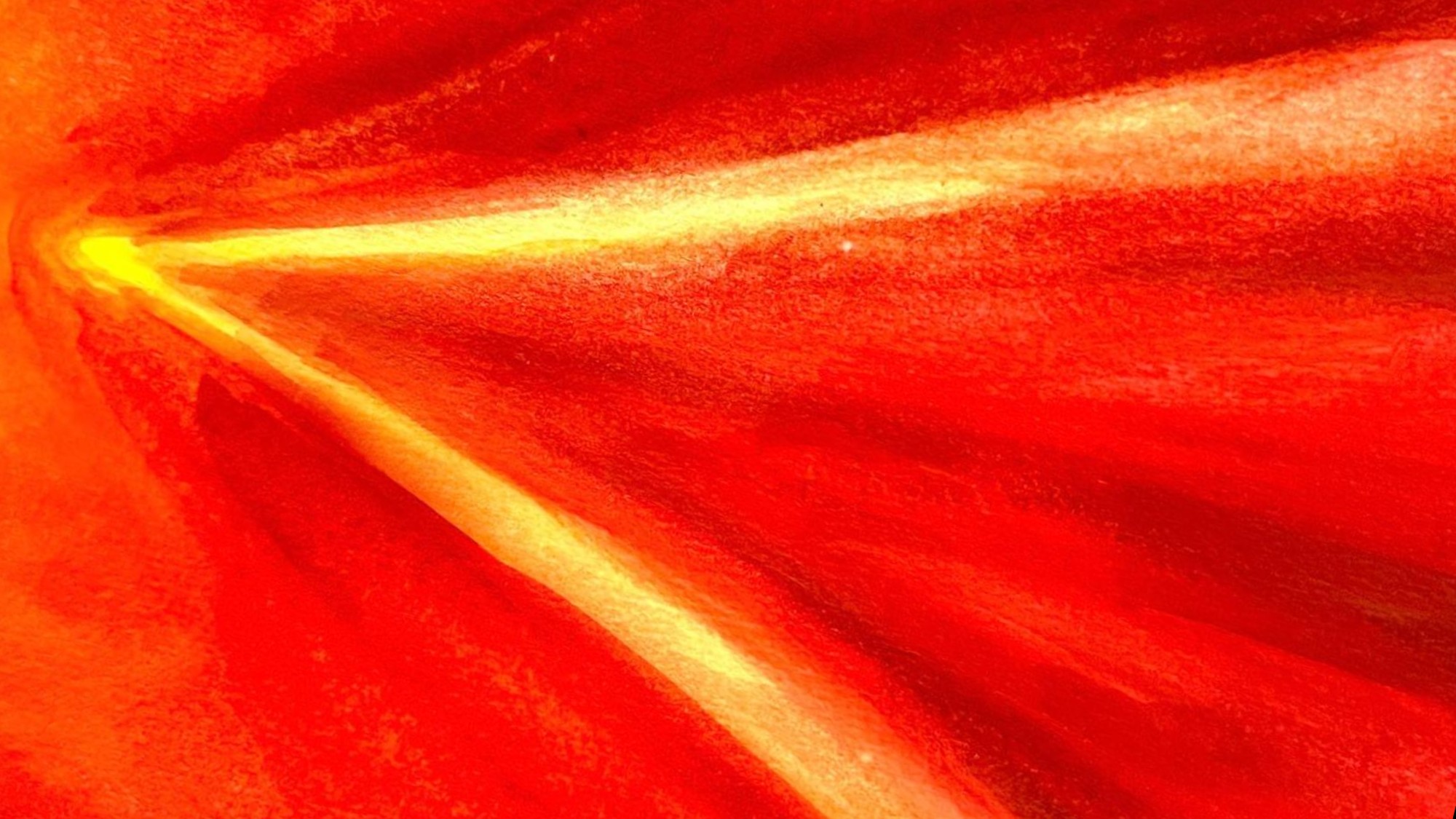
It took two decades of smashing lead nuclei at near-light speed. But the Large Hadron Collider (Lhc) finally produced the “diffusion wake” inside quark-gluon plasma that physicists predicted over 20 years ago. It is a tiny ripple in the cosmic soup. A wake left by particles zipping through the earliest state of the universe.
Why We Never Saw the Diffusion Wake Before
Here is the problem with high-energy physics: the signal is faint. The noise is deafening.
For twenty years, teams looked for these wakes using Z bosons. They smashed atoms, looked for jets alongside the Z boson, and hoped for a glimpse of the disturbance in the plasma. The evidence was there, sort of. But it got drowned out. Other jet-related effects masked the subtle wave signals. The data wasn’t clean enough. You can’t call a discovery a discovery if you can’t statistically separate it from the static.
It felt impossible for a while.
So the researchers at the University of Illinois Chicago changed the strategy. They stopped chasing Z bosons for this specific test. Instead, they used the LHC to create “dijet” events. Two jets. Back-to-back. Like twin bullets firing in opposite directions from the center of a collision.
This shape matters. The symmetry allows scientists to peel back the noise.
What Is Quark-Gluon Plasma Exactly?
You can’t find a lone quark or gluon in your kitchen. Or on the Moon. In today’s universe, they are locked up in protons and neutrons, bound tight as part of larger particles called hadrons.
To break them free, you need insane energy.
The LHC smashes lead nuclei together. The collision heats matter to trillions of degrees. It melts the protons. What you get is quark-gluon plasma. It’s the “soup” the early universe was made of microseconds after the Big Bang. Hot. Dense. Fluid-like.
When particles move through this fluid, they don’t just zip past. They interact. They lose momentum. They push the plasma out of the way. Like a boat cutting through an ocean. The physics predicts a wake. A diffusion wake.
The Sign That Proved It Real
The new measurement is simple but elegant. The team looked at the region behind the direction the jets traveled.
Empty space. Or close to it.
They saw a clear lack of particles in the wake zone, especially at lower momentums. This deficit is the signature of the wake. It matches the theory perfectly.
“This observation is a culmination of a decade-long quest,” says Olga Evdokimova, team leader at UIC.
Actually, she says it has been over twenty years. The phenomenon was predicted two decades ago. It stayed elusive until this new approach made the signal louder than the background chaos.
The effect was strongest in central lead-lead collisions. These crashes create the densest blobs of quark-gluon plasma on Earth. More plasma means more friction for the jets. More friction means a bigger, more visible wake.
Why This Matters for Cosmology
Raghunath Pradhan, another UIC leader, called it a door opener. Precision characterization. That’s what we can do now.
Understanding how particles lose energy in this plasma helps us model the early universe. We can simulate the density and flow of the cosmos right after its birth with better accuracy. It turns theoretical guesswork into measured dynamics.
We are mapping the friction of the Big Bang.
And it wasn’t pretty data mining. It required throwing out an old method and betting on the geometry of dijets. A risk that paid off.
So where do we go next? Probably to other collisions. Other types of partons. The LHC keeps turning. The plasma keeps boiling.
We finally have a clear view of the ripple. Now we have to understand the ocean.