


Nerds guard their secrets with a vault seven times stronger than your average person’s. Some critics claim this fortified mental security offsets the social burden of being a nerd. Stuffo found two such secrets while digging through a top drawer for a favorite pen. One was Superman’s preferred meal: Gerber baby food carrots. The other was the true origin of Wonder Woman. This story covers her complex history. We will look at her fascination with bondage. We will discuss her sorority friend Etta. We will also explore her brief but bizarre minimalist phase. Read on as Stuffo reveals details about America’s favorite invisible jet pilot. We will cover her origins. We will explain the source of her powers. We will track the changes she underwent over her 60+ years on the job.
From Themyscira to Washington D.C.
Wonder Woman was not always the warrior princess known today. Her backstory is rooted in ancient mythology. She was created by a goddess. Her mother was Queen Hippolyta. She was sculpted from clay. Zeus breathed life into the figure. This makes her a demigod. She was sent to Man’s World. She came to escape the influence of Ares. Ares is the god of war. He caused trouble on Themyscira. Diana Prince adopted this alias. She worked as a pilot. She flew an invisible jet. This vehicle was provided by Steve Trevor. Trevor was a pilot who crashed on her island. He brought her into the modern world.
The Sorority Connection and Etta Candy
Her social circle in Man’s World was specific. She joined a sorority. Her friend was Etta Candy. Etta was a loud and cheerful character. She often annoyed Diana. Their dynamic was central to early stories. Etta provided a contrast to Diana’s serious demeanor. This relationship highlighted Diana’s adjustment issues. She struggled with human customs. Etta helped her navigate these differences. Their friendship persisted through many storylines. It remained a key element of her early life.
The Bondage Controversy
A significant portion of her history involves bondage. This theme appeared in the original comics. It was part of her training. The Amazons used these methods. They taught discipline through restraint. This aspect has been debated for decades. Some readers found it problematic. Others viewed it as mythological symbolism. The character’s creators included these elements. They reflected the times in which the stories were written. Modern interpretations often remove or modify these scenes. The debate continues among fans and scholars. It remains a defining, if controversial, part of her legacy.
The Hipster Minimalist Phase
Wonder Woman underwent a visual transformation. At one point, she adopted a minimalist style. This phase was brief. It reflected a shift in fashion trends. She wore simpler costumes. The bright colors were toned down. This change was part of a broader effort to update the character. It did not last long. Fans rejected the subdued look. The classic costume returned. The minimalist phase is now largely forgotten. It serves as a footnote in her history. It shows how her image has evolved.
Sources of Power
Her abilities are divine. They come from her parentage. Zeus gave her strength. Hermes gave her speed. Athena gave her wisdom. Aphrodite gave her beauty. These gifts are constant.

You might think the 2017 galactic blockbuster is where the mythos really took off, but the DNA for that Amazonian powerhouse was engineered decades earlier. Back in 2005, Warner Bros. actually lined up Joss Whedon to helm a Wonder Woman film. He was set to write and direct the big-screen adaptation slated for 2006. It never happened. Whedon’s name floated around, but the project stalled. Eventually, he was paired with William M. Marston.
Marston created Wonder Woman in 1941. He wasn’t just a comic book writer. He was an attorney. A psychologist. An educational consultant. An inventor.
His resume reads like a mad scientist’s lab notebook. He played a leading role in developing the polygraph lie detector. He helped refine the systolic blood pressure test. He wasn’t confined to the pulpy pages of All Star Comics. He was shaping how America measured truth and tension.
Gender Theory and the Matriarchy
Marston’s psychological specialty was gender theory. His views were radical in the 1940s. They remain provocative today. Depending on who you ask, you’ll label him either a crackpot or a proto-feminist. The line between the two is blurry.
The Wonder Woman Pages notes that during his lifetime, Marston championed the causes of women. He wasn’t just writing stories for kids. He was arguing for a shift in power. Another source frames it more aggressively. Marston theorized that America would eventually become a matriarchy. He believed women could and would use sexual enslavement to achieve dominance over men.
“Among Marston’s theories was that America would become a Matriarchy, and in many of his writings he espoused the view that women could and would use sexual enslavement to achieve dominance over men.”
It sounds like fiction now. It reads like manifesto then.
Truth, Dominance and the American Way
The themes didn’t stay in his head. They bled into the ink. Wonder Woman wasn’t just a superhero. She was a vehicle for Marston’s specific brand of psychological theory. The character’s tools—lasso of truth, bracelets of submission—were direct reflections of his ideas about control and honesty.
Why does this matter now? Because the current cultural conversation about power, consent, and gender dynamics is still wrestling with the same questions Marston posed eighty years ago. He didn’t just create a hero. He created a mirror. A distorted, radical mirror.
We see echoes of his theories in modern discussions about female empowerment. Are we still trying to figure out if dominance should be achieved through force or through influence? Marston thought it was through connection. Through submission. Through a kind of radical empathy that he called “love.”
The 2005 Whedon project died. The 2017 film succeeded. But the core tension remains. How do you balance strength with vulnerability? How do you lead without conquering? Marston had an answer. It was messy. It was controversial. It was ahead of its time.
We’re still catching up.

The Man Behind the Lasso
Long before he was drawing tiaras and lassoing villains, William Marston was in a lab coat. He wasn’t just a psychologist; he was a researcher obsessed with how men and women actually tick. His conclusions were radical for their time. He argued that women weren’t just softer versions of men, but inherently more honest, nurturing, and trustworthy. Men? Well, they were the problem.
Marston spent years studying dominance and submission. He looked at everything from emotional states to sorority initiation rituals. He believed that surrender wasn’t weakness. It was a pathway to truth. These ideas didn’t stay in the academic journals. They bled directly into the ink of his most famous creation.
The Truth Machine
Marston didn’t just study the mind. He built tools to measure it. He is credited with inventing the DISC test, a psychological framework still used by counselors today to gauge stress levels and social compatibility. It breaks personality down into Dominance, Influence, Steadiness, and Conscientiousness.
Then there’s the polygraph. The lie detector. Marston’s role here is murky. Biographers argue over how much of the credit belongs to him versus his colleagues. But the core concept? That’s his. He pioneered the idea of hooking a suspect up to a blood pressure cuff while firing questions at them. Did he perfect the machine? No. But he pushed the industry to take truth-detection seriously. He proved that physiological spikes could betray a lie.
Enter Diana Prince
The comic book industry was hungry. In the late 1930s, Detective Comics, Inc. (which would become DC Comics ) and All American Comics were looking for the next big thing. They had Batman. They had Superman. They needed a female counterpart. Not a sidekick. A hero.
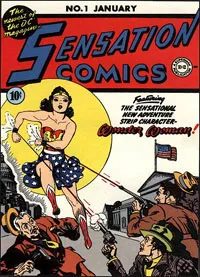
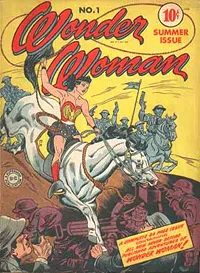
Marston stepped up. He pitched “Suprema, The Wonder Woman.” The name “Suprema” didn’t stick, but the character did. She debuted in All Star Comics #8, followed by Sensation Comics #1 and Detective Comics. By the summer of 1942, she had her own title: Wonder Woman. In 1944, she moved fully under the DC umbrella.
Marston didn’t just draw her. He wrote her. Every issue. Every adventure. He poured his psychological theories into her fists, her lasso, and her very existence. He wanted a hero who could change the world not by punching harder, but by loving better. Or so he claimed.
Wonder Woman’s Special Powers and Weapons

Diana Prince wasn’t just a superhero. She was a statement. Created by William Moulton Marston, Wonder Woman began life as an Amazon princess raised on the secluded Paradise Island, later known as Themyscira. Her rise to power wasn’t handed to her. She earned the title of Wonder Woman by winning a ceremonial contest, proving herself the most skilled and intelligent member of her tribe. That victory changed everything.
When American Air Force pilot Steve Trevor crash-lands on their shores, the Amazons see an opportunity. They send their champion to heal him and escort him back to “man’s world.” It’s a diplomatic mission disguised as a rescue. Upon arriving in civilization, Diana adopts the alias Diana Prince to hide her divine nature. It’s a classic double life, but with a twist. This iteration of Wonder Woman didn’t just punch bad guys. She aimed to reform them.
Marston’s vision was radical for its time. He imagined a woman who was intelligent, honest, and kind, yet possessed immense strength. Her superpower wasn’t just physical. It included great powers of persuasion. She believed in redemption, not just retribution. Her goal was to turn criminals into upright citizens. This philosophy set her apart from almost every other hero in the Golden Age of comics.
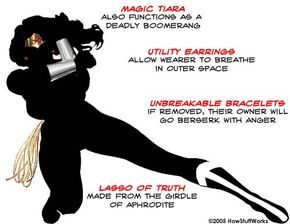
Her arsenal reflected this unique approach to justice. Take the Lasso of Truth. It wasn’t just a weapon. It was a tool for accountability. Bound by the lasso, criminals had no choice but to speak the truth. The rope was unbreakable and infinitely stretchable. Its origins were mythic, forged by the Greek blacksmith god Hephaestus from the girdle of Aphrodite. It forced honesty where lies usually thrived.
Then there were the Magic bracelets. Every Amazon wore them. They were bulletproof, yes, but their meaning ran deeper. They symbolized the Amazons’ temporary enslavement to Hercules in Greek mythology. Lose the bracelets, and an Amazon loses her mind, consumed by rage. They were also defensive tools. If a villain fused the bracelets together, they weakened the wearer significantly. It was a specific vulnerability, much like kryptonite for Superman.
Transportation was another puzzle. Her invisible plane didn’t have a clear origin story until after Marston’s death. The comics offered conflicting explanations over the decades. Sometimes it was an incarnation of Pegasus, the flying unicorn. Other times, it was a morphing robotic substance she called “Dome.” As technology advanced in the real world, the concept evolved into an invisible jet. The magic gave way to machinery, but the function remained.
Supporting her were two characters who survived the entire run from 1941 to today. Steve Trevor remained the anchor to her human life. Then there was Etta Candy. Etta was Diana’s sorority girlfriend and an all-purpose hero’s best friend. She was unpredictable. One week, she inadvertently lured Diana into trouble. The next, she provided crucial help with a difficult mission. Etta also had a signature trait: an overuse of her “Woo woo!” catchphrase. It added levity to a serious mythos.
The resistance she faced wasn’t just from villains. It came from her peers. Wonder Woman was the first female member of the Justice Society of America. It should have been a historic moment. Instead, she was immediately assigned the title of secretary. The organization didn’t even have a secretary before her. Who needed a secretary anyway? The insult didn’t end there. When she left the group for an extended period, the other members forced her to undergo more than a year of trials just to return. They questioned her commitment. They tested her worth.
This institutional sexism mirrored the real-world struggles of the era. Marston saw it. He wrote around it. But the friction remained. The Justice Society kept her at arm’s length, both professionally and personally. It made her victories harder to earn. It made her leadership more impressive.
The legacy of this early era is complex. It’s not just about fighting crime. It’s about changing minds. The lasso doesn’t just bind bodies. It binds truths. The bracelets don’t just block bullets. They hold history. The plane doesn’t just fly. It crosses boundaries.
Does the original vision still hold up? The tools have changed. The world has changed. But the core question remains. How do you bring peace to a world that isn’t ready for it? Diana Prince keeps asking it. She keeps trying.

The connection between the creator and his creation is rarely this literal. William Moulton Marston didn’t just write stories; he built a mythology around his own psychological theories and domestic arrangements. His background as a psychologist, specifically his work on the systolic blood pressure measurement that later became the polygraph test, wasn’t just academic filler. It was the blueprint for Diana Prince’s most iconic tool.
The lasso of truth isn’t a random accessory. It’s a direct translation of Marston’s professional life into comic book logic. If you believe the lie detector reveals hidden truths by measuring physiological responses, then a magical rope that forces honesty makes perfect sense. It’s not just a weapon; it’s a scientific instrument wrapped in gold.
The Shadow of Bondage and Control
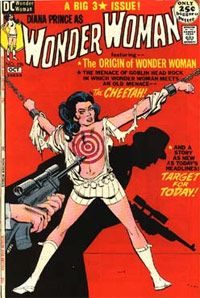
Read the early issues closely and the subtext becomes the text. Almost every storyline features Wonder Woman in some form of restraint. We are talking full-page panels of Diana bound in chains, shackles, or rope. It wasn’t subtle. It was repetitive.
Covers from the Marston era frequently depict male characters holding Wonder Woman captive. Men in chains. Women in chains. The imagery is pervasive. Scholars and critics have pointed out that these visuals weren’t accidental fetishism, however much fans might read them that way. They were deliberate illustrations of Marston’s theories on gender and power dynamics. He believed women were naturally superior in moral leadership and that men needed to submit to female guidance to achieve a healthier society. The bondage scenes visualized that submission.
Then there’s the Holliday Girls. Etta Candy and her sorority sisters operate in a world of rituals that mirror Marston’s writings on female bonding and hierarchy. The hazing rituals described in his non-fiction work find a strange echo in the way the Holliday Girls test and integrate new members. It’s less about typical college initiation and more about a structured, almost clinical exploration of female solidarity and dominance.
“The lasso of truth isn’t a random accessory. It’s a direct translation of Marston’s professional life into comic book logic.”
The Family Structure Behind the Mask
Speculation about Wonder Woman’s physical design often points to Olive “Dotsie” Richard. She wasn’t just a muse. She was Marston’s live-in partner, research assistant, and the mother of his two other children. Marston’s household was unconventional by 1940s standards. He had a wife, Elizabeth Holloway Marston, and Dotsie. They lived together. They raised four children between them.
This wasn’t a secret scandal kept in the shadows. It was their daily reality. The family unit included Marston, Elizabeth, Dotsie, and their four kids. Some accounts suggest Dotsie’s appearance influenced the visual design of Diana Prince. The strong, independent, slightly androgynous look? That could be Dotsie. The intellectual rigor? That was Marston’s academic influence. The emotional complexity? That was the result of navigating a triad marriage in a conservative era.
Marston’s personal life wasn’t just a footnote. It was the source code. The comics reflect a man trying to reconcile his progressive relationships with traditional superhero tropes. The result is a character who is simultaneously a warrior, a diplomat, and a symbol of a specific, id
William Marston didn’t stick around long enough to see the full extent of his creation’s legacy. He died in 1947, leaving behind a specific legal clause that would define Wonder Woman for decades. The contract granted DC Comics exclusive publishing rights, but with a catch. The rights were contingent on the title’s continued publication. If DC ever let the book go dark, ownership would permanently revert to the Marston estate. That simple condition helped secure Wonder Woman’s status as one of the longest-running superhero comics ever printed.
After Marston’s death, the pen passed to writers like Robert Kanigher and Denny O’Neil. The late 40s and 50s saw the character shift significantly. Her feminist edge was softened. The writers revisited her origins, adding depth and new gadgets to her arsenal.
The changes were substantial.
-
A new romantic focus: She developed a serious crush on Steve Trevor. This move paved the way for a parade of superhero suitors. She eventually fell for Birdman and the Mer-man. Superman fans might argue she had feelings for him too, depending on who you ask.
-
Expanded powers: Her tiara wasn’t just headwear. It functioned as a magic boomerang. Her earrings allowed her to breathe in oxygen-free environments, like the vacuum of space. Her bracelets created a communications link back to Themyscira.
-
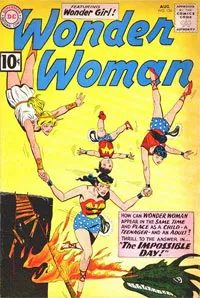
Origin stories and continuity chaos: Robert Kanigher borrowed a trick from the Superman mythos. He introduced Wonder Girl and Wonder Tot to show Wonder Woman at different life stages. One storyline, “Impossible Tales,” imagined a scenario where all four versions—Woman, Tot, Girl, and Queen (her mother)—existed simultaneously. Hilarity ensued. Writer Bob Haney misinterpreted the concept. He treated the four figures as separate characters rather than variations of the same person. Haney broke continuity. He made Wonder Woman her own sidekick, Wonder Girl. He then wrote Wonder Girl into the Teen Titans comic, placing her alongside Robin and other young sidekicks. These errors wouldn’t be cleaned up until the massive DC Comics continuity reset known as Crisis on Infinite Earths.
Wonder Woman 3.0: The Mod ‘60s and High Karate
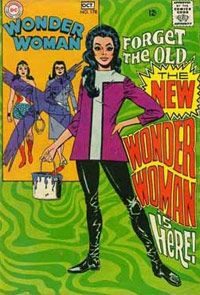

The superhero boom of the 1950s had flatlined by the start of the 1960s. Publishers were scrambling. DC Comics knew Wonder Woman needed a pivot. The cultural zeitgeist was shifting. Spy thrillers were taking over. The Avengers and The Prisoner were defining the new cool. DC decided to lean hard into that secret agent aesthetic.
They gave Diana Prince a total overhaul.
The lore got complicated fast. The other Amazons left Earth for a parallel dimension. Their goal? To retrieve their lost powers. Wonder Woman made a choice. She stayed in “Man’s World.” She chose to remain powerless. It wasn’t a punishment. It was a lifestyle shift.
She opened a boutique.
It wasn’t just a shop. It was a hub for mod fashion. The iconic tiara vanished. The red, white, and blue leotard was archived. In its place came high-fashion jumpsuits and miniskirts. She wasn’t fighting crime with brute strength. She was using wit, stealth, and politics.
Learning to fight without superpowers required a new approach. Enter I Ching. A mysterious martial arts master with Asian roots. He taught her hand-to-hand combat. It was gritty. It was grounded. It was a far cry from the Amazonian princess of old.
Then came the shock. Steve Trevor died.
For the first time in the character’s history, her primary love interest was killed off. The stakes became personal. The tone became darker. This era of Wonder Woman was unrecognizable to fans of the Golden Age.
It didn’t last forever.
The mod experiment ran for a few years. Then the cultural pendulum swung back. Feminism was rising. Gloria Steinem wrote a landmark essay for the inaugural issue of Ms. Magazine. She dissected the character. She highlighted the contradictions. Her writing sparked a re-evaluation of Diana’s place in pop culture.
But the damage—or the evolution—was already done.
This version of Wonder Woman left a mark. It proved the character could adapt. It paved the way for future comics. It influenced television adaptations for decades. The secret agent phase was brief. The impact was permanent.
Infinity Earths and Beyond
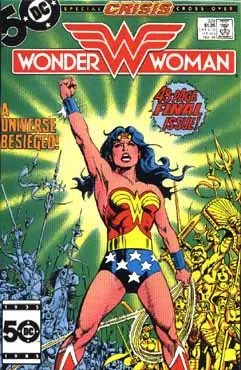

By the mid-eighties, Wonder Woman comics were suffocating under the weight of their own continuity. The 1970s had seen a sprawl of parallel universes become the default fix for plot holes. If a writer wanted to ignore a character’s past or rewrite an origin story, they didn’t bother with logic. They just declared the next ten issues took place on “Earth-3.” It started with the absurdity of “Impossible Tales” stories where Wonder Tot, Wonder Woman, and Wonder Girl shared the same page, but it quickly became a crutch.
Eventually, the timelines got so fragmented that no one knew what was actually true anymore. DC had to intervene. They launched the Crisis on Infinite Earths series, a massive editorial culling that killed off the old parallel worlds. The goal was simple: wipe the slate clean. Create one single, unchangeable canonical history for every character. To do that, they had to kill off the existing Wonder Woman and reboot her.
The Perez Reboot
George Perez took the reins for the new series, stripping away the Silver Age whimsy. He grounded the character in Greek mythology, focusing on the petty and violent conflicts between the Olympian gods. The result was jarringly different from what fans knew.
The new Diana arrived in Man’s World speaking only Ancient Greek. She didn’t know what a television was, let alone how to navigate modern politics. Her physical appearance remained similar, but the supporting cast got a hard reset. Etta Candy, once a bubbly sorority girl, was reimagined as a serious military officer. Steve Trevor was aged up significantly. Because of this age gap and the new dynamic, his romantic interest shifted from Diana to Etta. It was a stark departure from the classic status quo.
The New Origin Story
DC’s current site outlines a version that sticks closer to William Marston’s original themes but fleshes out the mechanics. Diana is not just a statue brought to life. She is the reincarnated spirit of a human child who died in the womb nearly 30,000 years ago. Greek goddesses saved this spirit to fight Ares. They funneled it into a clay sculpture crafted by Hippolyta, breathing life into the doll.
Each Olympian gifted her with specific powers. But power wasn’t enough. Diana had to enter a secret tournament to prove she was the worthiest Amazon. She won. As Themyscira’s champion, she defeated Ares just in time to stop a nuclear holocaust. It was a high-stakes origin that gave her a clear, singular purpose.
Catching Air
Before the reboot, there was a strange detour in the 1970s continuity. Wonder Woman discovered she could fly. Or rather, she learned to glide on air currents. It wasn’t the true levitation of her later years or the god-given flight of the modern era. It was a temporary ability that added a layer of physical spectacle to the stories of that decade, even as the continuity around her began to fray.
TV Shows and Cartoons
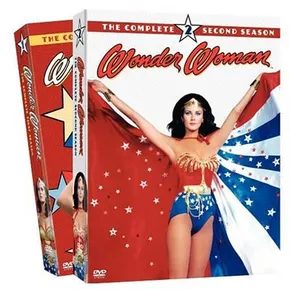


Lynda Carter is Wonder Woman. For decades, the Amazon Princess and the actress who played her have been fused in the public consciousness. But before Carter donned the star-spangled bodice, there were false starts. There were missteps. There was a whole era of television attempts that never quite caught the lightning in a bottle.
If you think the 1970s show was the first try, you’d be wrong.
The Comedy Pilot That Never Was
Back in 1967, Greenway Productions had an idea. They wanted a comedic Wonder Woman series, riding the coattails of the campy, pop-art success of the live-action Batman. It was the height of superhero television parody. The pilot starred Ellie Wood Walker as the title character.
It didn’t go anywhere. No series. No legacy. Just a forgotten tape in an archive.
The Mod 1970s Detour
Then came 1974. A made-for-TV movie hit the airwaves, starring Cathy Lee Crosby. It’s all but forgotten now, which is probably for the best for Crosby’s legacy. The problem? The comic book had moved on. The movie featured a mod, 1960s-era Diana Prince. She was a fitness enthusiast, not a super-powered warrior. She wore slacks. She didn’t fight crime with super strength or lassoed truth.
It was a tonal mismatch. The audience wanted the bold, superhero version. They got a lifestyle show with a cape. Lynda Carter would nail that tone a few years later. Crosby’s attempt was just… early.
Carter’s Dual Era: War and Present Day
Carter’s show, simply titled Wonder Woman, ran from 1976 to 1979. And it was weirdly split in personality.
The first season stuck closer to the source material’s origins. It was set in the early 1940s. World War II loomed large. The missions were military-focused, grounded in the era’s conflicts rather than pure fantasy. It was faithful to the comic’s roots but leaned heavily into war drama.
Good ratings. Then, cancellation.
But NBC wasn’t done. The show was resurrected, moving to ABC for its second run, retitled The New Adventures of Wonder Woman. The shift was stark. No more 1940s. We jumped to the then-present day: the 1970s. It became a standard action/adventure show. Diana Prince was a civilian in the modern world, fighting crime with gadgets and grace. The mythological elements took a backseat to the action.
Cartoons and Legacy
The character didn’t just live on live-action. There have been cartoons galore. An appearance on The Brady Kids in 1972. Regular spots on Super Friends throughout the ’70s and ’80s. Even today, she’s part of the Justice League lineup. She’s everywhere, except sometimes, she’s not quite Wonder Woman.
The Next Wrong Turn: Joss Whedon and NBC
Fast forward. Hollywood wants the golden goose again. Joss Whedon was attached to direct a film. Interviews suggested he wouldn’t be sticking to the older comics. He wanted to shake things up. The movie never really got off the ground. It fizzled.
Then came 2011. NBC tried again. A pilot for a Wonder Woman series. The trouble? The fans. Specifically, the costume.
Leaked set photos showed a look that didn’t sit right. It wasn’t the iconic red, blue, and gold. It was something else. Something less iconic. The backlash was immediate. The costume was the problem. Or maybe the execution. Either way, NBC didn’t pick it up. The series died before it aired.
Is She Actually Immortal?
Here’s the thing about Diana. Is she immortal?
It depends on who you ask.
The Amazons from Paradise Island? Definitely immortal. Most are over three thousand years old. They’ve seen empires rise and fall.
Diana? Maybe.
Some creators argue she abandoned her immortality when she left Paradise Island to join the world of men. The original 1940s Wonder Woman aged, albeit slowly. She had grey hairs before she was shuffled off to limbo during DC’s Crisis on Infinite Earths mini-series.
The Lynda Carter Wonder Woman? She was definitely immortal. She didn’t age a day over 40 years of TV time.
So, which version are you watching? The one who ages? Or the one who never does?
Sources
- Joss Whedon Vows He Won’t Do Anything Silly With Wonder Woman
- Wonder Woman
- Wonder Woman #237
- The Weekly Planet
- Wonder Woman: Amazing Amazon
- Wonder Woman Index
- DC Comics Secret