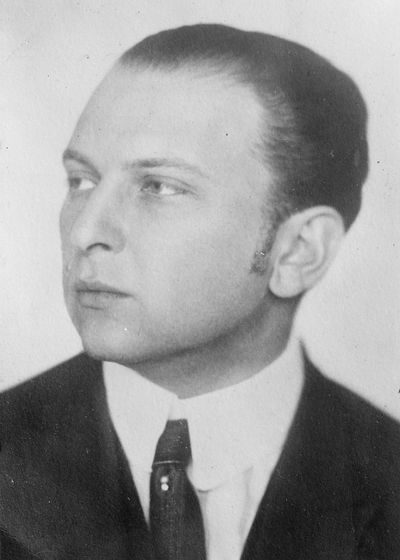
Born in Budapest in 1888, Fritz Reiner wasn’t just a conductor. He was an architect of sound. And he built his structures with terrifying accuracy. The Hungarian-born maestro died in New York on November 15, 1963, leaving behind a legacy defined by one word: control.
His approach to symphonic music and opera was despotic. It had to be. Without that iron grip, the music would have collapsed under its own weight. He demanded technical precision that bordered on the inhuman. Yet the musicians respected him for it. They knew his musicianship was flawless. His mastery was absolute.
This tension between authoritarian leadership and artistic greatness is the central story of his career. It’s not a comfortable narrative. It’s the story of how Fritz Reiner shaped the Chicago Symphony Orchestra into a global powerhouse. He served as music director from 1953 until his death in 1962. In those nine years, he transformed the ensemble. He stripped away the romanticism of the previous era. He replaced it with clarity. With exactitude. With a sound that cut through the air like glass.
From Dresden to Detroit’s Neighbor
Reiner’s path to Chicago wasn’t linear. It was a winding road through Europe’s elite musical institutions. He studied at the Budapest Royal Academy of Music. He worked his way up through various small European opera houses. By 1914, he was conductor of the Dresden Royal Opera. He held that post until 1921.
Then came the United States. He arrived as the principal conductor of the Cincinnati Symphony Orchestra. He stayed from 1922 to 1931. Cincinnati was his proving ground. It’s where he honed his signature style. It’s where he learned to demand perfection from players who had never heard it before.
From 1931 to 1941, he taught. He headed the opera and orchestral departments at the Curtis Institute of Music in Philadelphia. Teaching is different than conducting. It requires patience. Reiner had little of either. But he passed on his knowledge. He instilled in his students the same obsession with detail that he demanded from professional ensembles.
Pittsburgh and the Met: Testing the Waters
Before Chicago, Reiner tested his methods elsewhere. He was music director of the Pittsburgh Symphony from 1938 to 1948. Pittsburgh is a tough town. Its orchestra was tough. Reiner fit right in. He tightened their sound. He refined their technique.
Next came the Metropolitan Opera in New York City. He led the Met from 1948 to 1953. Opera is messier than symphonic concerts. There are singers. There are stage directions. There are egos. Reiner controlled it all. He managed the chaos with the same cold logic he applied to sheet music.
The Chicago Years
Chicago was his masterpiece. When he arrived in 1953, the orchestra was respected but not feared. By the time he left in 1962, it was the best in America. How did he do it? He didn’t just bat his wand. He dissected the score. He revealed every line. Every counterpoint. Every dynamic