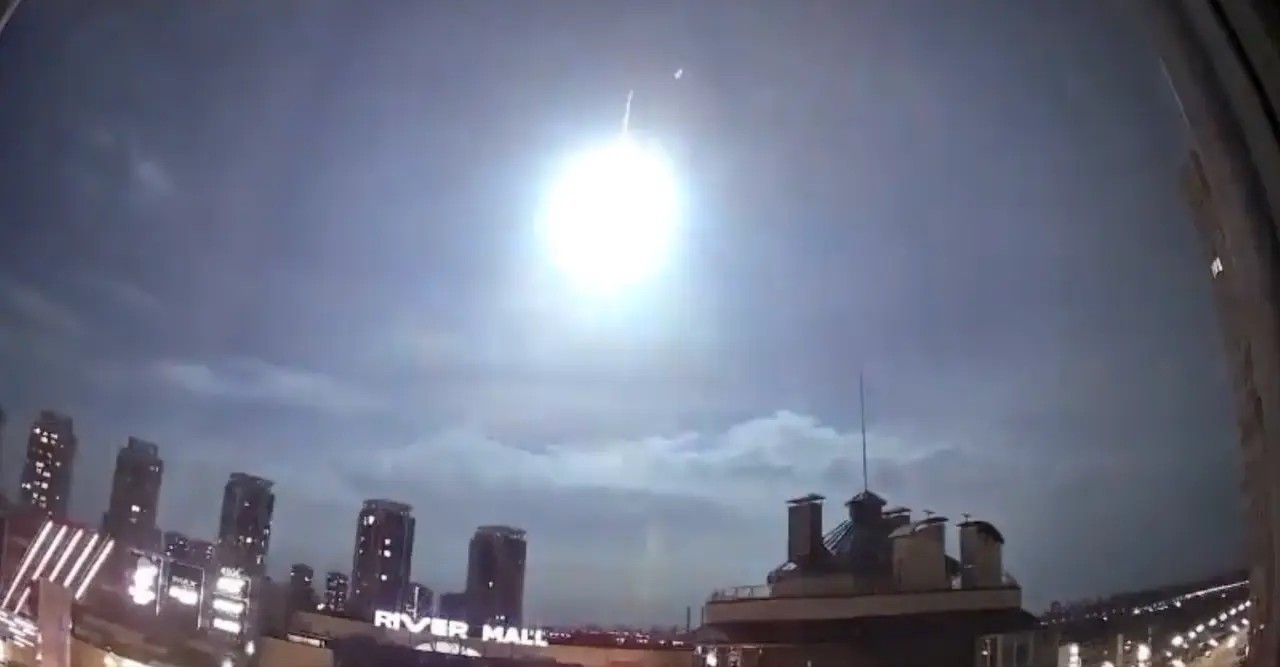
The internet lit up. Or rather, the sky did.
A mysterious, bright flash streaked across the night sky over Kyiv on Wednesday, April 19, 2023. Social media feeds immediately filled with speculation. In a country at war, where else do you look for explanations? Was it another Russian missile? A new wave of attacks?
Panic is easy. Clarity is harder.
The Ukrainian military administration moved quickly to shut down the rumor mill. They confirmed an air raid alarm had been activated, but they had a specific explanation.
“The air raid alarm was activated, but air defense systems did not engage. It was not a missile attack.”
That’s the official line. But what was it?
The NASA satellite theory and why it failed
Initial reports pointed to space debris. Specifically, a dying satellite.
NASA had publicly announced that one of its retired satellites—a 300-kilogram piece of metal—was scheduled to burn up in Earth’s atmosphere that night. The timing seemed perfect. The location seemed plausible. People connected the dots.
But the dots didn’t actually connect.
NASA stepped in to correct the record. When asked by Ukrainian officials, they pointed out a simple logistical flaw. At the exact moment the flash appeared over Kyiv, the satellite in question had not even entered the atmosphere yet. It was still orbiting.
So if it wasn’t a missile, and it wasn’t the NASA satellite, what was the light show?
Why astronomers think it was a meteorite
By Thursday morning, the Ukrainian Space Agency offered a different hypothesis.
They believe the flash was likely caused by a meteorite falling to Earth.
It’s a common phenomenon, often misidentified in high-stress environments. Meteors burn up in the upper atmosphere, creating bright streaks or bursts of light that can easily be mistaken for explosions or military hardware from the ground.
However, there’s a catch.
Data is still missing. Without more concrete evidence, the meteorite theory remains just that—a theory. It’s the most probable explanation given the elimination of the missile and satellite options, but “probable” isn’t “proven.”
For now, the sky keeps its secrets. The flash remains unconfirmed, a brief moment of confusion in a landscape already saturated with uncertainty. We’ll have to wait for better data before we can say for sure what lit up the night over Kyiv.


How to stay updated without the algorithmic noise
The standard advice is to doom-scroll through your feed. That’s not the move here. You want the science and tech news without the engagement-bait.
Futura offers a different route. Direct lines. No middleman deciding what’s “viral.”
WhatsApp and Google News are the channels.
Why these two?
WhatsApp cuts out the interface clutter. It’s just a message. You get the update. You read it. You’re done. It feels less like consumption and more like a brief from a colleague.
Google News does the aggregation but keeps it clean. It pulls from verified sources. Futura is one of them.
Which platform fits your habit?
If you live in messaging apps, go with WhatsApp. The notification is subtle. The content is dense.
If you prefer a curated dashboard, use Google News. It groups the stories. You can scan headlines fast.
The goal isn’t to read more. It’s to miss nothing.
Not every headline matters. But in science and tech, the small updates often predict the big shifts. A new paper. A hardware leak. A policy change.
You don’t need to hunt for them.
Let them come to you. On the apps you already open.
It’s about signal over noise. Always.
What are you waiting for to start tracking the changes that actually matter?