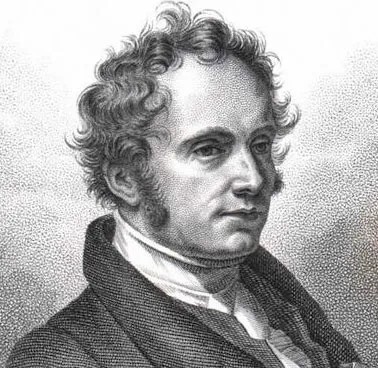
Albert A. Michelson didn’t just measure the stars. He measured the fabric of reality itself.
He was born in Strelno, Prussia in 1852 and came to the United States as a boy. His family fled old-world politics and sought opportunities in the new-world. He joined the United States Naval Academy. He studied in Europe. He then returned to teach at the University of Chicago, where he spent most of his career, chairing the physics department from 1892 until his death in Pasadena in 1931.
But just having a good teacher doesn’t make you a household name in physics.
You become one by inventing a tool that changes the way we see the world.
The interferometer that changed everything
Michelson’s greatest gift to science was the interferometer. Sounds technical. It is. But think of it as a ruler so accurate it can measure a hair’s breadth from miles away. The device used light waves to create interference patterns. These patterns showed distances and changes too small for a mechanical measuring device to detect.
With this invention he hunted a ghost.
For decades, scientists believed that space was filled with a substance called the “luminiferous aether.” They thought that light needed a medium to travel, just as sound needed air. If the Earth were to move through this ether, the speed of light should change depending on which direction we are moving.
Michelson and his assistant Edward W. Morley decided to test this.
Michelson-Morley experiment
This is the research that broke old physics.
The Michelson-Morley experiment, performed in 1887, used an advanced interferometer to measure the speed of light in different directions. They expected to find a difference. They expected to find the aether wind.
They found nothing.
The speed of light remained constant. No matter how you moved. Regardless of how you oriented the instrument.
The experiment showed that the speed of light is a fundamental constant.
This was a physics problem at the time. It was a huge, embarrassing problem. It suggested that the ether did not exist. It suggested that space was not what everyone thought it was. It paved the way for Einstein’s theory of relativity, which later explains why the speed of light represents the hard limit of the universe.
Michelson never fully accepted Einstein’s theory of relativity, but his data made it possible.
Measuring the impossible
While his reputation demonstrated the permanence of the speed of light, his magic tricks measured the stars.
Using a refined version of his interferometer, Michelson turned his attention to Betelgeuse. A red supergiant in Orion. It’s huge. But it’s also so far away that it looks like a point of light in the sky. No telescope can resolve its disk. It just looks like a dot.
Michelson thought he could do better.
In 1920, he used an interferometer with mirrors 6 meters apart. He measured the interference pattern of starlight. From that pattern he calculated the diameter of Betelgeuse.
He determined the diameter to be about 1.2 billion kilometers.
The first substantially accurate determination