Paul Muni didn’t just play historical figures. He became them. Born Weisenfreund in Lemberg, Austria (now Lviv, Ukraine) on September 22, 1895, he grew up in a family of Polish Jewish actors. He hit the stage while still a child. By the time his family immigrated to the United States, he was already soaking in the theater world.
He started in Yiddish stock companies along the East Coast. Then came the pivotal shift in 1918. He joined New York’s Yiddish Art theater. Here, he developed a specific skill set. He mastered the art of makeup. This talent would define his film career. He often played characters much older than his actual age.
The 1920s made him a Yiddish stage star. That popularity opened doors. He landed his first Broadway role in We Americans from 1926 to 1927. Hollywood was watching. In 1929, he made his film debut in The Valiant.
Critics took notice. He received an Academy Award nomination for playing a murderer. It seemed like the start of a legendary Hollywood run. The box office didn’t agree. The film was a disappointment. The next one fared worse. Seven Faces (1929) featured him playing seven different characters. Audiences stayed away.
Muni retreated back to the stage. He returned to New York. He found success again in Counsellor-at-Law, running from 1931 to 1933. The reviews were glowing. He had proven he could survive the screen’s harsh glare. But the real acclaim was still waiting.
He died in Montecito, California, on August 25, 1967. The journey from a young boy in Yiddish theaters to an Oscar-nominated leading man was paved with heavy makeup and difficult roles. The industry had seen his range. They just hadn’t fully understood it yet.
The Transition from Stage to Screen
Why did some stage giants crash in Hollywood? Muni wasn’t immune to that trap. His early films tested the waters. The Valiant showed his intensity. Seven Faces showed his versatility. Neither sold tickets.
“Muni resumed his stage career, and he earned particular praise for his work in Counsellor-at-Law.”
This pivot was strategic. It wasn’t a retirement. It was a recalibration. He needed to remind the world that he could command a room. The stage allowed for that kind of sustained performance. The camera, often, demanded subtlety he hadn’t fully mastered yet.
His background in Yiddish theater taught him discipline. It taught him to speak with weight. Those skills transferred, eventually. But the early 1930s were a bridge. A period of proving himself again. To his fans. To himself.
The historical figure portrayals would come later. The awards would follow. But those early failures in Seven Faces highlighted a gap. Between acting on stage and acting for film. Muni closed that gap with hard work. And a lot of prosthetic glue.

The Muni Method: Research, Makeup, and Studio Power
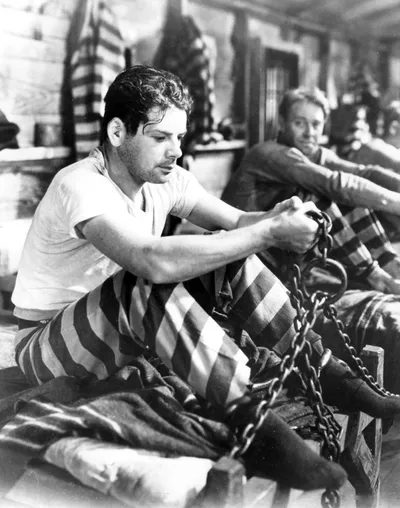
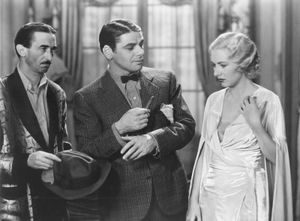
Paul Muni didn’t just show up on set in 1932. He arrived with a purpose that would redefine his career. It started with Scarface, a crime drama where he played a cruel, explosive gangster. That role alone signaled a shift. Then came I Am a Fugitive from a Chain Gang. Here, Muni portrayed an impoverished World War I veteran driven into criminality. The film served as a harsh exposé of the penal system, helping to end chain gangs in the American South. It also earned Muni his second Oscar nomination.
He signed with Warner Brothers that same year. By the end of the decade, he was the studio’s most prestigious star. Why? Because his background as a prominent stage actor kept Hollywood from molding him. They couldn’t force him into a marketable image. They couldn’t turn him into a typical big-screen leading man. Instead, Muni wielded script approval. This was a rare concession during the golden age of the studio system. Very few actors got that kind of power.
The result? Diverse roles. Superior work. Muni became known for depicting prominent historical figures. He tackled films with serious social themes. He didn’t wing it. He researched extensively. He studied dialects. He read literary works. He also used makeup to hide his own features. This created a physical representation of the subject. It wasn’t about being handsome. It was about being real.
Beyond the Surface: The Cost of Authenticity
Think about the effort involved in those performances. Muni didn’t rely on charm. He relied on labor. He would disappear into a character so completely that his own face became irrelevant. The makeup department worked overtime to obscure his well-known features. This was necessary for the physical transformation. But it was also part of the process. He wasn’t playing himself. He was building someone else.
This approach separated him from his peers. Other stars might have coasted on their looks or their existing fame. Muni treated every role as a job. A difficult job. He studied the language of his characters. He absorbed their mannerisms. He made sure the audience saw the person, not the actor.
“Whatever the role, Muni did extensive research into the character.”
This dedication paid off. His films generally surpassed most Hollywood fare of the era. The studio system usually demanded compliance. Muni delivered compliance mixed with artistic integrity. He used his leverage to pick projects that mattered. I Am a Fugitive from a Chain Gang wasn’t just a movie. It was a statement. Scarface wasn’t just entertainment. It was a portrait of violence.
Legacy of the Stage Actor in Hollywood
Muni’s presence at Warner Brothers changed the landscape. He proved that a serious actor could be a box office draw. He didn’t need to be a romantic lead. He didn’t need to fit the mold. The studio recognized his value. They allowed him the freedom to choose. This wasn’t common practice. Most actors were puppets. Muni held the strings.
His reputation preceded him. Critics knew what they were getting. They knew they would see depth. They knew they would see effort. This expectation set a standard. It challenged other actors. It challenged the producers. It forced the industry to take character-driven stories seriously

From Oscar Glory to Stage Dominance
Paul Muni’s career wasn’t just about winning awards. It was about survival in a studio system that often felt like a cage. In 1935, he took on Black Fury. He played a coal miner caught in a brutal union dispute. The role earned him a third Oscar nomination. He was a write-in candidate, which is a feat in itself. You don’t usually see that happen.
Warner Brothers didn’t make it easy. Muni fought them tooth and nail to produce The Story of Louis Pasteur. The budget was tight. Almost non-existent. But the biopic about the French microbiologist worked. It was a major hit. And finally, the Academy listened. Muni won Best Actor.
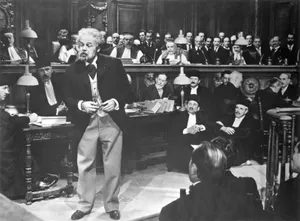
He didn’t stop there. The very next year, he starred in The Good Earth. He played a Chinese farmer in the adaptation of Pearl Buck’s novel. It was a heavy role. Then came The Life of Emile Zola in 1937. The drama about the French novelist won Best Picture. Muni got another acting nod. He was on fire.
But not every project landed the same way. He was cast as Benito Juárez in Juarez. The film also starred Bette Davis. It was a drama about a Mexican national hero. It didn’t match the success of his earlier biopics. The momentum stalled.
Returning to the Roots
We are not talking about a career decline here. Just a shift. After the lackluster We Are Not Alone in 1939, Muni went back to Broadway. He starred in Key Largo. The production ran from 1939 to 1940. He split his time between stage, screen, and later, television.
His Broadway return was significant. He won a Tony Award for Inherit the Wind. The show ran from 1955 to 1957. He played a character modeled on Clarence Darrow. It was a return to form. A return to power.
His later film roles were sharp. Angel on My Shoulder in 1946. A comedy about gangsters. It showed his range. Then there was The Last Angry Man in 1959. It was his final film. He played a crusading doctor. He received an Oscar nomination for it. One last nod.
Television became his next stage. He had prominent roles in several anthology series. His acting career ended after a 1962 appearance on Saints and Sinners. He retired. No grand fanfare. Just a quiet exit from a life spent in front of the camera.