We’ve stared at the Red Planet for millennia. Wondering. Speculating. Then, in the middle of the summer of 1976, we finally got an answer.
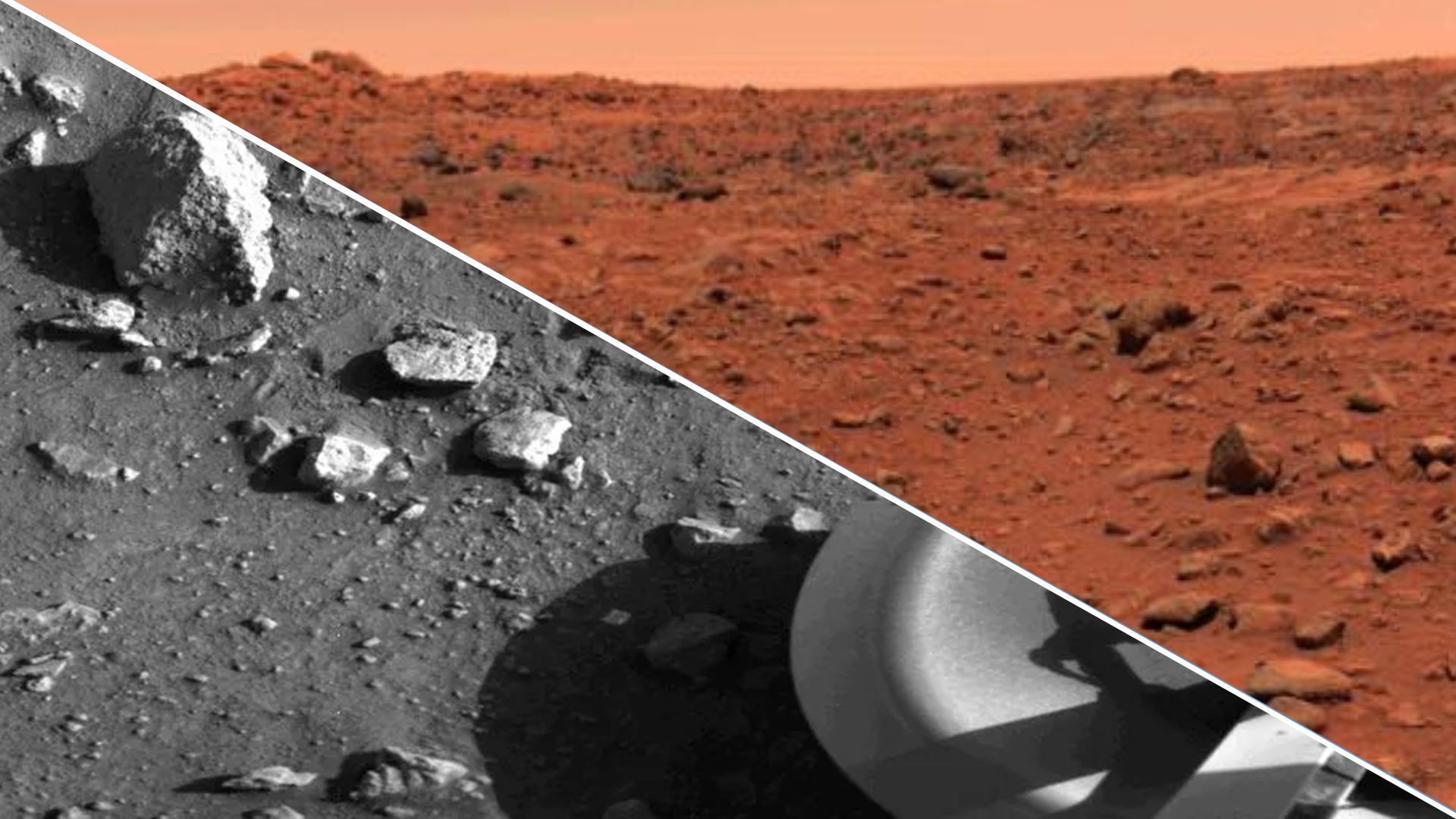
It happened fifty years ago. July 20, to be precise. That was the day NASA’s Viking 1 became the very first spacecraft to touch down on Mars and send back real images from its surface. Humanity’s first view from another world. It was exactly seven years after Apollo 11 touched the Moon. Coincidence? Maybe. Or maybe just good timing.
The mission was supposed to land right around the U.S. Bicentennial celebration on July 4. But Mars doesn’t care about American holidays. Mission controllers had to hunt for a flat enough patch of ground. So the landing was delayed.
Viking 1 touched down in Chryse Planitia, just north of the equator. It was smooth. Silent. But here’s the thing: the signal had to cross 212 million miles. That’s 340 kilometers of empty space. Radio waves are fast, but not that fast. The confirmation didn’t arrive for another 19 minutes.
Twenty-five seconds after the wheels kissed the dust, the camera took the shot. At 7:53 a.m. EDT.
Back at the Jet Propulsion Laboratory in California, the monitors were dark. Dr. Thomas Mutch, the imaging team leader, knew the drill. The image would build slowly, line by line. From left to right.
“I studied the black screen, waiting for that narrown strip that will signal the first few lines,” Mutch recalled. “Rocks and sand are visible… and — finally at the far right —one of the spacecraft foot pads, a symbolice artifact that stamps our accomplishment with the sign… ‘It’s incredible.'”
When the picture loaded, it wasn’t a desert wasteland. It wasn’t an alien metropolis. It was dirt. Rocks. Dust. The same stuff Viking had kicked up during its landing was still settling on the lander. It looked strangely, eerily familiar. A solid surface. Pebbles. Sand.
The color image came the next day. A panorama followed shortly after. The mystery was gone. Replaced by gritty reality.
This wasn’t a solo mission. Viking had a partner. Viking 2 landed in Utopia Planitia six weeks later. Both orbiters mapped the planet in detail, sending back over 52,000 photos of the Martian sky and 4,500 pictures from the ground. The scale of data was unprecedented.
But the landers did something more than take selfies. They dug. They probed the soil.
Viking carried the first instruments designed to detect life. Directly in Martian dirt. The official report was clear: no life. Nothing convincing. The experiments came back negative.
Or did they?
This is where it gets messy. Decades later, scientists are still arguing about it. Some think one of Viking’s experiments actually hit a biological signal. Others argue the experiments were too harsh, sterilizing the sample before they could detect life. It’s the great unresolved mystery of planetary science.
Later missions complicated things. Curiosity found organic molecules. Phoenix found perchlorate salts—chemicals that could interfere with life-detection tests. Did Viking destroy the very evidence it was looking for? We still don’t know.
Viking 1 stopped talking in 1982. Viking 2 went silent two years earlier. A software glitch during an update killed the connection. The hardware is still there. Waiting in the rust-colored dust.
We’ve sent rovers since then. We’ve seen polar caps, dried riverbeds, and potential ancient habitats. But that first grainy image from July 1976 changed everything. It turned Mars from a dot in the telescope into a place. A real, physical place we could step on.
So, what does that mean for the search for life? The question remains unanswered. Viking looked. It probed. It sent back data that we’re still unpacking.
Maybe the answer was right there in the soil. Maybe the instruments blinded themselves to the truth. Or maybe Mars was always too quiet for us to hear.
You can take the quiz. See what you know. But the Red Planet’s deepest secrets are still buried.