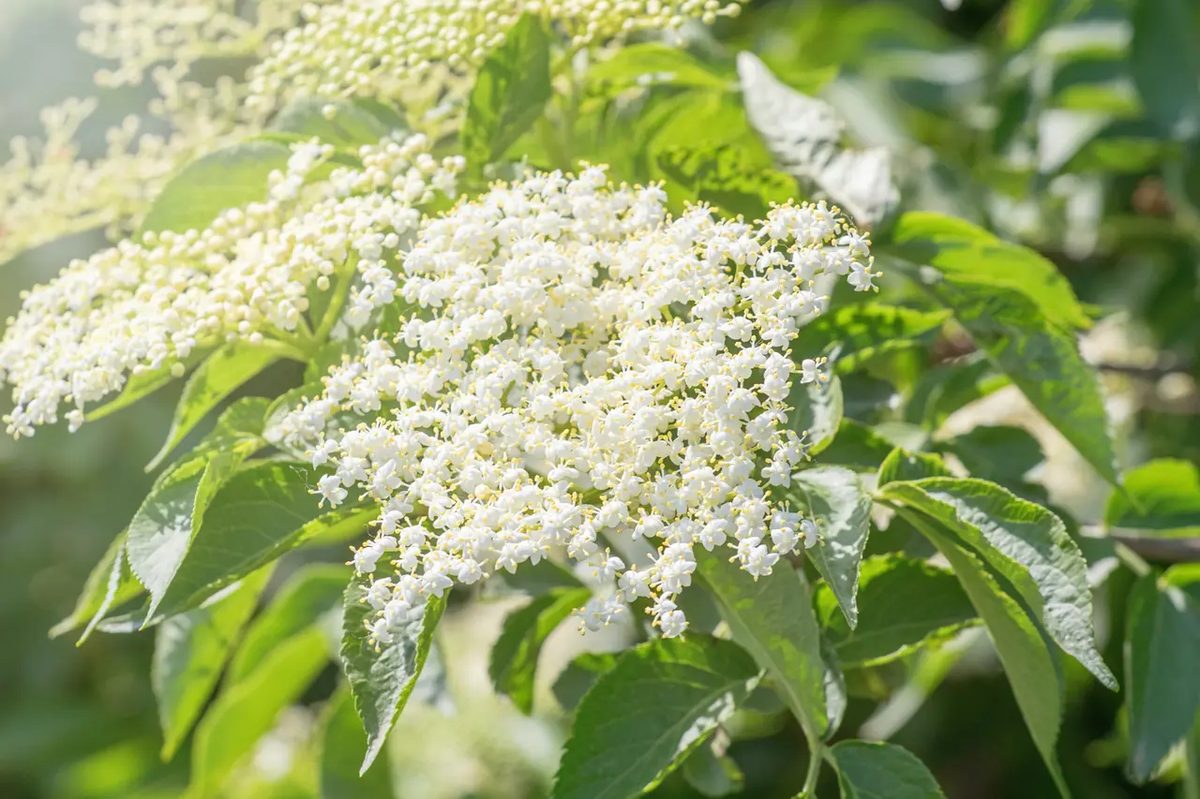
It probably grows in your neighborhood. You’ve probably walked past it without looking. Elderberry is everywhere and hides in bushes, forests and roadsides. It is a member of the honeysuckle family. Left alone, it can grow to over two meters in height. It loves partial shade or full sun.
By spring, it puts on a show. Flat, white flower clusters – corymbs that look like small discs – open. They smell sweet. Bees swarm them. When the flowers fade, they turn into black berries. Sweet. Edible. According to ENS de Lyon language historians, the name “elderberry” could even refer to a sour taste.
But the real story isn’t just about foraging. It’s about what happens when you process these plants.
The antibacterial power of elderflower
People dried elderflowers for days to make tea. It’s an old medicine. The idea is simple: it helps to sweat out a cold. That’s what “diaphoretic” means. It stimulates sweating.
Science is starting to catch up. In 2018, researchers studied peptides extracted from the black elder flower. They found something interesting. Some of these peptides showed antimicrobial properties against various bacteria. How do they work? They destabilize the bacterial membrane. It is a direct attack on the bug’s structural integrity.
This is not just folklore. It’s biochemistry. Flowers are not only beautiful; They are chemical factories.
Does elderberry syrup really shorten a cold?
You’ve seen the bottles on the pharmacy shelf. Sambucol is a big name here. It’s black elderberry syrup. Claim? Strong antiviral effect.
Most of the evidence comes from in vitro studies – experiments in petri dishes. They show that elderberry flavonoids bind to virus particles. In particular, they prevent the H1N1 influenza virus from entering human cells. It’s like putting a cap on a bottle before the virus gets in.
But petri dishes are not people. We need clinical trials.
The 2017 review summarized the available information. A significant study conducted in Norway in 2004 involved 60 adults aged 18–54. They all had flu symptoms. Half took 15 ml of elderberry syrup. The other half took a placebo.
The results were striking. Those who consumed elderberry syrup recovered four days faster. They also used less rescue medications.
Four days. That’s a considerable amount of time away from the couch.
Why this is important
These results suggest that the elderberry is not just a folktale. There is a mechanism. There is data. Peptides from flowers destroy bacteria. The flavonoids in the berries prevent viruses.
However, the Norwegian study was small. Sixty people is not a large sample size. We need larger studies to confirm these effects. Science progresses slowly. It takes repetition. But the signal is there.
When next spring comes and those white discs open, remember: It’s not just a bush. It’s a pharmacy. And maybe, just maybe, it can save you a few days