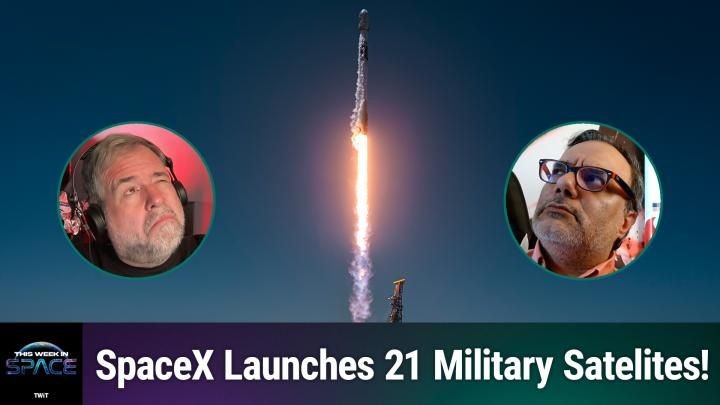
Rod Pyle and Tariq Malik don’t mince words. Episode 219 of This Week in Space hits the ground running with a single dominant theme. SpaceX is effectively going to war. Not a metaphorical skirmish for market share, but a tangible, contract-heavy battle for dominance in military space logistics and lunar transportation. The stakes couldn’t be higher. With Flight 13 looming, the whole Starship ecosystem hangs in the balance.
“SpaceX is doubling down on their big defense contracts.”
The show doesn’t ignore the science. Far from it. While rockets prepare for battle, astronomers are busy finding sugar in the void between stars. It’s a weird mix. Geopolitical tension meets cosmic chemistry. That’s the modern space landscape. Chaotic, expensive, and strangely beautiful.
SpaceX Starship Flight 13 and the Race to Mars (and Defense)
Flight 13 isn’t just another test hop. It is a checkpoint for survival. The system is overdue for a clear proof-of-concept demonstration. NASA isn’t waiting forever with their Human Landing System (HLS) contract. Every delay erodes confidence. Every success buys more time, or maybe a contract renewal.
But there is something else. Something quieter. More lucrative in the immediate term. SpaceX launched twenty-one “data transport” satellites for the US military. These aren’t passenger haulers. They are data mules. Fast, resilient, and specifically built for the Pentagon’s appetite for bandwidth from orbit. This marks a shift. Commercial space is no longer just about launching tourists to low Earth orbit. It’s about integrating with military infrastructure. The US Space Force has money, and Elon Musk’s company knows how to move fast.
Lunar Logistics: Blue Origin, NASA, and Starlink
The Moon is getting crowded. Or it will be soon. Blue Origin continues plowing through the recovery phase following their New Glenn explosion. They are pushing forward on their lunar lander development, seemingly unfazed by the setback, or perhaps forced to accelerate. NASA isn’t idle either.
The Artemis program moves forward in pieces. NASA plans to test lander capabilities rigorously. They even tapped SpaceX’s Starlink network. Yes, the internet constellation that floods our skies, is now expected to deliver high-fidelity imagery from Orion back to mission control. It’s an interesting pivot. Using commercial broadband for deep space mission telemetry feels futuristic. Until you realize the tech already exists. It just needed a customer.
Strange Horizons: Sugars, Slides, and Rocky Planets
While terrestrial politics play out over satellite slots, the universe delivers oddities. Astronomers detected the first atmosphere around a rocky, Earth-sized planet in the habitable zone. That sentence alone is dense enough to sink a lesser article. Let it sit. We are talking about exoplanet potential. Real potential.
Pluto remains dramatic. Massive landslides have been spotted. Gravity and geology don’t take weekends off. Even the dwarf planet fights with itself. Then there’s the candy. Researchers identified “raspberry sugar”—glycolaldehyde—in an interstellar cloud. Why does that matter? It’s a clue to the origin of life. Complex organic molecules are out there, drifting in the dust. They might have been the building blocks we inherited. Or they are just a coincidence. Hard to tell, until you can smell it.
The Ground Game: FCC Mirrors and Crew Dragon Woes
Back on Earth, regulations clash with innovation. The FCC approved Reflect Orbital’s request to launch its first space mirror into orbit. The company promises tens of thousands to follow. This raises immediate eyebrows among astronomers and space debris trackers. More shiny objects in low orbit. A potential disaster for sky observation, according to industry officials. The debate isn’t new. But the scale is new.
Meanwhile, fears circulate regarding Crew Dragon availability. Industry officials warn of capacity issues. If one vehicle fails, is there a backup plan? Redundancy costs money. Redundancy is rarely cheap. It seems the commercial space race is tightening, leaving fewer cushions for error.
Who’s Behind the Microphone?
The analysis comes from two veterans who know the terrain. Rod Pyle, Editor-in-Chief at Ad Astra magazine, brings historical weight. He has written eighteen books. He produced documentaries for Discovery and History Channel. He even touched the visual effects on Star Trek: Deep Space Nine. He understands the narrative arc of space exploration.
Tariq Malik, Editor-in-Chief at Space.com since 2018 (well, 2019 in the bio, close enough), covers the operational side. He started as an intern in 2001. He has been to Space Camp four times as a child. He rode the vomit comet to report on zero-gravity fires. This isn’t academic theorizing. It is field-tested journalism.
“Space.com is, and always has been the passion of writers.”
Quick Picks and Rocket Kits
The episode wraps with standard fare, but with specifics.
- Telescope: The Celestron Astro Fi 105. Recommended for viewing planets and comets. A solid entry point.
- Model Kits: Estes released a scale model of the Falcon 9. It’s launchable. It costs roughly $150. Use the code IN-COLLECTSPACE at collectSPACE.com to shave 10% off the price.
- Listen Here: Subscribe via Club TWiT for an ad-free experience. Standard feeds are free, available anywhere.
The show dives deep every Friday. They ask when humans will reach Mars. They examine the race to the Moon. It isn’t perfect coverage, but it is honest. And right now, SpaceX isn’t just launching rockets. They are changing the rules of engagement for defense, science, and commercial transport all at once. The dust settles eventually. The debris doesn’t.