Seems pretty innocent. Pour a glass. You take a sip. Nothing happens.
But water is a biological and chemical quirk that doesn’t act like a normal liquid. Most substances shrink when they freeze. Water expands. Most compounds are invisible in their natural state. Water is clear, odorless, and tasteless—until it’s no longer clear, or until you understand what it’s really doing on a molecular level.
It covers 75% of our planet. Life did not develop close to chance. That’s probably where life started.
Dipole effect and hydrogen bonding
To understand why water is important, you need to look at the form. The H2O molecule is curved, not linear. This asymmetry creates an electric dipole. The other side is slightly positive. The second one is slightly negative.
This geometry forces the molecules to attract each other like tiny magnets. They form hydrogen bonds. Individually, these bonds are weak, but together they form a sticky, cohesive network.
The most important property of water is its ability to dissolve other substances, which makes it a universal medium for biological processes.
This bond explains the deviations. Why does ice float? Because the hydrogen lattice creates more space than liquid water. Why does water have such a high boiling point for such a small molecule? Because it takes a lot of energy to break those bonds. It’s not magic. Physics goes hand in hand with chemistry.
The solvent of life
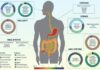
Organisms do not only contain water. They are basically bags of aqueous solution. Blood. Digestive juices. cellular fluid.
Water acts as a traffic channel. Nutrients move. Waste is removed. Chemical reactions take place in suspension. If water did not dissolve so many different salts and minerals, metabolism would stop.
This dissociation is key. Water breaks down into H+ and OH- ions, especially when other substances are present. It can act as an acid. It can serve as a base. It adapts.
Industrial Heavy Lifter
We take this adaptability for granted until we try to do things without it.
Factories rely on water for everything from suspending paper pulp to cooling engines. It dilutes. It washes. It produces steam to generate electricity. It hydrates lime and cement, literally turning liquid rock into solid infrastructure.
Even sulfur mining or textile processing depend on its unique viscosity and surface tension. It’s a coolant. A solvent. A source of hydrogen.
We also rarely think about water bound to salts and minerals. It’s not just about surface moisture. It is structural.
Life depends on it. Industry runs on it. But the real story isn’t just that we use it. That we are made of it. And the way these H2O molecules stick together is what keeps the planet habitable.
We have only scratched the surface.