A 59-year-old woman has achieved complete remission from an aggressive soft-tissue cancer without undergoing chemotherapy, radiation, or surgical removal of the primary tumor. The sole medical intervention she received was a biopsy to diagnose the growth.
This rare phenomenon suggests that the physical trauma of the biopsy may have inadvertently activated her immune system, prompting it to recognize and destroy the cancer cells. While spontaneous remission is exceptionally uncommon, this case provides a tangible clue as to how mechanical injury to a tumor might “wake up” the body’s natural defenses.
The Disappearing Tumor
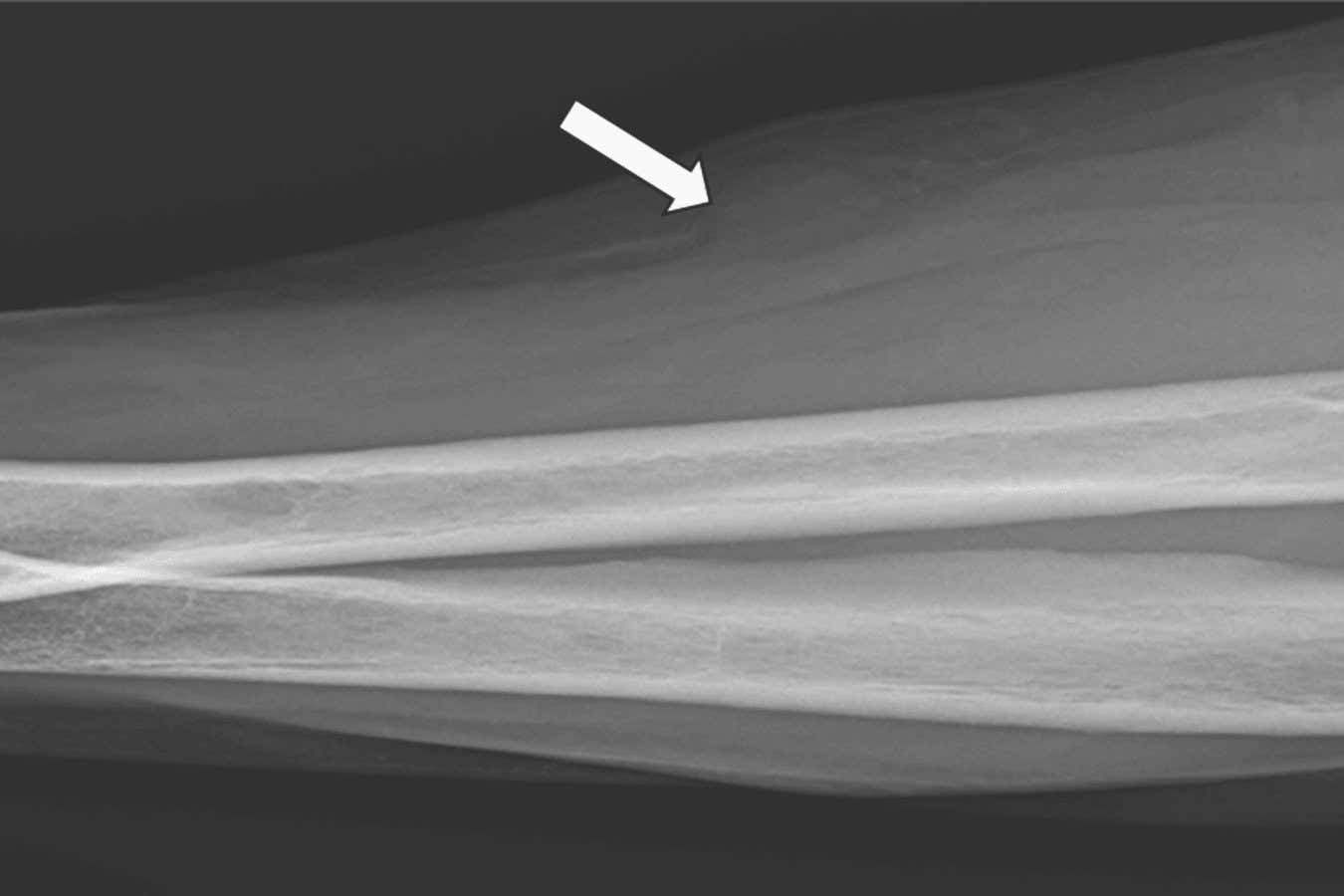
The patient first noticed a rapidly growing lump on her arm a few weeks before seeking medical attention. By the time she visited the Marshfield Clinic Health System in Wisconsin, the mass had reached 2 centimeters in width and was causing significant pain and discomfort.
Rohit Sharma, the physician who treated the patient, described the lesion as a myxofibrosarcoma, a type of cancer affecting the connective tissue between skin and muscle. This diagnosis was particularly concerning because myxofibrosarcoma is known for its aggressive nature and high potential to metastasize.
“To confirm the diagnosis, we marked the site with tattoo ink and performed a needle biopsy,” Sharma explained. “Given the aggressive nature of the cells found, we scheduled surgery to remove the tumor two weeks later.”
However, when the surgical team returned to the marked site, they found nothing. The tumor had vanished entirely.
A Rare Immune Response
To ensure no cancerous tissue remained, the team surgically excised the surrounding healthy tissue. Pathological analysis confirmed that no cancer cells were present. The patient had gone into spontaneous remission.
“It’s extremely remarkable,” said Toby Lawrence, an immunologist at the Centre for Immunology of Marseille-Luminy in France, who was not involved in the case. “The rapid disappearance suggests a powerful immune activation triggered by the injury caused by the biopsy.”
This case is one of only nine documented instances where a biopsy appeared to trigger the regression of this specific type of cancer. While rare, such events offer critical insights into the relationship between tissue injury and immune surveillance.
The Mechanism: Injury as a Signal
Experts believe the biopsy acted as a catalyst for a robust immune response. The process likely unfolded in several stages:
- Cellular Death and Signaling: The needle biopsy caused damage to some cancer cells, leading to their death.
- Inflammatory Alert: These dying cells released inflammatory signals, attracting “first-responder” immune cells, such as natural killer (NK) cells, to the site within hours or days.
- Antigen Release: As the tumor tissue broke down, it released specific proteins (antigens) unique to the cancer cells.
- T-Cell Activation: These antigens were presented to T-cells, the adaptive immune system’s specialists, which then learned to identify and destroy the remaining cancer cells.
“The timing of the biopsy and the resolution suggests there’s an immune reaction occurring,” Sharma noted. “Any type of cancer disappearing after a biopsy is highly unusual, but it has been most commonly reported for cancers that are more easily recognized by the immune system, such as skin cancers.”
Why This Matters for Future Treatments
While this outcome is a miracle for the patient, it is not a reproducible treatment strategy. Sharma emphasized that this response does not occur in most patients. The “lucky few” who experience this likely possess specific genetic factors or environmental exposures that allow their immune systems to respond so vigorously to minor tissue injury.
However, understanding why this happened could revolutionize cancer therapy.
Caetano Reis e Sousa, a researcher at the Francis Crick Institute in London, suggests that studying these rare cases—and similar responses in mouse models—could reveal how to make tumors more visible to the immune system.
“If we understand the mechanism by which a biopsy makes those cells visible to the immune system, we could harness it and develop drugs that do that too,” Reis e Sousa said.
The Path Forward
The medical community is now looking to replicate this understanding on a broader scale. Sharma’s team plans to compile a database of similar rare cases to identify common patterns. By analyzing the genomes and medical histories of patients who experience spontaneous remission, researchers hope to isolate the genetic and environmental triggers that enable such potent immune responses.
Ultimately, this case highlights a fragile but powerful truth: the human immune system is capable of eradicating cancer, but it often requires the right signal to do so. Unlocking that signal could lead to new therapies that mimic the effects of a biopsy, turning the body’s own defenses into a precise weapon against cancer.