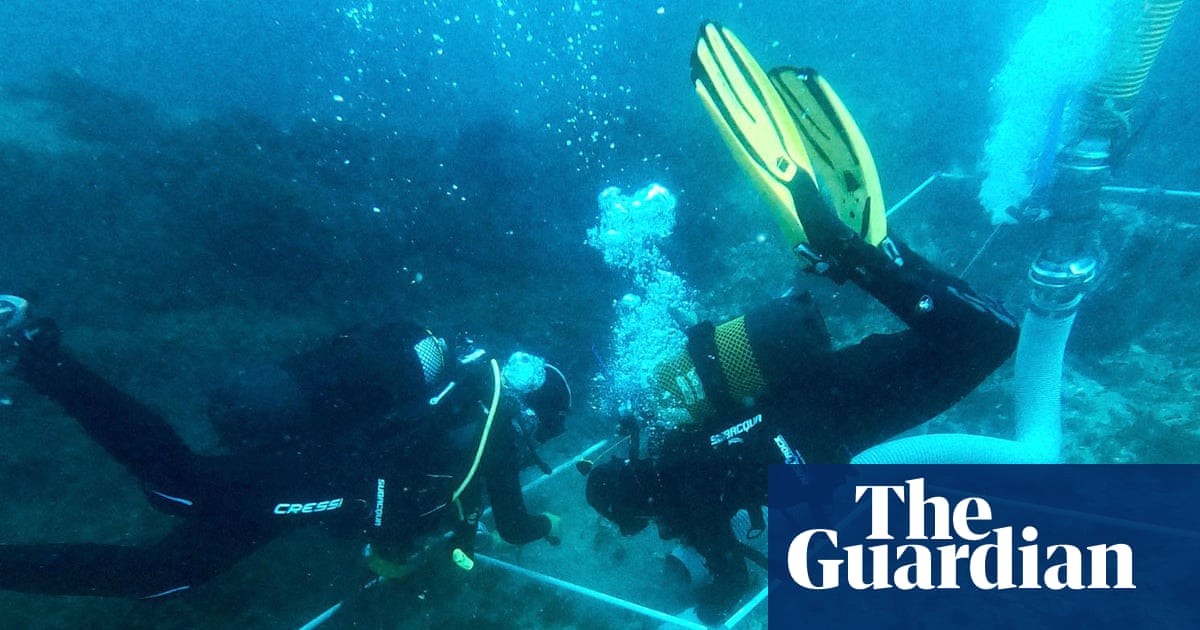
A massive archaeological undertaking has revealed that the waters between Algeciras and the Rock of Gibraltar serve as a vast, submerged museum. Through a multi-year study known as Project Herakles, researchers have identified a staggering concentration of maritime history, documenting a timeline of human activity that stretches from the 5th century BC to the mid-20th century.
A Bottleneck of History
The Bay of Gibraltar sits at the mouth of the Strait of Gibraltar—a critical maritime “bottleneck” connecting the Atlantic Ocean to the Mediterranean Sea. Because this passage has been essential for trade, exploration, and warfare for millennia, it has become a graveyard for vessels of nearly every major nationality.
Led by the University of Cádiz, the project has identified 151 archaeological sites, including 134 shipwrecks. These wrecks represent a diverse array of cultures and eras, including:
– Ancient Era: Punic vessels (5th century BC) and 23 Roman ships.
– Medieval Period: Four ships that may offer rare insights into Islamic maritime rule in southern Spain.
– Early Modern Era: 24 vessels from the age of exploration and colonial expansion.
– Modern Era: 18th-century warships and even a 1930s aircraft, identifiable by its engine and propeller.
The sheer variety of shipwrecks—ranging from Dutch and Venetian to Spanish and British—highlights the bay’s role as a global crossroads where different empires constantly intersected.
Hidden Tactics and Human Moments
Among the most significant finds is the wreck of the Puente Mayorga IV, a small, late 18th-century Spanish gunboat. These vessels were designed for guerrilla naval warfare ; they were often disguised as humble fishing boats to launch surprise attacks on much larger British ships of the line. Despite their historical reputation, these specialized craft have remained largely undocumented by archaeologists until now.
The excavation also provided a rare, humanizing glimpse into life at sea. During the study of the Puente Mayorga IV, researchers discovered a wooden box shaped like a book. While initial theories suggested it might have been a vessel for espionage or secret maps, the box actually contained nothing more than a pair of wooden combs. This find serves as a reminder that even in the midst of naval conflict, the daily routines of sailors remained remarkably human.
A Race Against Time and Environment
Despite the historical wealth of the bay, these sites are under immediate threat. The researchers are calling on the Spanish government and regional authorities to implement stricter protections against several growing risks:
- Industrial Development: Ongoing port expansion, dredging, and dock construction threaten to disturb or destroy unexcavated sites.
- Climate Change: Rising sea levels are shifting sediment layers, which can either bury sites or expose them to erosion.
- Biological Threats: Invasive algae species are aggressively covering rocks and wrecks, complicating preservation efforts.
Bringing the Deep Sea to the Surface
To combat the lack of public awareness, the research team is using technology to bridge the gap between the seabed and the shore. By creating 360-degree videos and virtual reality models, they allow non-divers to experience “dryland diving” via VR goggles in museums and local town halls.
While the reality of a shipwreck is often less “glamorous” than the treasure-filled fantasies found in adventure novels, the team argues that the true value lies in the historical data. These sites provide a unique, concentrated microcosm that allows historians to track the evolution of maritime technology and cultural exchange across the Iberian Peninsula and North Africa.
The Bay of Gibraltar offers an unparalleled opportunity to analyze thousands of years of maritime history within a single, compact geographic area.
Conclusion
The discovery of over 130 shipwrecks underscores the Bay of Gibraltar’s role as a vital artery of global history. However, without urgent conservation efforts, this underwater archive of human conflict and commerce remains highly vulnerable to modern industrial and environmental pressures.