While much of the global conversation regarding antibiotic resistance focuses on hospital misuse and overprescription, new research suggests a more environmental threat is brewing. Two recent studies published in Nature and Nature Microbiology indicate that climate change—specifically rising temperatures and increasing droughts—is actively driving the development of antibiotic-resistant bacteria in our natural ecosystems.
This shift is significant because it moves the problem of “superbugs” beyond the walls of clinics and pharmacies, placing it squarely within the natural world.
The Heat Factor: Adaptation Through Warming
For years, scientists have observed a correlation between higher temperatures and increased antibiotic-resistant infections, but the underlying mechanism remained a mystery. A decade-long study led by Jizhong “Joe” Zhou at the University of Oklahoma has provided a potential answer.
By using infrared lamps to artificially warm grassland plots by 3°C, researchers observed a startling trend:
– Increased Resistance Genes: Soil microbial communities in heated plots showed roughly 25% more antibiotic resistance genes than those in normal temperature plots.
– Evolutionary Advantage: The warming didn’t just kill some bacteria; it changed the competitive landscape. As bacteria adapted to survive the heat, they simultaneously developed resistance.
– Gene Swapping: The study suggests that heat-tolerant bacteria, some of which were already resistant, gained a competitive edge, likely spreading these resistance traits to other microbes through genetic exchange.
Crucially, this resistance isn’t necessarily caused by direct exposure to drugs, but is an evolutionary byproduct of the bacteria adapting to a warmer environment.
The Drought Effect: Concentration and Competition
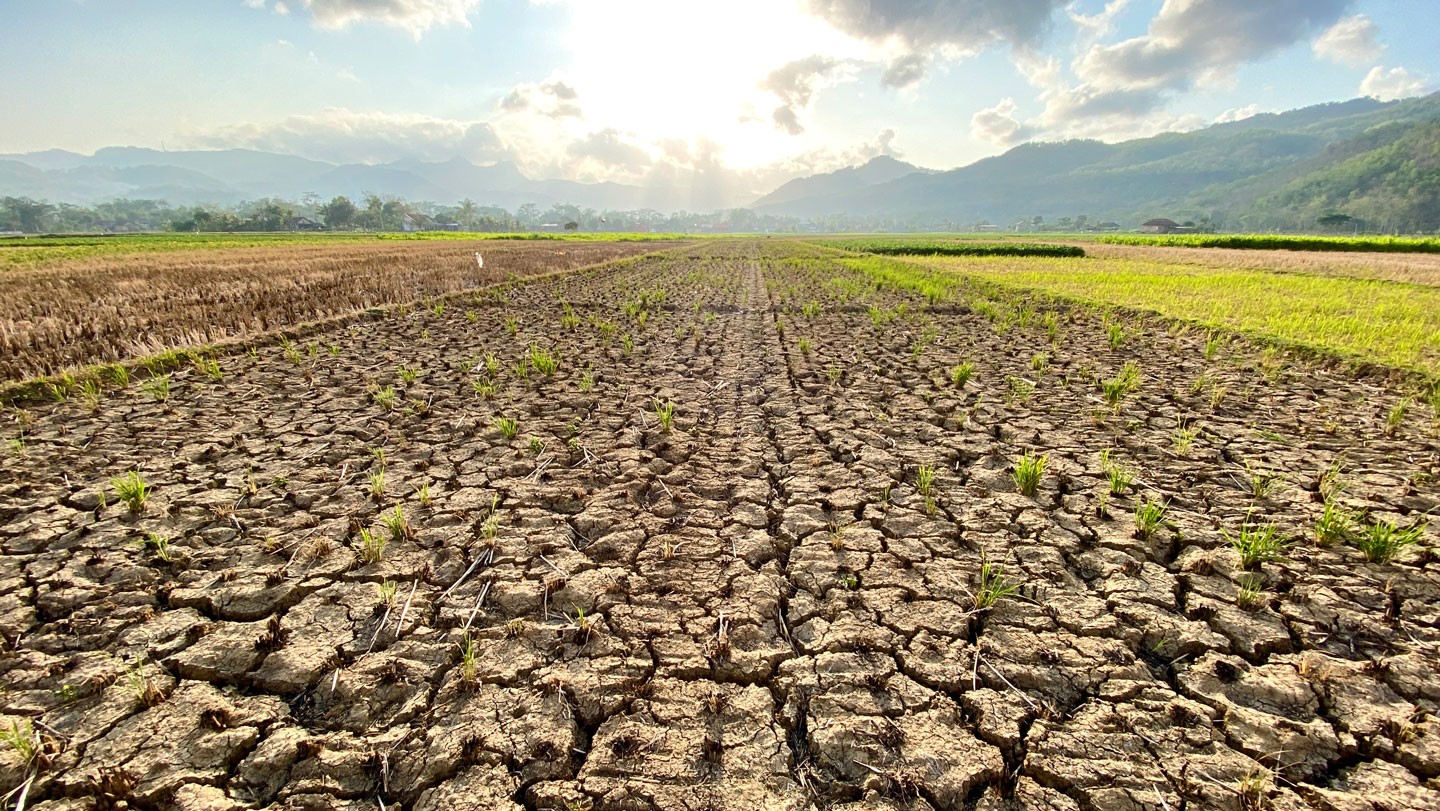
While heat drives adaptation, drought drives exposure. A second study, involving researchers from Caltech, highlights how dwindling water supplies create a “concentration effect” that favors resistant strains.
Examining diverse environments—from California croplands to Swiss forests and Chinese wetlands—the team found that:
– Increased Production: Soil microbes actually produce more antibiotics during drought conditions.
– The “Rock Candy” Analogy: As soil moisture evaporates, the antibiotics present in the environment become highly concentrated in the remaining water. Much like evaporating sugar water to make rock candy, drying soil concentrates these chemical compounds.
– Survival of the Fittest: These concentrated antibiotics kill off sensitive bacteria, leaving behind a “cleared” environment where only the most resistant strains can thrive.
Furthermore, as water disappears, microbes are forced into closer proximity. This crowded environment facilitates horizontal gene transfer, where bacteria “swap” resistance genes with their neighbors, rapidly accelerating the spread of immunity to drugs.
From Soil to Human Health: The Connection
The ultimate concern is how these environmental changes translate into human medical crises. The research suggests several pathways for this transition:
- Environmental Proximity: Data from 116 countries shows a higher frequency of antibiotic-resistant infections in drier geographic locations.
- Wind and Dust: In arid regions, dust storms can carry antibiotic-resistant pathogens across vast distances, potentially exposing human populations to highly resilient microbes.
- The “One Health” Challenge: Experts note that public health cannot be managed solely within hospitals. Because microbes in the soil are part of a global ecosystem, environmental shifts directly impact the efficacy of our most vital medicines.
“We’re at the mercy of the environment. It isn’t as if we can solve all public health problems just by working within hospitals. We’re going to have to look at the environment as well.” — Ramanan Laxminarayan, One Health Trust
Conclusion
The convergence of rising temperatures and increasing drought is creating a “perfect storm” for microbial evolution, turning natural soils into breeding grounds for antibiotic resistance. This highlights that combating superbugs requires a holistic approach that addresses both medical practices and global climate stability.