The future of #America’s healthcare: Why prevention is better than cure
The US healthcare system is a financial black hole. In 2011, health expenditures per inhabitant in the United States were approximately $7,960. Compare that to the OECD average of $3,233. Despite these huge premiums, the World Health Organization ranks the US system 37th in efficiency. High price is not the same as high quality. At the same time, lifestyles that cannot be prevented by the system increase obesity, heart disease and type 2 diabetes. The status quo is broken.
Futurists saw the cracks before us. These are not psychic. They are visionary researchers and analysts who design scenarios based on current trends. They look decades ahead and often ignore the voices of immediate legislation. Experts believe that the development of medicine begins with a fundamental change in thinking.
Prevention of overreaction
Current medicine is reactive. If you break a bone, see a doctor. You feel sick, you get treated. This model is expensive and inefficient. If this “random pain” turns out to be a serious condition, the financial losses for both the patient and the insurance company can be significant.
The future is in preventive healthcare. The goal is to stop the disease before it occurs or to catch it early when it is cheap and easy to treat. Most major diseases have controllable risk factors. Heart disease is still the leading cause of death in the United States, but the factors that trigger it – smoking, high cholesterol, high blood pressure, obesity and lack of exercise – are all within our control.
The problem is human nature. People often ignore the warning signs. Many people skip regular checkups. Sometimes it’s because of price, but more often it’s because of ignorance or carelessness. We are bad at learning our biology. This ignorance puts a strain on the entire system. Treating an advanced illness costs more money and time than preventing early risks.
Well-known futurist Jim Carroll predicts that in the next 10 years, wellness programs will become the norm in most organizations. We don’t just offer gym memberships. Companies can offer financial incentives to employees who meet health goals. Conversely, those who do not participate or who do not improve their indicators may be penalized. The changes are obvious. Staying healthy costs more than treating people when they get sick.
4: Check your owner’s manual
The #Personalized Health Revolution: Genomics and Biotechnology
Knowing your family tree doesn’t tell you everything. You may have a genetic time bomb that no one has set off in your lineage. This is the gap between genetic risk and true predisposition. The only way to close it is to read the code yourself.
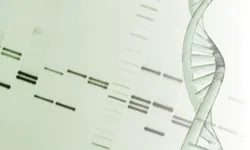
The Human Genome Project completed in 2003 mapped 20,000–25,000 genes that make up human DNA. But a map is not the territory. Everyone has their own order. Variations matter. Mutations are important. If you have genetic mutations associated with certain cancers, early detection can make all the difference. Find out what symptoms to look out for. You know when to go get tested. If you are planning to start a family, you can assess the risk of transmitting the disease to your children before the disease develops.
Currently, one set of codes costs about $3,000. It lasts a week. It is rarely insured. This is a luxury and not a standard of care. But the curve is bending. The development of technology has reduced the price and time. The industry goal is $1,000 per genome, which is the current cost of an MRI. Futurist Michio Kaku predicts that the price will drop to $100 in the future. Imagine that. Saliva sample. A CD (or cloud upload) containing the genome data. Instant access. This is genomic medicine. Doctors don’t just treat symptoms. They tailor prevention and treatment to your own biological blueprint.
Consumer-oriented health monitoring
We are moving away from reactive medicine. Technology is becoming your body’s dashboard. Yes, you can download an app to track your calories and steps. But futurist Jim Carroll envisions something more integrated. Use a gadget that sends data directly to the web. Measure your body fat with a smart scale. An armband that monitors blood pressure. Everything syncs with your iPhone.
Why is this important? Because your doctor can monitor your health in real time, not just at your rushed appointment. Submit the information. they analyze it. Catch problems before they become emergencies.
In the future, the integration will deepen even more. Kaku predicts that DNA-encoded silicon chips could be embedded in bathroom mirrors. You blow on the glass. The mirror analyzes saliva droplets. Look for the P53 gene. This mutation is found in half of common cancers. Early detection is as easy as brushing your teeth.
Frank Moss, formerly of the MIT Media Lab, sees software as a health coach. The program makes improvement suggestions based on your vital functions. You may be asked to perform diagnostic tests on yourself. Scan it. Send the results to your doctor. It is explained in the video. Decide together the course of action. If you need to go to the doctor’s office, your doctor will show you the information on a big screen. You accept the plan. Instructions will be sent to your mobile phone. Relationships change from authority-driven to cooperative. You are more than just a patient. You are a data partner.
Grow new organs
The next limit is something more visceral. We are not just monitoring our bodies. We learn to fix it from the inside. Organ failure is the most common cause of death. Organ transplants save lives, but their number is very small. The immune system often rejects the donor. The waiting list is long. The solution is in tissue engineering.
Researchers have grown simple tissues such as skin and cartilage in the laboratory. Targets include complex organs such as the heart, kidneys and liver. In this process, the patient’s own cells are used. These cells are stripped of their genetic characteristics and reprogrammed as stem cells. They are then seeded onto a scaffold made from a donor organ from which the cells have been removed. The scaffold provides the structure. The patient’s cells grow inside it. Over time, the organs regenerate.
Why is this better? Because the new organ is made of your cells. No rejections. Immunosuppressants do not permanently weaken your immune system. You don’t have to wait for the donor match. Personalized medicine in the literal sense of the word.
This technology is still in its infancy. Developing a functioning heart that beats in sync with the rest of the body is very difficult. The vascular network is complex. The electrical signals are accurate. But progress is real. Bioprinters can now stack cells with high precision. Researchers are testing these approaches in animals with promising results.
It’s not just about extending your life. This is about improving the quality of life. People with kidney failure can survive without dialysis. Patients with heart disease can receive a new heart without the risk of rejection. The obstacles are not only scientific. This is ethical and regulatory. How do we approve these treatments? How do we price them?
The implications are staggering. If organs could be grown according to demand, the donor shortage problem would be solved. The black market for organs is collapsing. Depending on who controls the technology, healthcare costs could either drop or skyrocket. But the potential is there. Replace defective parts with new, complete parts. Heal your body from within.
The boundaries between biology and technology are blurring. Your genes are your information. Organs are replaceable parts. Your health is a system that can be monitored and updated. What if we could edit code as easily as a document? The answer is not in the laboratory. They are in the questions we ask about what it means to be human.
The potential of regenerative medicine is attractive because of its simplicity. Repair your body by replacing broken parts. We are already doing this on a small scale. Stem cell and bone marrow transplants are routine treatments. Artificial organs exist, but they are blunt instruments. Artificial hearts are often a last resort, a bridge to nowhere because the hardware fails too quickly. If you need a kidney and time is limited, dialysis can take years and cost $30,000 a year. About 18 Americans die every day while waiting for an organ transplant. Even if you get it in the end, rejection is always a life-threatening threat.
But what if you don’t need a donor? What if you don’t need a machine?
Futurists believe that within 10-20 years we will simply grow new organs. This not only saves lives. This is about the economics of aging. As our population ages, we need body shop. Replace worn parts. The cost savings alone are impressive. The schedule is tight, but the foundations are being laid.
How can lab-grown organs change transplant medicine?
Consider the first artificially created organ. In 2008, British doctors transplanted a patient’s trachea that had grown from his own stem cells. It worked. We are already using skin made with tissue technology for burn patients. Clinical trials are expanding rapidly, and developments are taking place in everything from blood vessels to the ear. This technique is moving from speculative fiction to clinical reality.
Coordinated Digital Health Systems
Transitioning to a model where it is easy to “order” new organs requires a healthcare system that does not collapse under its own weight. Frankly, hospitals are inefficient. You get admitted, you’re faced with a huge amount of paperwork and a large number of providers, often conflicting with each other. This division costs money and lives.
Medical futurist Jack Ulrich predicts that healthcare will move toward coordinated, standardized care. This is not just a polite thing to do. It’s a matter of responsibility. The systems are transitioning from siloed providers to networks of shared responsibility.
The driving force behind this change is digitization. Hospitals are digitizing everything. Patient records, MRIs, pharmacy inventories, and even the location of wandering Alzheimer’s patients. This information can be monitored in real time. Helps monitor disease outbreaks. Prevent mistakes before they happen.
The Patient Protection and Affordable Care Act (PPACA) provides a financial boost. This encourages hospitals to establish accountable care organizations. These are networks of doctors, hospitals and clinics that share the burden of patient outcomes. If the patient gets sick due to a lack of coordination, the network pays the price. If the patients stay healthy, the network benefits.
Can business efficiency models solve healthcare problems?
Another futurist, Joe Flower, suggests looking outside medicine for solutions. He points to management tools such as Six Sigma and the Toyota Production System. These are methods used by car manufacturers to eliminate waste and improve processes.
Some hospitals have already adopted these models. result? They treat more patients. You can do this without hiring more workers or building large facilities. This does not mean cutting corners. This eliminates friction that delays treatment.
The combination of laboratory-grown biology and digital logistics creates a new paradigm. You grow the part. The system provides it. It’s no longer a question of whether you can do it, but how quickly you can scale it. Infrastructure is currently being built.
Digital health differences and the way forward
Let’s be honest about the current situation. The healthcare system is broken. Medical offices operate in silos and refuse to talk to each other. Data sits trapped in incompatible formats, creating friction for patients who just want a check-up without repeating their entire medical history. The lack of standardization is more than just a disadvantage. it’s a barrier to effective care.
I’m part of an insurance wellness program that pushes me to keep track of my metrics. I use an app for this. It feels so good to be in control. This made talking to my doctor about my health less abstract. But for others, especially those with complex diseases that require tissue or organ engineering, this digital gap can be dangerous.
Good news? We are moving towards a more connected future. Some of the predictions we discussed are already here. In ten years, what seems like sci-fi may be the norm. Things like widespread artificial life and fully integrated genomic medicine are still 20 years away. However, the direction is clear.
Why preventive care is more important than ever
We spend too much money fixing broken bodies, but not enough money keeping them whole. Futurist Joe Flower supports the transition to preventive health care. This is not just a moral argument. It’s a financial issue. Imagine a nation freed from the overwhelming burden of chronic disease costs. To achieve this, we need a system that prioritizes healthspan over longevity.
Accountable care organizations (ACOs) are one piece of the puzzle. They encourage healthcare providers to keep patients healthy instead of just treating them when they get sick. This is a small change to the payment model, but it changes everything. Doctors are paid based on results, not procedures.
This is not about replacing human contact with algorithms. It’s about using technology to free up that human touch. When doctors aren’t hunting for old records, they can actually listen to you. When patients see trends in their data, they become partners in their own care.
The genomic revolution has arrived
DNA sequencing is getting faster and cheaper. We’re talking about a future where genome mapping costs about $1,000. This is not a distant dream. It’s happening now.
What does this mean for you? Personalized medicine. Treatments are tailored to your genetic makeup rather than a one-size-fits-all treatment that works for some people and not for others. Regenerative medicine is another frontier. We have already seen organs grown in the laboratory being transplanted into humans. It is still in its early stages, but its potential is great.
Think of the people on the kidney or heart transplant lines. Tissue engineering can eliminate these lists. This can mean growing new organs from your own cells, reducing the risk of rejection. It’s not just about extending your life. This is about improving the quality of life.
Prepare for a high-tech future
How do we get there? We need a better information infrastructure. We need interoperability standards that allow systems to communicate with each other. We need informed and committed patients.
It’s easy to feel overwhelmed by the pace of change. But the risks of ignorance are even greater. Understanding these trends can help you make better decisions about your health. This allows decision makers to create frameworks that support innovation instead of stifling it.
We are on the verge of a new era of health. One where technology amplifies human potential. This is where prevention comes first. Data works for you, not against you.
The question is not whether such a future will happen. It’s how well we prepare for it. Will we let the digital divide widen? Or build a system that connects us all?
The future of healthcare is not just about new tools. It is about a new relationship between patients, healthcare providers and technology.
We have the science. We have the technology. What we need now is the will to implement it. Break the silos. Place the patient in the center.
The rest are just details. The details are currently being written in laboratories and hospitals around the world. Are you paying attention?