


Climate change is no longer just a buzzword. That is why we are rethinking how we move. But let’s be honest: sustainability doesn’t have to be a chore. If there is no fun in the commute, people wouldn’t travel. The sweetest part? These devices are environmentally friendly and actually enjoyable to ride.
We are looking at transport that produces zero emissions. No exhaust gas is produced. No need for massive parking structures. It offers an efficient and enjoyable travel experience in dense urban environments. Here are five innovative machines that bridge the gap between ecology and adrenaline.
The Scuddy: A Suitcase You Can Ride
Commuters have a particular pain point: the last mile. Even if you are on the train, you may have to walk to the office. Scuddy solves this problem with smart design.
This is an electric scooter that can be folded compactly. You can carry it like a suitcase at the airport or on public transport. When you’re there, you can unfold it and go.
In terms of performance, it can reach a speed of up to 35 km/h. This is fast enough to avoid traffic jams, but slow enough to stay safe in the city. The range is 40 kilometers. Most daily tasks and commuting needs can be handled with one charge.
There are two versions with very different legal requirements.
- Fast Version: Class M driver’s license is required and a helmet must be worn.
- Slow version: If you are over 15 years old and have a moped driver’s license (Mofa-Führerschein ), you can ride without a helmet.
This makes it a viable option for younger riders and those who don’t want the regulatory hassle of obtaining a motorcycle license.
Heelys: sneakers for secret skating
Have you ever seen a someone walking normally, then suddenly glide away? This is not magic. This is shoe integration.
Heelys are sneakers with hidden wheels in the heel. You walk normally. You shift your weight back, and you roll.
“Skillful riders can turn 360 degrees and grind along curbs and railings.”
This is not just a trick for kids. Experienced users treat them like skates. The shoes are priced the same as regular sneakers, removing the barrier to entry. Children’s sizes are also available, but their popularity in schools varies.
Many American schools banned them. What is the reason? Safety. If you Rolling shoes in a crowded hallway, you’re more likely to crash. But what about open space? It offers a unique way to move, like skating without a board.
Pedelec vs. E-Bike: Understanding the Legal Differences
E-bikes are rapidly becoming popular. But not all Pedelecs are the same. The difference between Pedelec and Pedelec is important in terms of regulatory compliance and cost.
The biggest difference is the engine assistance and speed.
- E-Bikes: These bikes have a 500 watt motor. You can push it up to 20 km/h without pressing the pedals. By law, these are classified as light motorcycles (Kleinkrafträder ). Must be register them with a license plate. A moped license (Mofa-Führerschein ) is also required.
- Pedelecs: Uses a 250 watt motor. The most important thing is that the engine only runs when you pedaling. This legal nuance is important. It is treated just like a regular bicycle. No registration required. There is no license plate. There are no mandatory license.
For the average commuter, Pedelecs are often more convenient. It removes the headache of bureaucracy. The battery is well integrated into the frame and looks like a regular bike.
Magic Wheel: It’s all about balance
The Magic Wheel looks like a unicycle without a seat. Forces you into a standing position.
How does it work? Place one foot on a small platform and press the other foot against the ground. You steer by shifting your body weight. Braking is done by dragging your foot or jumping off.
The speed increases rapidly. There is no gear to limit you. This requires constant concentration and balance.
It is very light. When climbing stairs or steep slopes, you can pick it up by the handle and carry it. Not suitable for a leisurely business trip. Ideal for riders who want to engage their core and legs with every meter.
The Future of Fun
These machines have one feature in common. They reclaim movement. It doesn’t just get you from A to B, it makes the whole journey more enjoyable.
“Zero-emission transport doesn’t have to mean sacrificing joy.”
As cities become more congested and air quality regulations tighten, these personal mobility devices fill a gap.

Why a surfboard is actually a balanced master class
No need to wave to drive.
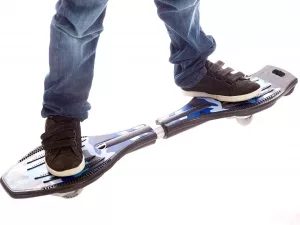
Despite their name and the sport that resembles surfing, surfboards have nothing to do with water. It’s a type of painting based on a certain mechanical trick: two plastic footrests connected by a central torsion bar. You can accelerate by rotating your hips in a circular motion. The board does not move when pushed off the ground. It moves by twisting the torsion bar, storing energy and releasing it to propel the board forward.
It doesn’t take long to figure it out. Balance is the first hurdle. You have to learn how to shift your weight without falling over. Once that’s done, you can start performing the trick. But the real reward goes beyond the cool factor. This is the positive effect of exercise on the body.
Hidden gym training
Most people see it as a fun leisure activity. The physiotherapist refers to the rehabilitation equipment. The movements required to ride a surfboard overload your stabilization muscles. These are the small muscles around your ankles, knees and hips that keep you upright. It doesn’t get much attention in regular fitness activities. Surfing forces them to be constantly engaged.
The vestibular system (the part of the inner ear responsible for balance) goes through rigorous training. Constantly adapts to changes in focus. This improves proprioception, or the body’s awareness of its position in space. It’s not just standing still. It’s all about dynamic balance.
Because of these benefits, German schools are starting to include surfboards in their physical education. It is not seen as a trick. It is considered a practical way to increase core stability and improve coordination in students who may be intimidated by traditional exercise.
How it really works
The mechanism is deceptively simple.
- Two planks: Spread your legs.
- Torsion bar: Connecting plate. Twisted.
- Yarn rotation: Use your hips instead of your legs to control the movement.
This design allows for smooth, fluid movements. The base does not need to be pressed down. Energy comes from distortion. If you try to use your legs like a skateboard, you will fail. You have to let your hips lead.
“Surfing significantly improves your balance and strengthens your supporting muscles.”
Who is it for?
This is often considered a youth sport. it is not. It has less impact on the joints and is suitable for the elderly who want to improve their balance while avoiding the risk of collision injuries. It is also popular among athletes in other sports who want to cross-train.
Surfers use this to practice carving moves on land. Skiers use it to develop nuclear power. Adaptability is also part of its appeal. This is not a niche activity. It is a versatile tool for physical development.
Learning curve
expected to fall. much.
The first lessons are about finding a rhythm. The brain must forget its instinct to walk sideways. You need to learn how to draw an arc. This felt unnatural at first. The torsion bars are durable. You must use your core to overcome this resistance.
When the function is clicked, it becomes liquid. The board is slipping. Balance becomes intuitive. You no longer think about staying upright.


