It started with a telegram. In 1939, a group of U.S. scientists looked at the fragile state of Europe and realized nuclear fission wasn’t just a lab curiosity. It was a weapon waiting to happen. They convinced President Franklin D. Roosevelt to listen. He didn’t throw money at the problem immediately. He approved $6,000. That’s it. Barely enough to cover lunch for a team of PhDs.
But the threat was real. The race was on.
By 1942, the effort had a name. Manhattan Project. The moniker came from the site of Columbia University in New York City, where early theoretical work began. It was a bureaucratic placeholder for something massive. The science moved fast. Research spread to the University of California and the University of Chicago. That’s where Enrico Fermi built the first nuclear reactor. Critical mass wasn’t a metaphor anymore. It was an engineering problem.
Where did the bomb actually get built?
You wouldn’t find the hardware in New York. The heavy lifting happened in three isolated locations. Los Alamos, New Mexico, became the design hub. J. Robert Oppenheimer led the scientists there. They worked in a high-altitude desert, designing the triggers and the physics.
Then there was the fuel. You can’t have a bomb without fissile material. Oak Ridge, Tennessee, handled uranium enrichment. Hanford, Washington, produced plutonium. These weren’t just factories. They were ghost towns with secret infrastructure. Thousands of workers didn’t know what they were building. They just knew to stay quiet.
The project employed 125,000 people at its peak. A quarter-million lives, tied together by secrecy and physics. The cost? $2 billion in 1940s dollars. That’s roughly $30 billion today. A fortune spent to break nature.
The test that changed everything
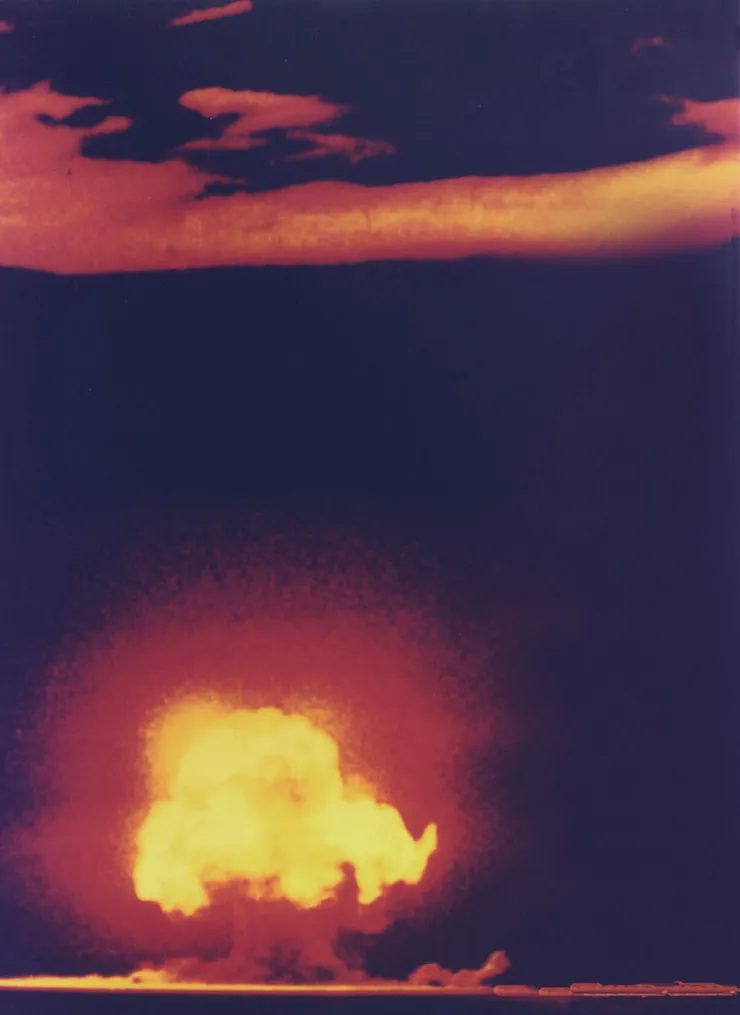
The theory had to be proven. In 1945, near Alamogordo in southern New Mexico, the team detonated the first atomic bomb. It wasn’t just a fire. It was a new era. The sky turned white. The desert melted.
The world didn’t end that day. But it changed. The Manhattan Project proved that humanity could harness the power of the sun. It also proved we could use it to destroy our cities. The science was sound. The application was terrifying.
We still live in the shadow of that test. The reactors, the labs, the secrets—they all point to a single question. We knew how to do it. We did it. Now we have to live with the consequences. The bomb sits in the world like a loaded gun on a table. Everyone knows it’s there. No one knows who will pull the trigger next.