Half a million homes running through the night, powered by solar panels in the UAE.
It sounds like sci-fi. It’s not. It’s just infrastructure.
A massive clean energy project in the Middle East is now combining 5.2 gigawatts of solar capacity with a staggering 19 gigawatt-hours of storage. That’s the world’s largest battery scheme. The goal is simple: keep the lights on when the sun goes down.
But you don’t have to look at deserts to see the future of storage. Look at your wrist. Or look at the sand. Or look at human sweat.
We are standing on the edge of an energy transition that has nothing to do with the frantic mining race for lithium, cobalt, and nickel. The current grid-scale champions are hitting their physical limits. Lithium-ion batteries wear out. They degrade after a finite number of charges. And they depend on critical minerals that are bad for the environment and often involve ethically dubious labor practices in vulnerable communities.
Engineers and scientists are bored of the scramble. They’re building alternatives. Indefinite life spans. Recyclability. Abundant materials.
Here is what actually works when the grid gets crowded.
Liquid Air Cryobatteries and Industrial Renewal
In Greater Manchester, UK, a former coal plant is breathing again.
It’s the Trafford Green Cluster. And right next to where soot once blackened the skies, Highview Power is constructing what could be the backbone of a local re-industrialization. They call it a “liquid air cryobattery.”
Former Mayor Andy Burnham didn’t pull his punch. He said this decade is the most exciting in the county since the Victorian era. It’s hype? Maybe. But the science is cold hard fact.
When renewable energy is plentiful—and cheap—it’s wasted if you can’t store it. Highview uses that surplus power to cool air down to -196 degrees Celsius. It turns air into liquid. This process shrinks the air’s volume by a factor of 700. You store it in insulated tanks.
Later, when electricity is needed, you let it warm up. The liquid air expands rapidly back into gas. That expansion spins a turbine. Electricity hits the grid. Zero emissions. No gas plants firing up to fill the gap.
There have been delays, as there always are with heavy engineering. But when this 50-megawatt project finally starts up this year, it will offer 300 megawatt-hours of storage lasting six hours.
That’s half a million homes covered for six hours straight.
Liquid air doesn’t just store energy. It turns the seasons.
Molten Salt for Heavy Industry
Move the sun 7,500 miles west, from Manchester to the Nevada desert, and the temperature flips.
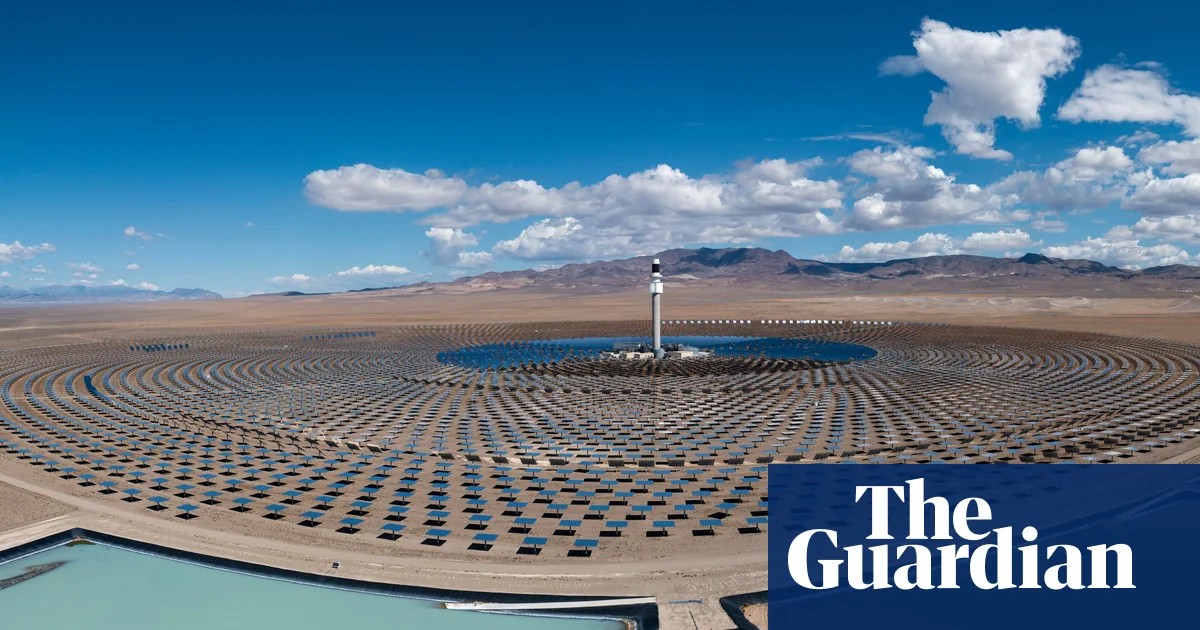
At the Crescent Dunes site, ten thousand mirrors focus sunlight onto a tower. Inside? A reservoir of molten salt made of potassium and sodium nitrates. The heat hits 560 degrees Celsius (roughly 1,040 F).
You don’t need batteries for that. You just need heat retention.
The salt stays hot for 10 hours after sunset. When power is needed, that heat boils water to create steam. The steam turns a turbine. Electricity flows. This is molten salt energy storage at its most mechanical.
But molten salt has a darker heritage, too. It is the primary power source for modern guided missiles. These weapons carry their own reserve batteries, packed with salts, that stay inert until launch. The pyrotechnic ignition activates them, releasing energy instantly.
We are stealing that reliability for peacekeeping, not war.
In Denmark, a leader in wind energy, this same tech is tackling something harder than nighttime lights: heavy industry. Decarbonizing manufacturing is a nightmare. But a 1-gigawatt-hour molten salt project unveiled this year can store wind power for up to two weeks. The salts are heated to 600 degrees Celsius, then circulated through a generator. High-temperature steam hits factory floors directly.
No combustion. No compromise.
Sand Batteries Heating Finnish Towns
If you live in Pornainen, southern Finland, you don’t think about electricity costs as much as you think about not freezing in February.
The town has spent the last few years testing a radical idea: heating sand instead of oil.
They use roughly 2,000 tonnes crushed soapstone. This material holds heat incredibly well. During summer months, electric heaters warm the sand up. It stores 100 megawatt-hours of thermal energy. That sounds like a lot, but for a town that needs to heat schools and town halls, it’s manageable.
In the dead of winter, hot air is blasted through the sand stack. The sand radiates the heat. The building gets warm.
The new stack stands 13 meters tall and 15 meters wide. It’s ten times bigger than the first one built in 2022.
Why does this matter? Because it works. The district plans to eliminate oil from its local heating network entirely. They aim to cut wood chip usage by 60%. That is a massive dent in local carbon emissions using dirt-cheap physics.
Clean energy doesn’t have to be complicated. It just has to be dense.
Enzymatic Biofuel Cells and Sweat Tech
Now for the weirdest entry. And it comes from the Tokyo University of Science.
Wearables are everywhere. Smart rings, health patches, fitness trackers. The problem? The battery. Tiny batteries mean bulky devices or daily charging rituals. Most users hate daily charging.
What if the device charged itself as you moved?
Japanese researchers are developing a thin patch that generates electricity directly from your sweat. Not indirectly. Directly.
It uses an enzymatic biofuel cell.
When you exercise, or just walk around in a humid climate, your body releases sweat. Sweat contains lactate. Lactate contains chemical energy. The patch captures those compounds. Embedded enzymes trigger a biochemical reaction. Electrons flow. Electricity is born.
No wires. No power bank. No external source.
Theoretically, you could wear this on your wrist forever. As long as you sweat. It powers the sensors that monitor your health, turning the body into both the user and the utility plant.
Is this niche? Absolutely.
Is it the next frontier? Also yes.
The grid of the future won’t look like a single, monolithic lithium-ion block. It will look like liquid air in a former coal plant, salt in the desert, sand in a Finnish schoolyard, and chemistry on your arm.
It is messier than the lithium promise. But it is real.